Molina de Tefía
The Molina de Tefía stands in the area known as the Tablero del Morrito, north of the La Alcogida EcoMuseum, in the interior of the municipality of Puerto del Rosario.
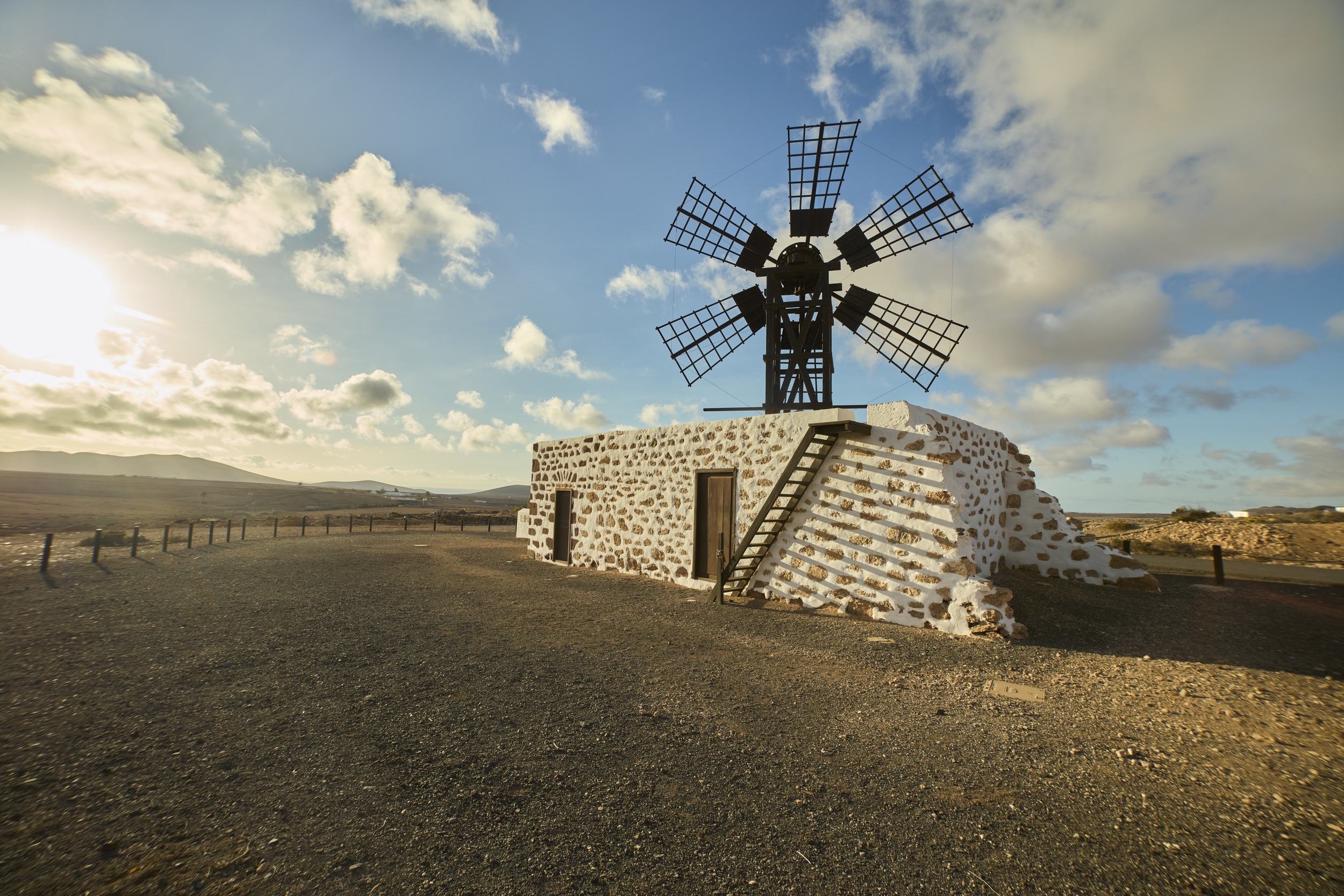
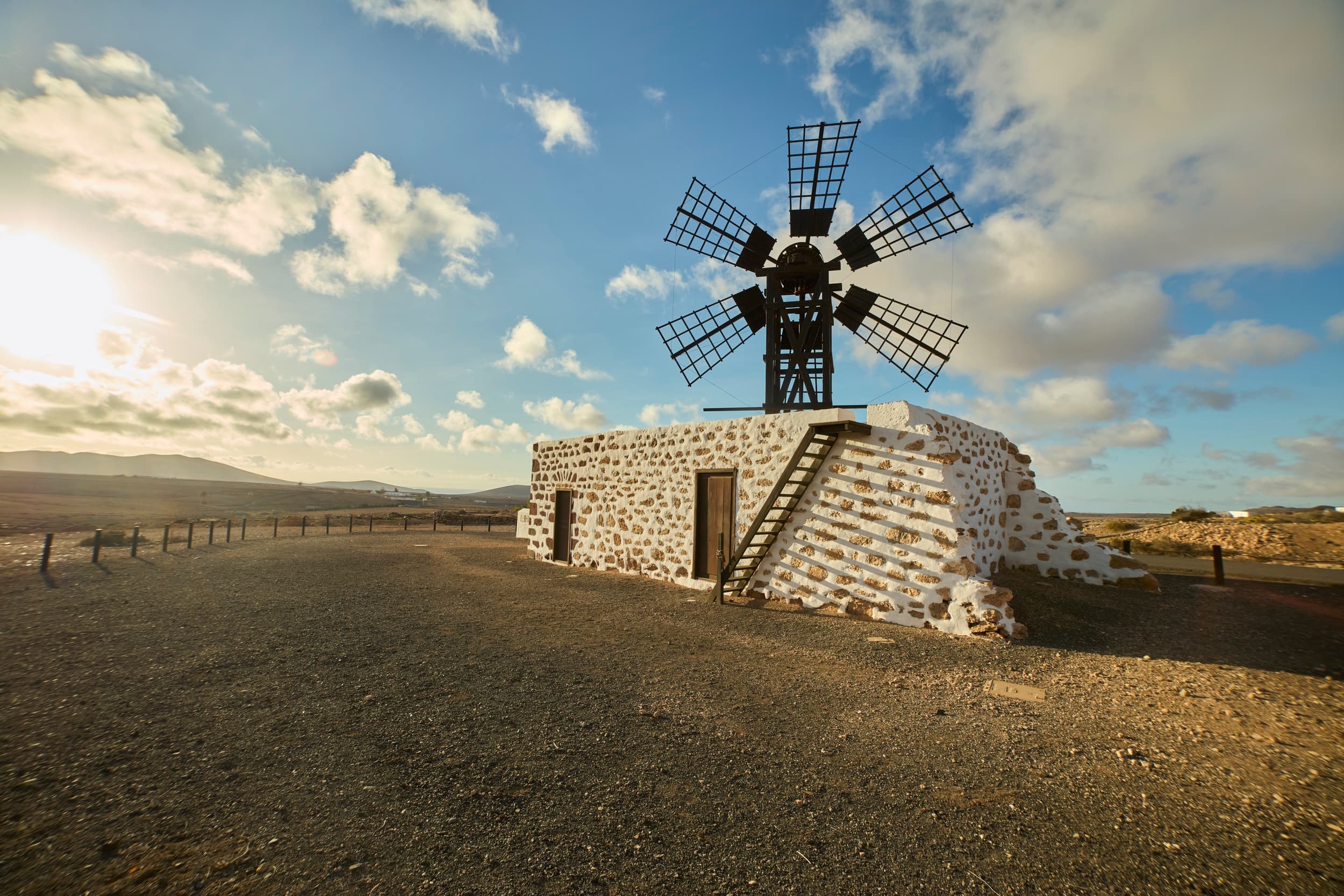
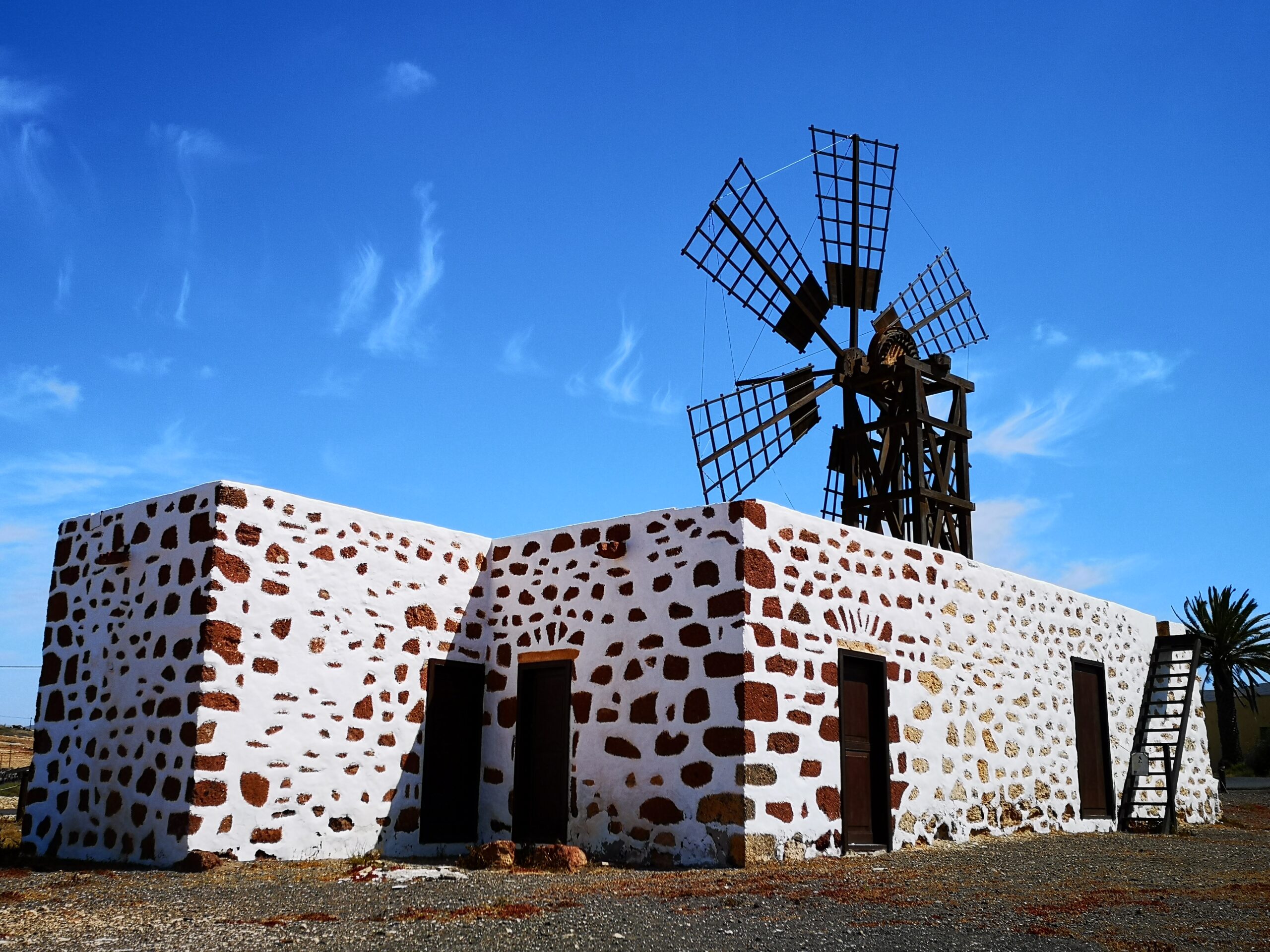
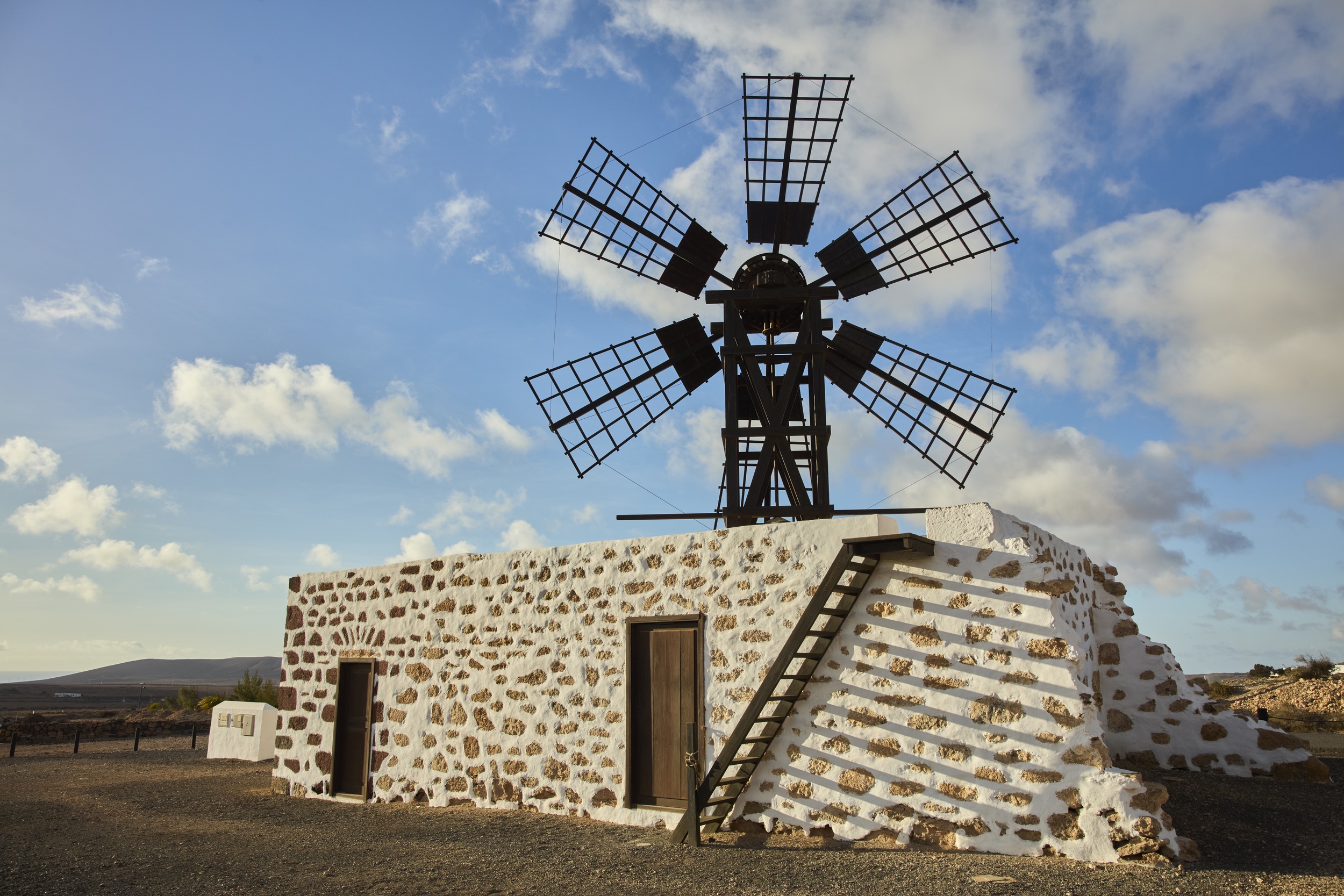
The Molina de Tefía stands in the area known as the Tablero del Morrito, north of the La Alcogida EcoMuseum, in the interior of the municipality of Puerto del Rosario. A molina is a local type of flour mill, and this one is among the most representative examples of how traditional milling evolved in Fuerteventura, as well as a key piece of Majorero ethnographic heritage.
A fire destroyed most of its original wooden structures, which have been recently rebuilt as part of a restoration that has brought the building back and restored its historical and cultural value.
The molina is a flour mill more modern than the traditional windmill. It was devised in the 19th century by Isidoro Ortega, from Santa Cruz de La Palma, to make milling more efficient. Its main advantage over the classic windmill is that all the milling and grain handling takes place on a single floor, sparing the miller from climbing up and down stairs with sacks of cereal.
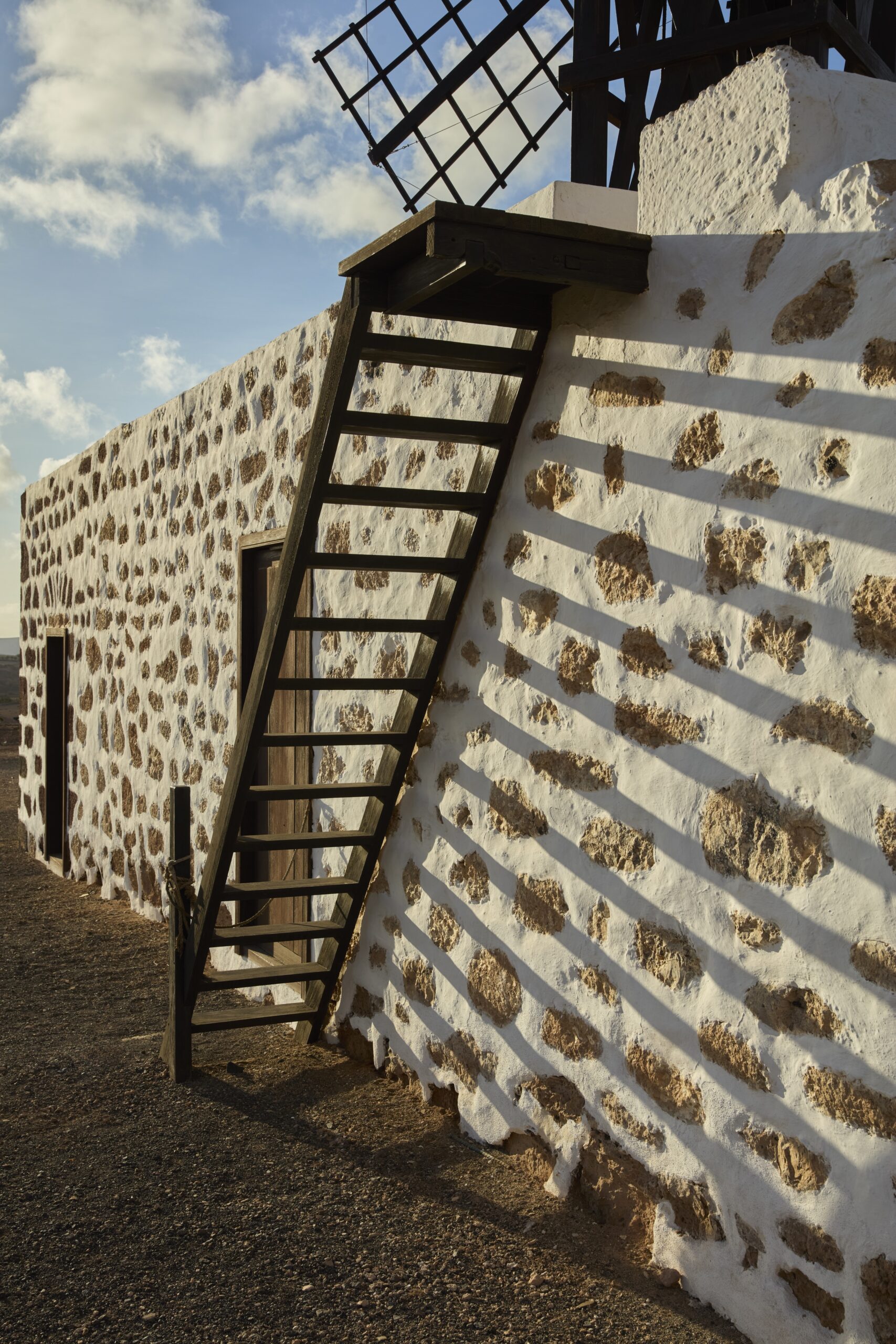
In terms of design, the molina consists of a wooden tower that holds the whole mechanism and rests on a metal pivot, known as a puyón, which turns on an iron plate set in the floor. The tower stands inside a masonry room, usually square or rectangular, and rises through a round opening protected by a kind of umbrella called a farol, which keeps the rain out.
The milling machinery sits at the base of the tower and is made up of two millstones, the hopper and the feed chute. The structure rests on two thick crossed beams, with the metal pivot at their lower centre, allowing the whole assembly to turn. At the top of the tower are the toothed wheel, the spindle and the sails, usually four or six, which catch the force of the wind.
A molina works much like a traditional windmill. The grain is poured into the hopper and runs down the chute to the millstones. The wind drives the sails, which transmit their movement to the toothed wheel. This meshes with the spindle and, through a vertical metal shaft, turns the upper millstone against the lower one, grinding the cereal.
A visit to the Molina de Tefía helps you understand the importance of gofio and cereals in the island’s traditional diet, and the ingenuity of the Majorero people in adapting to a land marked by wind and scarce resources.
Photos
The map loads data from OpenStreetMap, an external service. All the information is also in the list.