· Culture
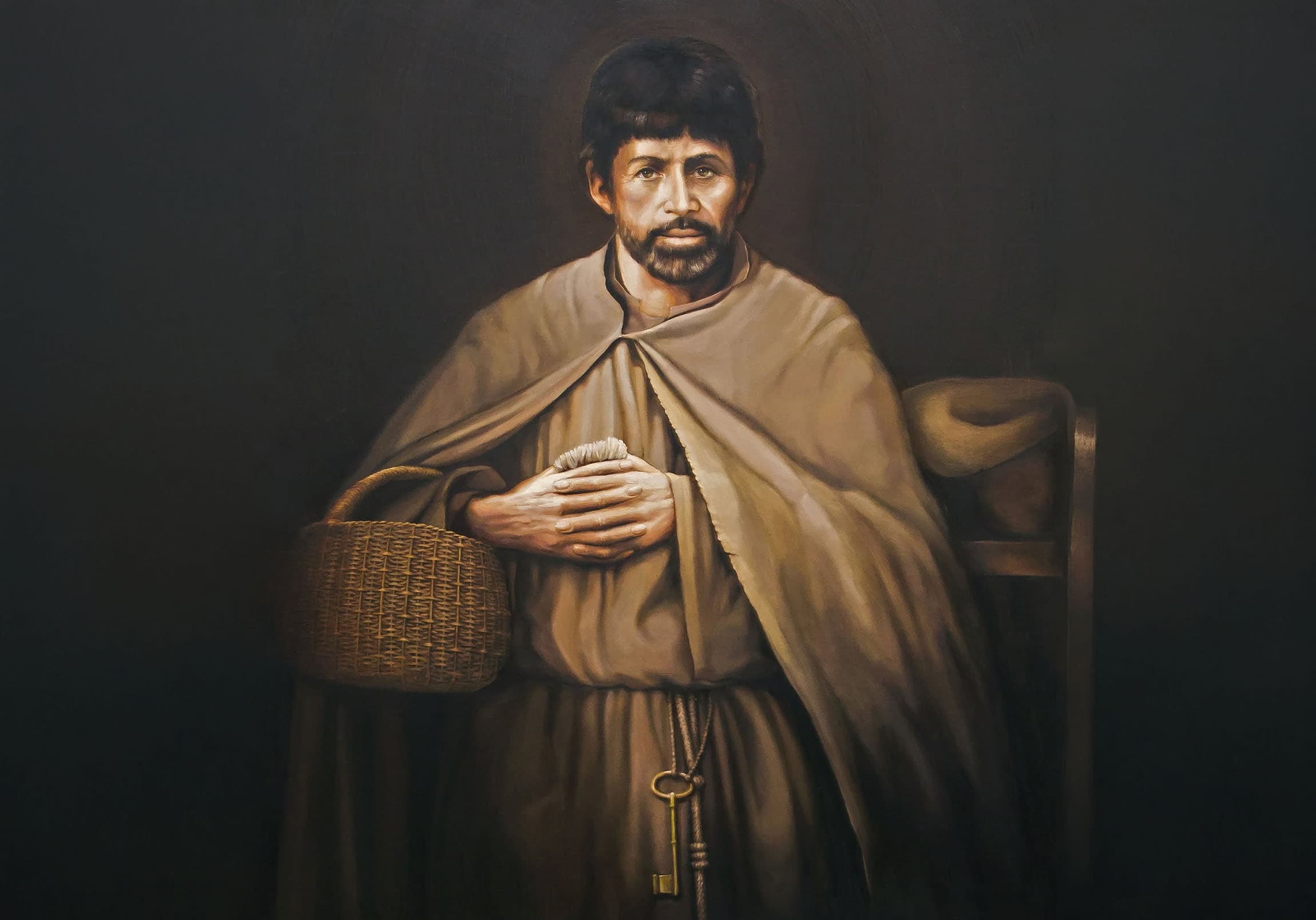
“Because with your little oil / today I escape from the cemetery.” These verses by the popular poet Bernardino Guajardo appear in an essay that Fidel Sepúlveda, of the Pontifical Catholic University of Chile, dedicated to Fray Andresito in 1999. According to that text, that Franciscan lay brother cured a wide variety of ailments without any knowledge of medicine, using oil, herbal infusions, and gestures.
Fray Andresito’s real name was Andrés Filomeno García Acosta, and he was born in Fuerteventura. Two years later, in La Ampuyenta, another man dedicated to healing was born—this one with a medical degree: Dr. Tomás Mena y Mesa. Today, the homes of both men are part of the same tour.
The Lay Brother and His Oil
Vatican Radio provides the dates for Fray Andresito: he was born on January 10, 1800, and died on January 14, 1853. Fuerteventura’s island council, the Cabildo, links him to La Ampuyenta because of a humble house where he lived with some relatives during the first half of the 19th century, and which today houses a shrine in his honor.
His legacy in Chile is clearly evident in the bibliography of Sepúlveda’s essay, published in the journal Aisthesis. The earliest biography he cites was printed in Santiago in 1858, five years after his death. Another, from 1932, is titled Fray Andresito en la tradición santiaguina. The essay itself discusses the charisma that the Chilean people perceive in him and also presents him as a folk poet.
The official step came on July 8, 2016. On that day, Pope Francis authorized the promulgation of the decree on his heroic virtues, which made him venerable.
The Doctor Who Didn’t Charge
The Cabildo reports that Dr. Mena was born in La Ampuyenta to a very humble family and that he practiced medicine for free and out of a sense of vocation from his home in the village.
The Himetop database entry includes his background. He was born on February 20, 1802. He was about to complete his training for the priesthood when his brother invited him to Cuba, and in Havana he studied medicine and earned his doctorate in surgery in 1826. He traveled to France in 1831 to study tropical medicine, and in 1847 he returned to La Ampuyenta, where he treated both the rich and the poor. He died in Santa Cruz de Tenerife on July 10, 1868.
The sources consulted do not clarify whether the doctor and the friar ever met.
A hospital never used
The building that Mena did not live to see completed still stands. The Hospitalito de La Ampuyenta consists of three interconnected wings, a significant architectural innovation according to the Cabildo. The Cabildo also explains that Mena promoted the project a few years before his death and that construction dragged on for three decades.
Himetop provides the ending to the story: Mena left a donation in his will; the hospital was built in 1898 but was never actually used.
If you’d like to see it
The Doctor Mena House, the Hospitalito, and the House of Fray Andresito are part of the La Ampuyenta Cultural Heritage Complex, managed by the Cabildo. It is open Tuesday through Saturday, from 10:00 a.m. to 4:00 p.m., and admission is free; tickets can be purchased online through the Museos Fuerteventura website. Phone: 928 858 998.