
· Culture
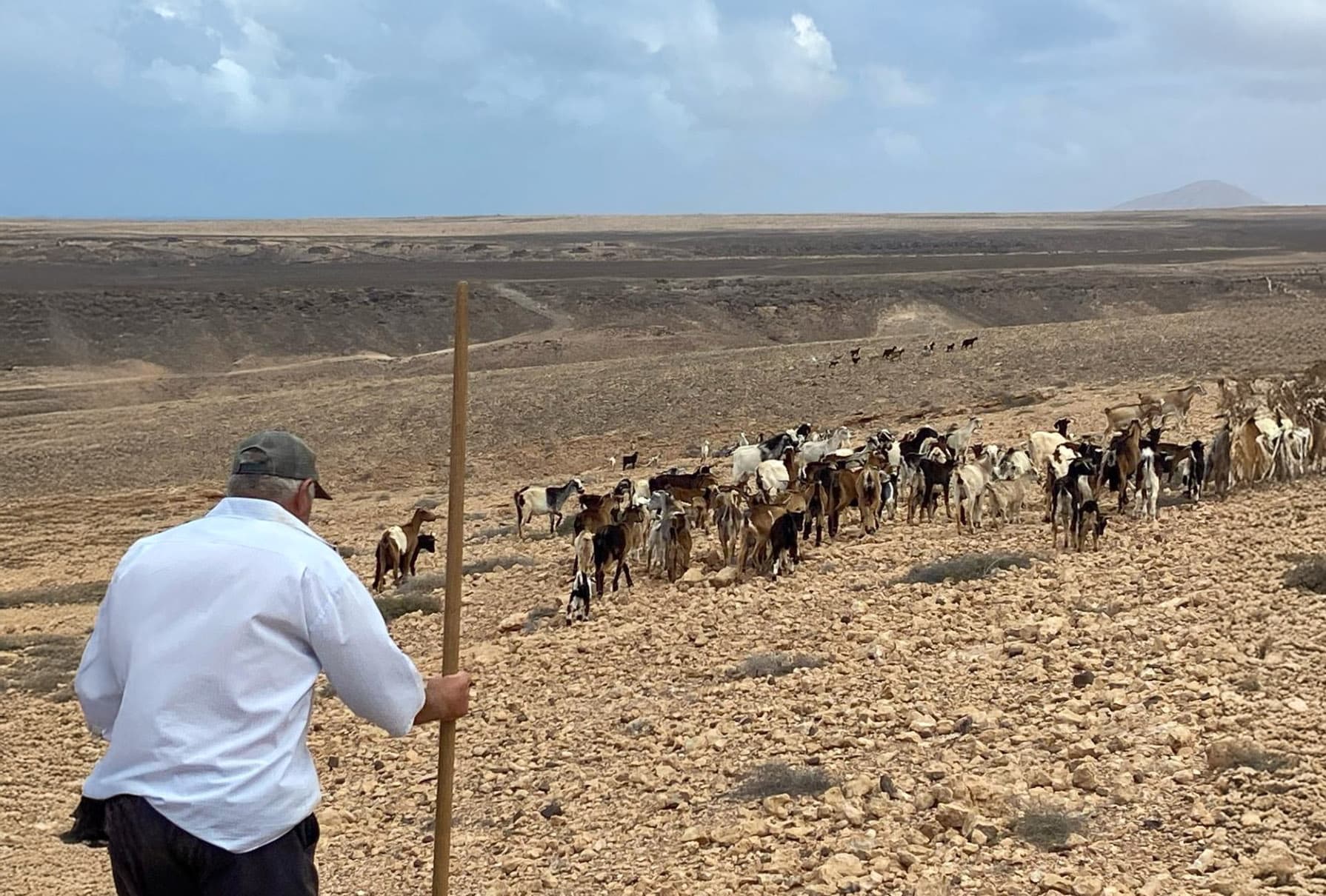
For those visiting Fuerteventura for the first time, the interior landscape – arid, vast and seemingly silent – can be disconcerting. However, behind those plains, ravines and ridges hides one of the oldest and most unique cultural traditions of the island: the “apañadas”, an ancient livestock practice that is still alive today and has been declared an Intangible Cultural Heritage.
What are the “apañadas”?
” Apañadas ” are group gatherings in which shepherds come together to locate, round up, and organize free-roaming goats —known as “costa” goats—and drive them to large dry-stone pens called ” gambuesas.”
It is not a party or a show, but an essential activity for the care of livestock, passed down from generation to generation since pre-Hispanic times, long before the arrival of Europeans to the island.
Puerto del Rosario and the island’s largest concentration of livestock
Although Puerto del Rosario is now the administrative capital of Fuerteventura, its municipality is home to the highest concentration of livestock farming on the entire island, particularly in its vast rural areas: Tesjuate, La Ampuyenta, Tefía, Llanos de la Concepción, Casillas del Ángel, and the extensive coastal and mid-altitude regions.
The municipality is part of the Mancomunidad Ganadera de Casillas, one of the five in which the majorera livestock is traditionally organized. From these territories are convened and develop numerous apañadas throughout the year, making Puerto del Rosario in a key to understanding the traditional livestock of Fuerteventura core.
How to develop an apañada
The roundup begins before dawn. Under the coordination of the coastal commissioner —the highest traditional authority in these practices—the herders spread out across ravines, ridges, and mountains to close in on the herd.
With the help of shouts, whistles, Bardino dogs, and the traditional lata (shepherd’s staff), the goats are gradually guided toward the gambuesa.
Once inside the pen, fundamental tasks are performed:
- Separation of farrowing goats and calves
- Identification of owners
- “Godchild”, to recognize which offspring belongs to which mother.
- Traditional cattle branding
- Selection of animals for milking or removal from the shore
This entire process is governed by customary rules, which have been respected for centuries.
Brands, the identity of the farmer
Each farmer has his own brand, unique throughout the island, which is passed down within the family. These marks – formerly made with cuts on the ears or face – are officially registered in the town halls and are part of a traditional identification system that is, in itself, a cultural heritage.
An aboriginal legacy that lives on
The “apañadas” have their roots in the culture of the ancient Mahos, the pre-Hispanic inhabitants of Fuerteventura. In fact, the “gambuesas” are possibly the only indigenous structures in the archipelago that continue to be used for the same purpose for which they were built.
The associated vocabulary—baifo, gambuesa, jaira, teberite, lata—the gestures, the routes, and knowledge of the terrain all make up a collective body of knowledge deeply rooted in the landscape.
Protected cultural heritage
In April 2024, at the initiative of the Cabildo of Fuerteventura, the apañadas were officially recognized as an Intangible Cultural Interest in the category of knowledge and uses related to nature, sky and sea.
This recognition protects not only the practice, but also the knowledge, community values and identity that surround it.
Why it is important for the visitor
Knowing the apañadas allows visitors to understand the deeper Fuerteventura, which is not explained only with beaches and volcanoes. In municipalities like Puerto del Rosario, livestock is not the past: it is living heritage, cultural landscape and collective memory.
Watching a gambuesa, walking along the cattle trails, or listening to a shepherd talk about his brand is to get a glimpse of a way of life that has shaped the island for centuries and continues to define its identity today.
Las apañadas en Puerto del Rosario