Tefía
TEFÍA: LANDSCAPE, HISTORY AND MEMORY OF AN AGRICULTURAL VILLAGE IN THE MAJORERO INTERIOR
Tefía is a town in the interior of the municipality of Puerto del Rosario whose existence and development are deeply linked to the agricultural and livestock tradition that shaped life for centuries in Fuerteventura. Its territory, framed by plains, gentle hills and ravines, treasures a historical and cultural heritage ranging from the footprint of the ancient mahos to crucial episodes of the Spanish democratic memory.
Towards the middle of the XIX century, the place was referred to as a dependent payment by then of the municipality of Casillas del Ángel and appears described in 1849 in the fourteenth volume of the Geographical-statistical Dictionary of Spain and its overseas possessions, by Pascual Madoz, as a dependent payment of the municipality and parish of Casillas del Ángel: located in a plain at the foot of the volcanic mountains of the same name. Its fertile plain is abundant in rainy years and scarce in dry years. In its lands there are several sources not very abundant and brackish, the most, which are used only for the cattle. There are also three streams of salty water in the ravines called Los Molinos and Haruque in which eels are raised. They produce wheat, barley, barrilla, millo, cosco and there are some tuneras and trees of various kinds. They raise sheep, goats and camels. There is a chapel called San Agustín in which mass is celebrated every feast day at the expense of the neighbors who pay a chaplain. The coasts of this hamlet provide fishing and seafood during the summer season.
THE SPRINGS OF TEFÍA: A VITAL RESOURCE IN AN ARID TERRITORY
One of the most unique and determining elements for the historical occupation of Tefía was the presence of springs and water outcrops in its vicinity, exceptional resources on an island marked by aridity and water scarcity. These springs, although of limited flow and sometimes brackish, were for centuries a strategic asset that conditioned the settlement and economic activities of the area.
The descriptions of the mid-nineteenth century already pointed out the existence of “several sources of water, not very abundant and brackish, which the neighborhood uses for their livestock”. This presence of water, however modest, made Tefía a privileged place within the insular context, allowing the stable settlement of the population and the development of subsistence agriculture, which in other areas was unfeasible.
The importance of these springs transcended the merely economic: in a society where water was the most precious resource, the places that had permanent outcrops acquired a territorial centrality that was reflected in the organization of space, population patterns and social relations. The springs of Tefía allowed not only the supply of livestock, but also the development of small vegetable gardens and the maintenance of the population in an adverse environment.
This water heritage, today less visible due to the generalization of desalinated water and the new supply systems, is an essential part of the history of the town and explains to a large extent the continuity of the settlement in this enclave of the interior of Majorca.
CONQUEST AND TRANSFORMATION OF THE TERRITORY
The conquest of the island was initiated in 1402 by Jean de Béthencourt and Gadifer de La Salle, integrating Fuerteventura into the sphere of the Crown of Castile under a feudal regime. After the incorporation of the Herrera and Ayala families into the seigniory, a redistribution of land and the implementation of a new administrative and religious model took place.
The logic of land use developed by the mahos persisted and adapted to the new manorial system, giving rise to small rural settlements dedicated mainly to goat farming and subsistence agriculture. The settlement of Tefía was structured around scattered houses, related to small agricultural estates in which techniques adapted to the climate and soil of the island were practiced.
TRADITIONAL ECONOMY: GAVIAS, LIVESTOCK AND CLIMATE ADAPTATION
Like other villages in the interior of Fuerteventura, Tefía developed an economy based on the livestock-cereal binomial. The technique of the gavias, a traditional hydraulic system designed to capture and retain runoff water, allowed the cultivation of wheat, barley and legumes mainly in an environment of low and irregular rainfall. This ingenious system of floodable terraces, unique in the Canary Islands, transformed the landscape and made possible a rainfed agriculture adapted to the arid environment.
Cereal agriculture, the cultivation of legumes and fodder crops and grazing formed the economic basis of the area, whose inhabitants developed a deep knowledge of the arid environment.
Goat breeding, a structural nucleus since aboriginal times, continued to be the main economic activity. Artisanal cheese production, the predecessor of today’s majorero cheese with denomination of origin, was part of a domestic economy oriented both to self-consumption and island exchange.
TRADITIONAL ARCHITECTURE AND ETHNOGRAPHIC HERITAGE
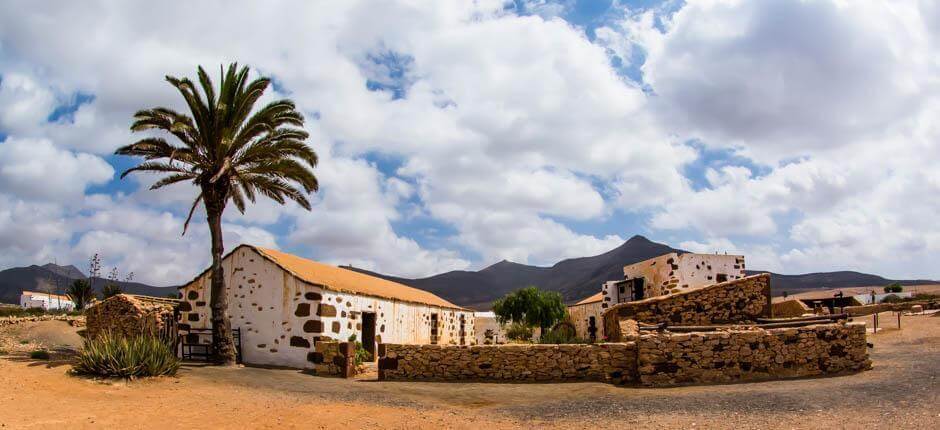
The traditional architecture of Tefía responds to the functional logic of rural life in Majorca: whitewashed earthen houses, dry stone walls, livestock corrals, threshing floors and cisterns for storing water. Each element of the built landscape is part of a material culture that has evolved over centuries, maintaining inherited techniques and solutions adapted to the volcanic and arid territory.
THE TEFÍA MILL
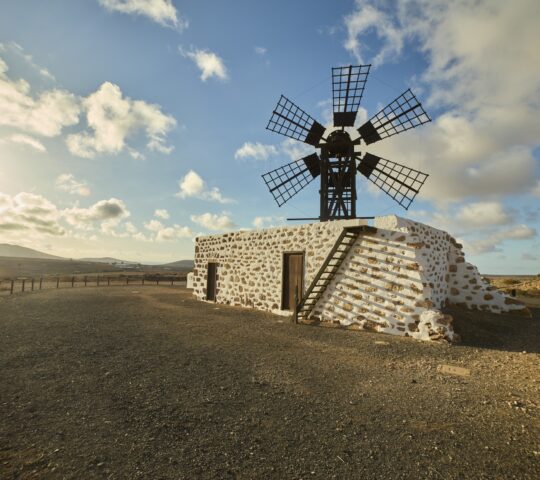
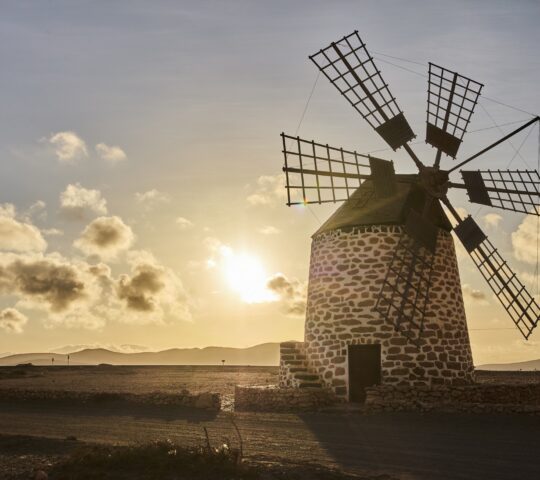
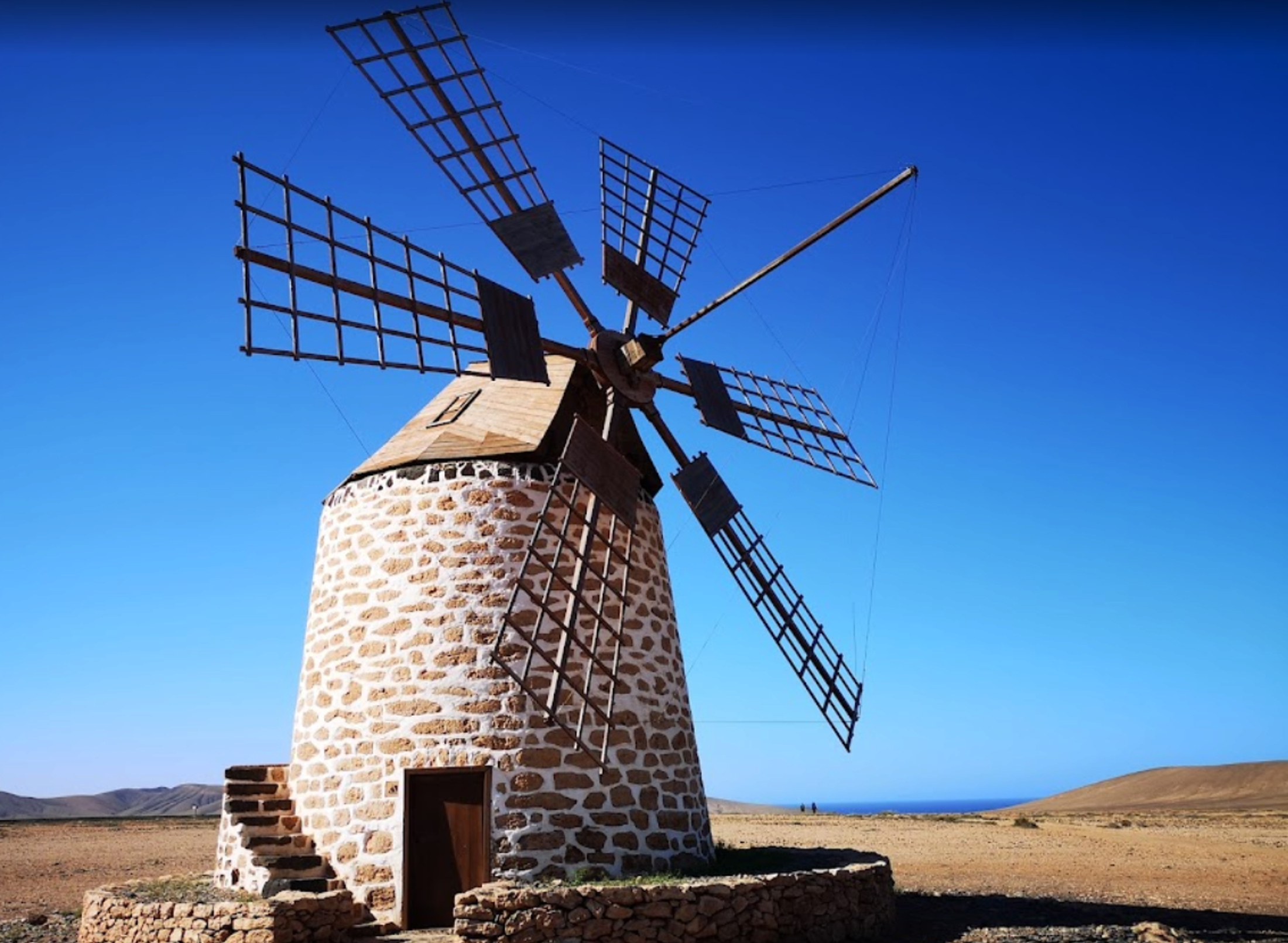
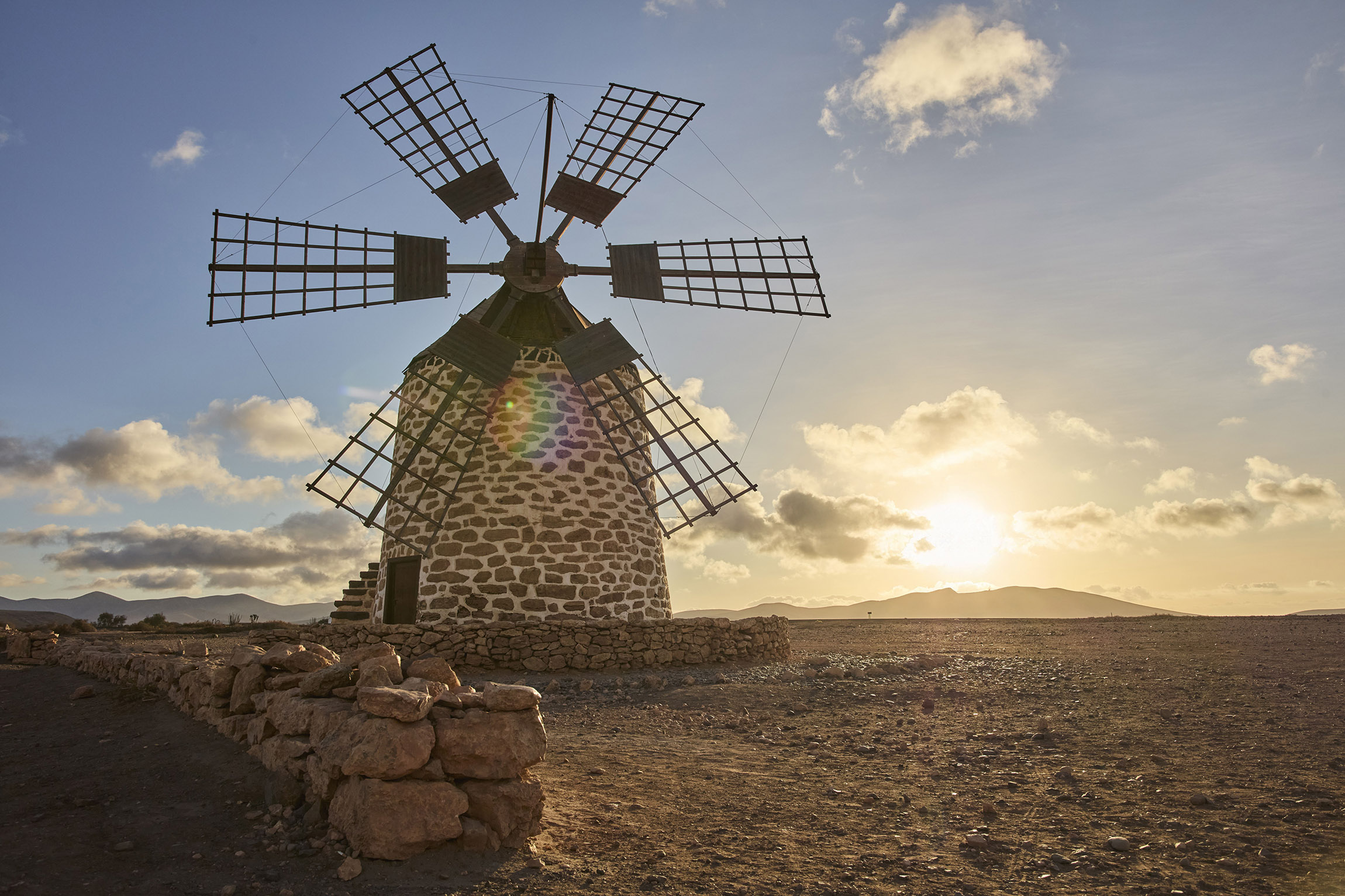
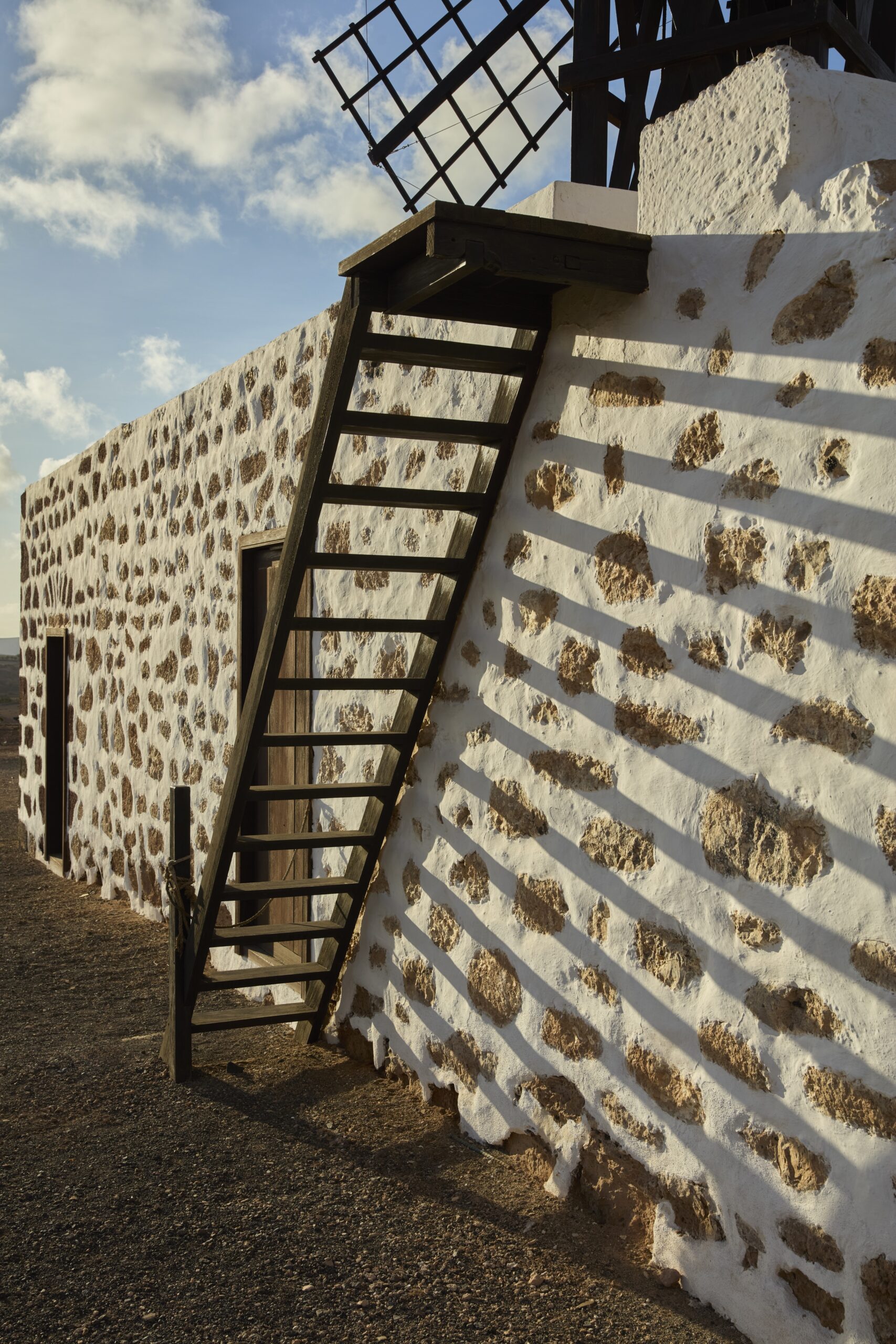
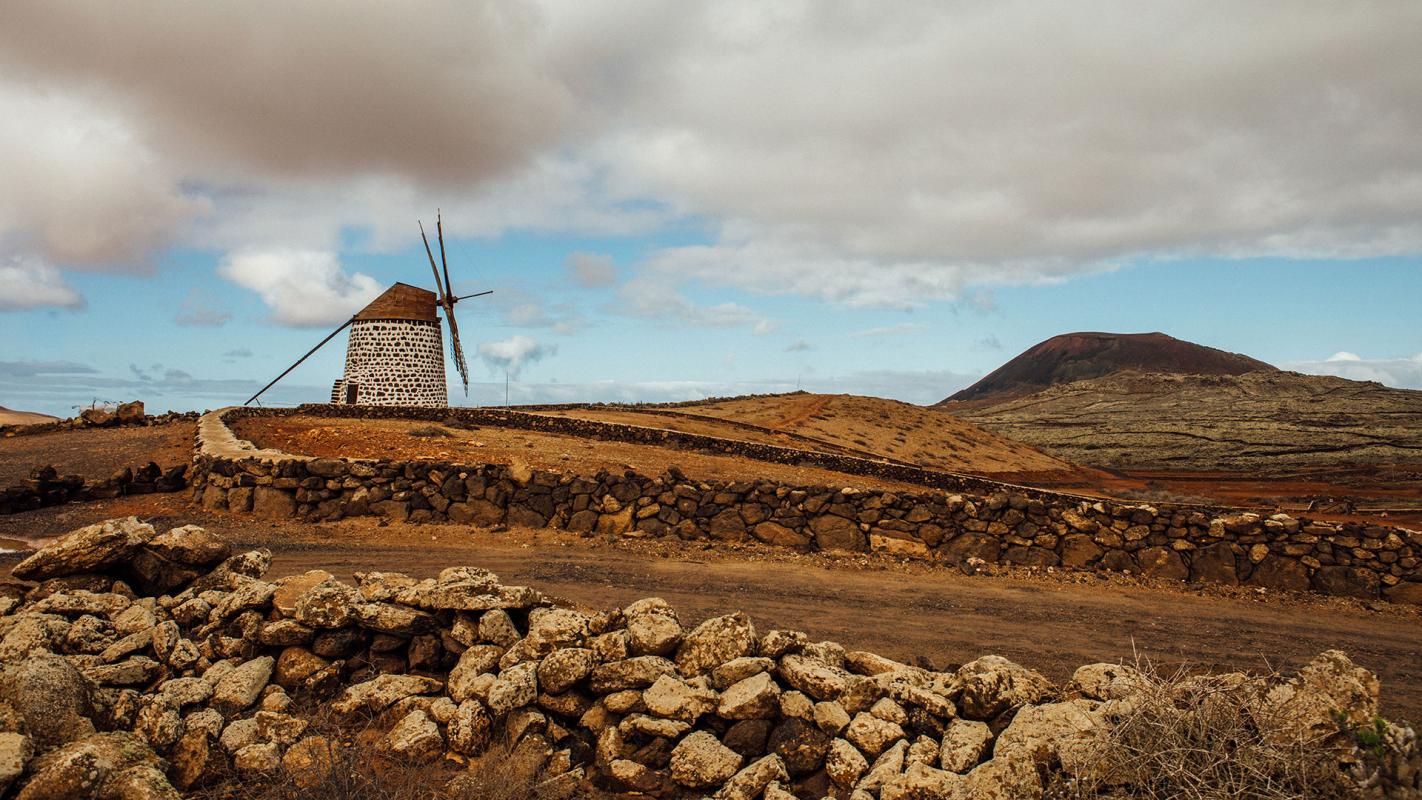
Among the vestiges of Tefía’s agricultural past, the Molino de Tefía stands out, an infrastructure that symbolizes the importance of cereal processing for the production of gofio, a traditional food in Fuerteventura since pre-Hispanic times. This mill, with its six blades, was built in 1930 for grinding cereals, taking advantage of wind energy in an area where this resource was abundant and free.
The location of the mill was not accidental: its construction in the vicinity of Tefía responded to the need to transform the cereal cultivated in the gavias of the region, avoiding long journeys and facilitating the access of the farmers of the area to this essential service. For decades, the mill was a meeting point and nerve center of the local economic activity, where the farmers came with their harvests to obtain the gofio that constituted the basis of the traditional food.
LA MOLINA DE TEFÍA
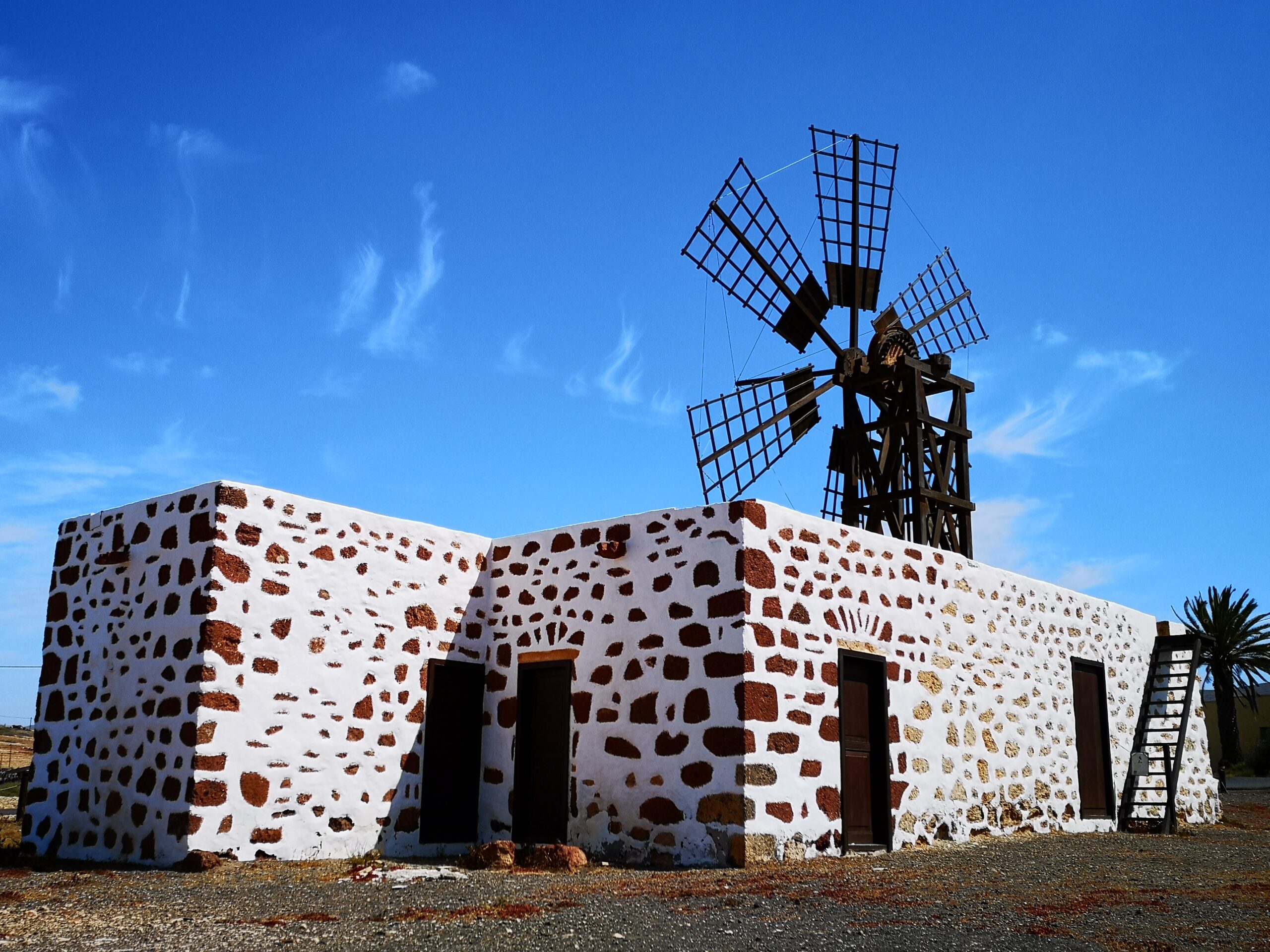
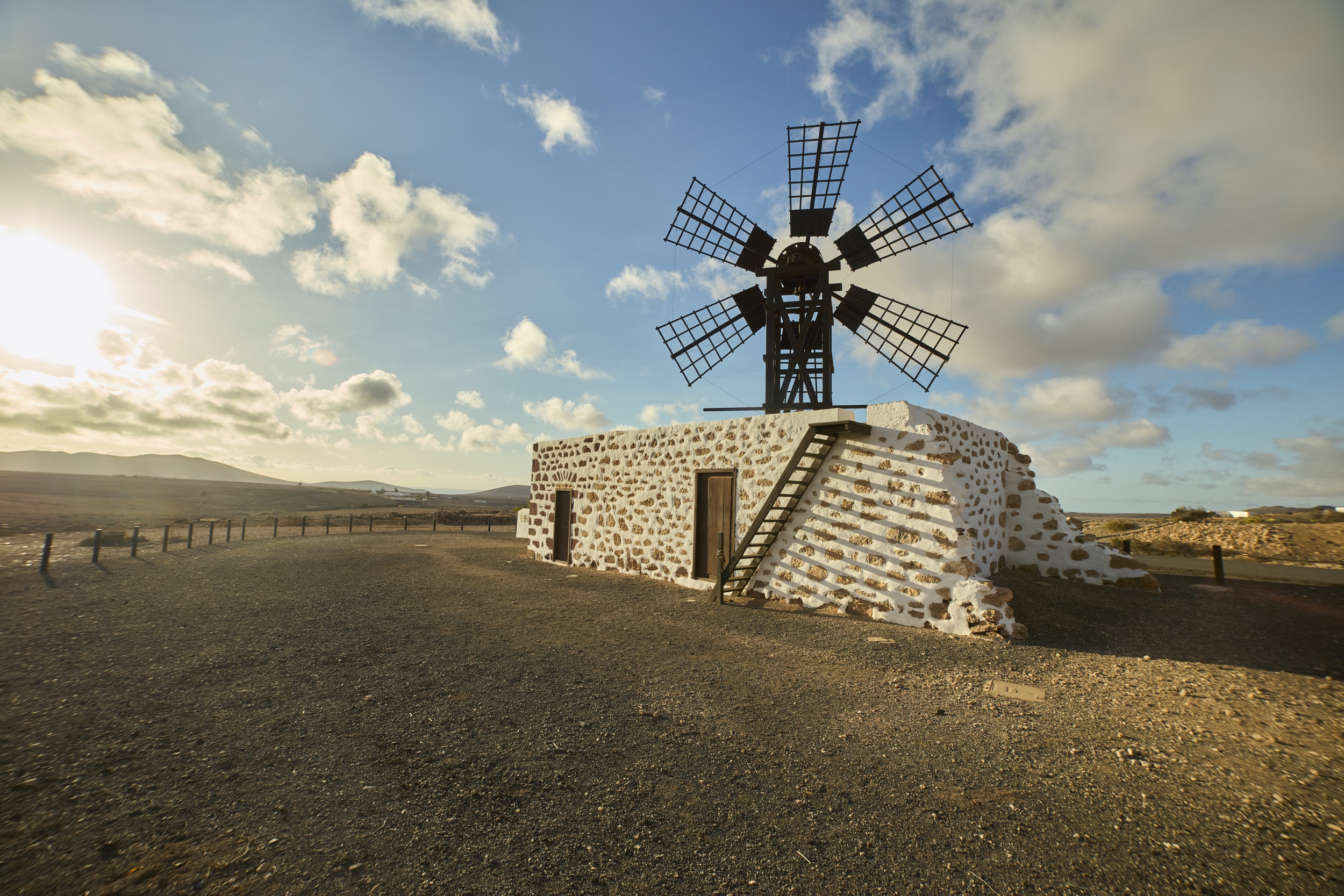
Next to the windmill is the Molina de Tefía, a more modern construction that made it possible to concentrate the entire milling process on a single floor, facilitating the miller’s work and improving performance. This installation represents the technological evolution of cereal milling, adapting to new needs without losing the essential function of service to the agricultural community.
Both constructions, the mill and the mill, reflect the importance of gofio as a food base and the ingenuity of a society adapted to an arid and windy territory. They are also a material testimony of the traditional economy based on the binomial livestock-cereal that for centuries sustained life in the interior of Fuerteventura.
THE HERMITAGE OF SAN AGUSTÍN
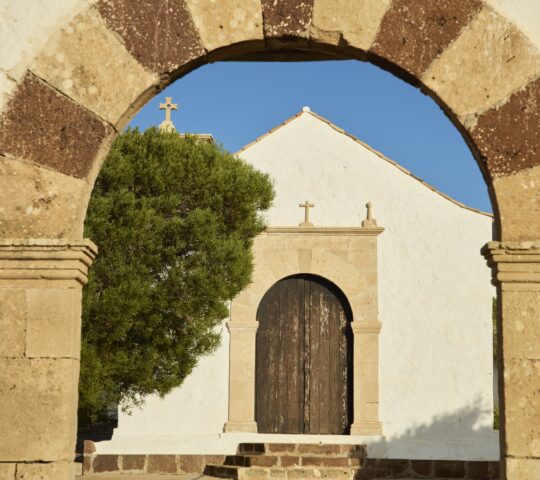
The hermitage of San Agustín, erected in the pago de Tefía at the beginning of the XVIII century and successively reformed until acquiring the present appearance, represents one of the landmarks of the local patrimony. Built thanks to the efforts of the neighbors, this hermitage reflects the importance of religion in the development of the first rural hamlets. Its architecture, which preserves Mudejar elements, makes it one of the oldest temples in the municipality.
THE ECOMUSEUM OF LA ALCOGIDA
One of the most outstanding elements of Tefía’s cultural heritage is the Ecomuseum of La Alcogida, an ethnographic complex that reproduces and preserves the traditional rural life of Majorca. This open-air museum integrates a series of restored houses and agricultural buildings, preserving their traditional furniture, tools, ovens, artisan workshops and elements of the daily life of the rural past.
The ecomuseum recreates 19th century rural life in Majorca through seven restored traditional houses, each linked to old families of the area. Here visitors can see live crafts, from basketry and fretwork to milling and clay work, as well as learn about the trades, livestock and traditional architecture.
La Alcogida not only shows the architecture of different social strata, from humble farms to larger houses, but also acts as a living space of memory that illustrates how the inhabitants of Fuerteventura adapted and organized their life and work in a demanding environment.
THE AGRICULTURAL PENITENTIARY COLONY OF TEFÍA: MEMORY AND REPARATION
The history of Tefía includes one of the most complex and painful chapters of the island’s contemporary history: the Agricultural Penitentiary Colony of Tefía, active between 1954 and 1966.
Origin and context
Established by order of the Ministry of Justice on January 15, 1954 on land next to a military airfield, this facility operated during Franco’s dictatorship as an internment center for common prisoners, political prisoners and, particularly systematically, homosexual men. The persecution of homosexuals intensified after July 15, 1954, when the Law of Vagrants and Malefactors was modified to include those considered “dangerous status” because of their sexual orientation.
The Agricultural Penitentiary Colony of Tefía became the main center of repression of sexual dissidence under Franco’s regime, the Canary Islands being one of the key points of the repressive judicial and penitentiary system that guaranteed the application of the law.
Living conditions
The inmates, more than a hundred of them, were subjected to forced labor from dawn to dusk, with the obligation to cut stones and fertilize infertile land. They slept in wards in unhealthy and overcrowded conditions, watched over by prison officers and their assistants who subjected them to regular mistreatment. The official objective was to convert this desert area into arable land through the forced labor of the prisoners.
Internment lasted a minimum of one year and a maximum of three, a sentence that was often served in several stages of confinement. Once released from the colony, the convicts were still subject to obligations such as declaring their domicile and the prohibition to reside in certain places.
Closing and recognition
The Agricultural Penitentiary Colony of Tefía was suppressed by Order of Justice on July 21, 1966. Despite its official closure and the initial attempts to hide or minimize the abuses, the memory of what happened has been surfacing over the years, giving rise to initiatives of recognition and social reparation.
In July 2025, the Secretary of State for Democratic Memory published the resolution to initiate the procedure to declare the former colony as a Place of Democratic Memory, recognizing its historical and symbolic significance in the struggle for rights and freedoms, as well as in the repression suffered by LGTBI people during the dictatorship.
This labor camp, described by some testimonies as a concentration camp without bars, was a space for the disciplining and repression of sexual and social dissidence under Franco’s regime. Recent public media attention, including the representation of these events in contemporary cultural works, has helped to make this chapter visible and contextualize it within the collective memory of the Canary Islands and Spain.
INTANGIBLE CULTURAL HERITAGE AND LIVING TRADITIONS
Beyond the material elements, Tefía treasures a rich intangible heritage. Oral traditions, knowledge related to shepherding, cheese making techniques, know-how in the construction of dry stone walls and the recipes of traditional Majorero cuisine are part of this legacy.
LOCAL HOLIDAYS
Tefía celebrates several festivities throughout the year that reflect its cultural heritage and community life. The Fiestas of San Agustín and Santa Mónica, celebrated in August and May respectively, include processions, religious events, music and traditional dances.
ASTRONOMICAL OBSERVATORY
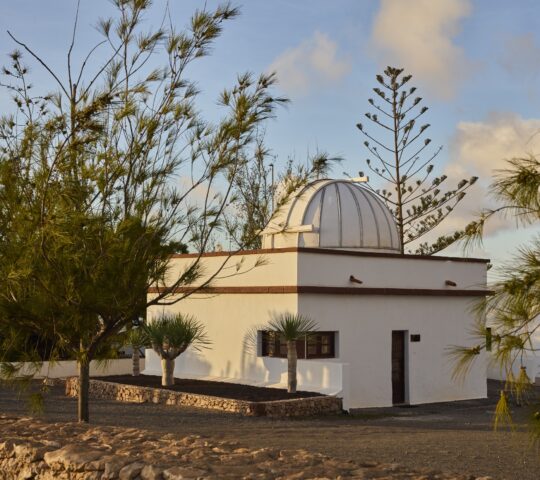
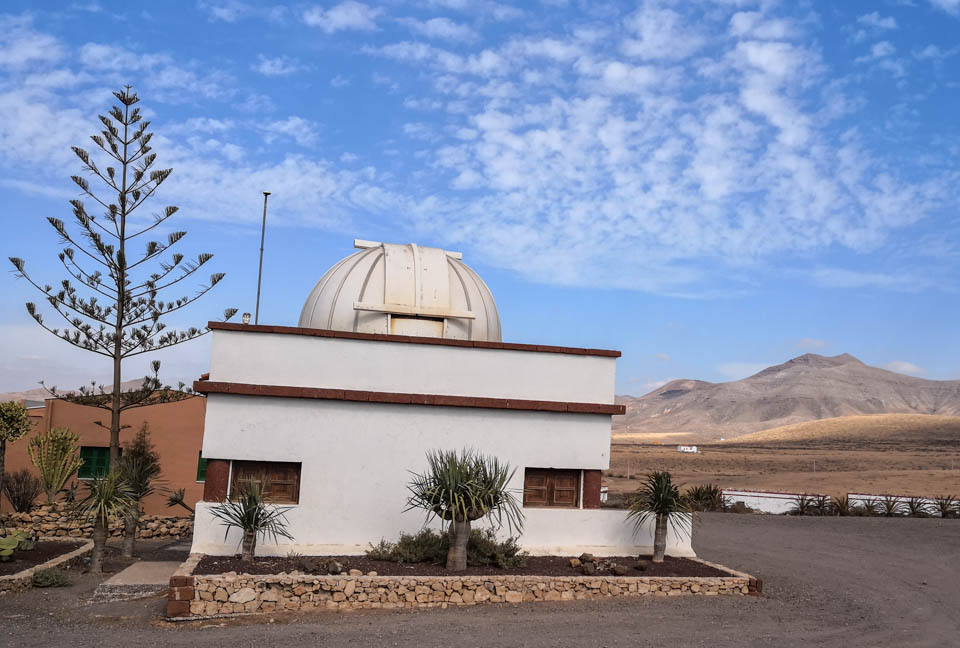
Tefía also houses the Astronomical Observatory of Fuerteventura, one of the best points on the island for stargazing thanks to low light pollution. From here you can see constellations like Orion and stars like Sirius or Canopus, making the visit an experience that connects earth and cosmos.
MONUMENT TO THE FALLEN OF THE PARATROOPER FLAG
In the Tablero de los Llanos de Muchichafe stands a monolith commemorating the accident during military maneuvers in 1972, in which 13 parachutists of the “Roger de Flor” flag died. This monument introduces an additional dimension of historical memory in the territory of Tefía.
HISTORICAL CONTINUITY AND TERRITORIAL MEMORY
The valorization of this heritage -material and immaterial, joyful and painful- is not only a question of identity, but also an opportunity to build a future that integrates the legacy of the past with the needs of the present.
In its whitewashed houses, in its gavias, in its fountains, in its ethnographic museum, in its mills, in the memory of the survivors of the penitentiary colony and in the energy of those who bet on new forms of agriculture, Tefía continues to write its history, that long history that began long before Europeans set foot on the island and that, transformed but not extinguished, is still alive in the heart of the Majorero interior.