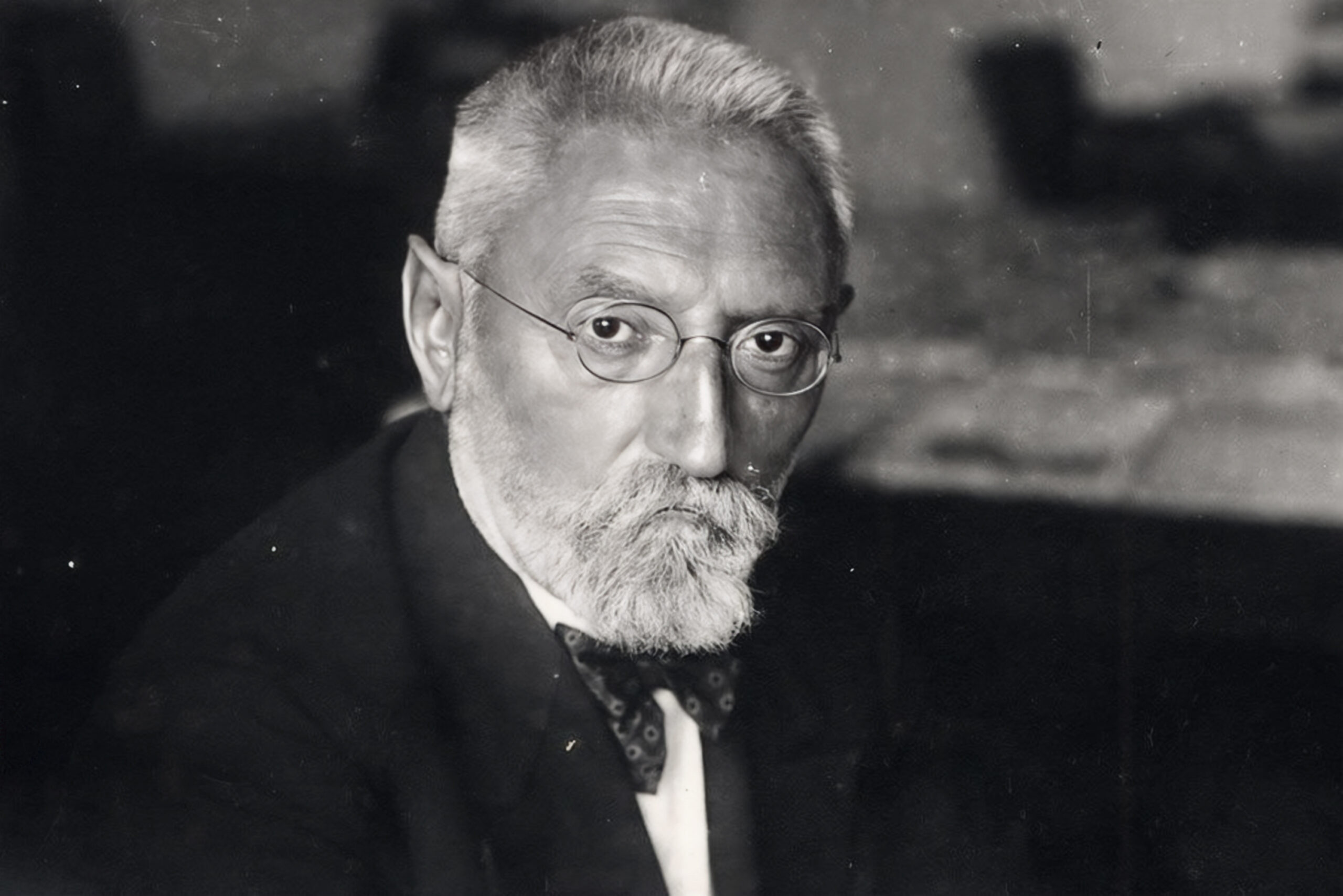
The relationship between Miguel de Unamuno and Fuerteventura was born in one of the most convulsive moments in the recent history of Spain. On September 13, 1923, General Primo de Rivera led a coup d’état that gave way to a military dictatorship characterized, among other measures, by the suppression of freedom of expression and the iron control of the press.
The harsh criticism that Unamuno had published against the monarchy and the military regime caused that, on February 20, 1924, the writer was banished, in addition to being dismissed from his academic positions as vice-rector and dean of the University of Salamanca. He himself would recall that episode with a phrase loaded with symbolism and personal memory:
“Precisely on February 21, 1924, the same day 50 years ago, when I was a child, I felt the second of the bombs that the Carlists dropped on Bilbao fall on the house next to mine. Fifty years after that time, the successors of that time took me out of my house”.
His exile generated a wave of protests among students, journalists and intellectuals, which spread throughout Spain, Europe and even Latin America. Even so, Unamuno was forced to leave Salamanca and go to a destination chosen precisely for its isolation and remoteness: Fuerteventura.
Arrival on a remote island
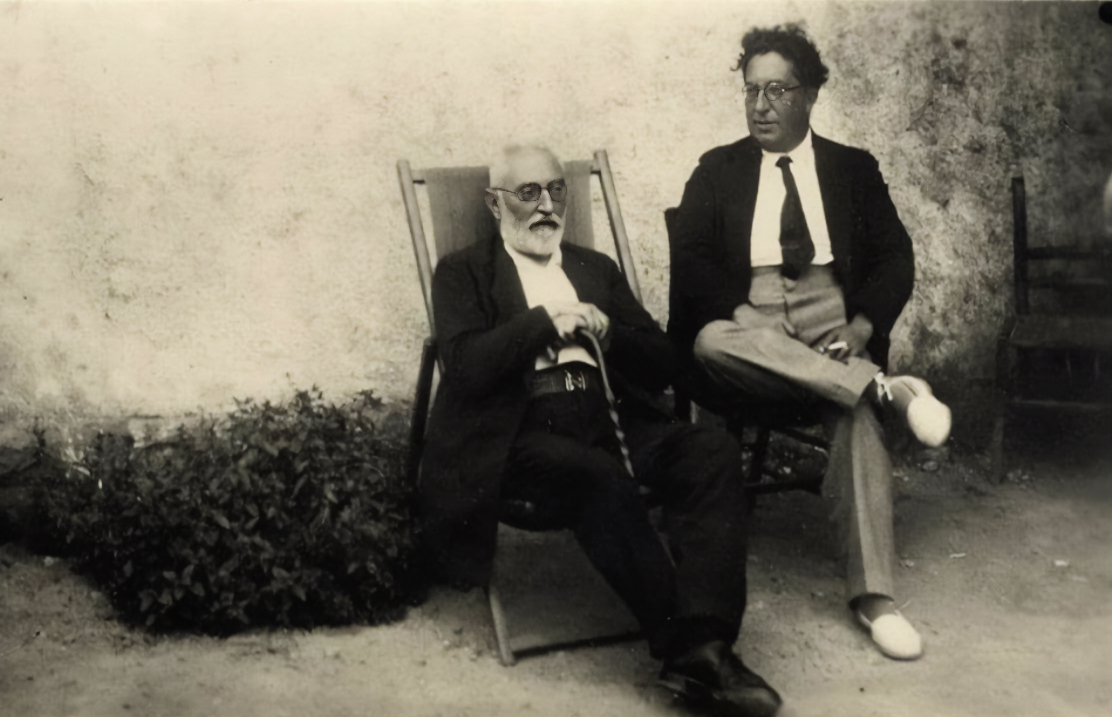
Unamuno arrived in Fuerteventura on March 10, 1924, with minimal luggage in which he carried only three books. At that time, the island was one of the most remote areas of the country, where news could take between eight and fifteen days to arrive.
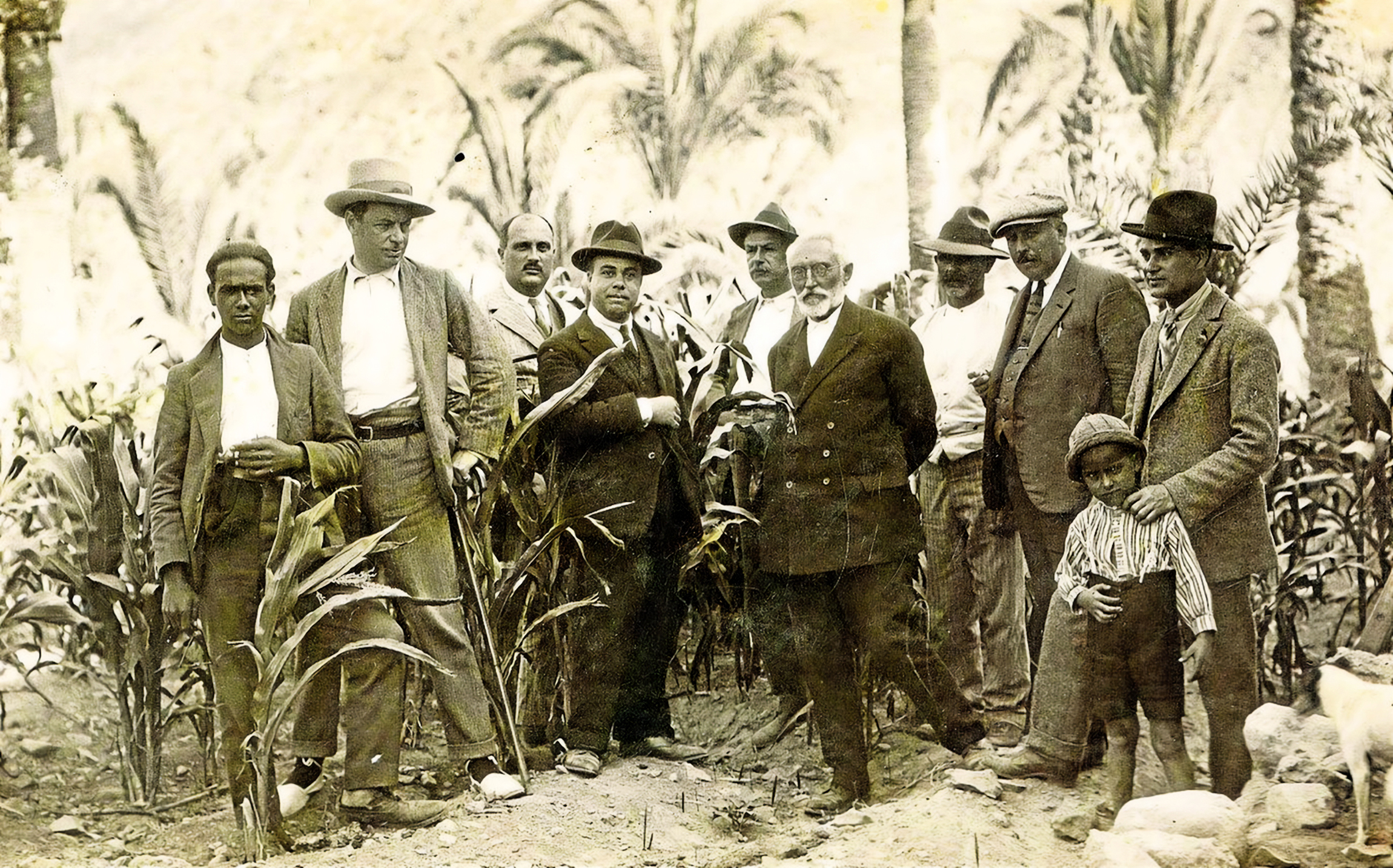
His first impressions were reflected in articles written from the island, where he described Fuerteventura as an austere and almost uninhabited territory, marked by the calm of the sky and sea, and the harshness of the landscape. Despite this initial vision, his presence turned the island into a place of intellectual and media interest. An anonymous journalist wrote at the time:
“Today the name of Puerto de Cabras is not unknown in both worlds, and it is even repeated by millions of lips and written […] by the most prestigious pens of contemporary literature.”
Daily life in Puerto de Cabras
During his four months of exile, Unamuno initially resided at the Hotel Fuerteventura, a modest pension located between the prison and the church, in the then Puerto de Cabras, now Puerto del Rosario. He shared the first days with Rodrigo Soriano, also exiled, but soon struck up a deep friendship with Ramón Castañeyra, a self-taught merchant and great reader, who received newspapers from Las Palmas and Madrid.
Unamuno dedicated his work De Fuerteventura a París (1925) to Castañeyra, with words that reveal the intensity of that relationship:
“It is only fair that it should be your name that first goes at the head of this painful book, for you were the true godfather of those sonnets…”
The writer also mentions in his texts local characters such as Víctor Martín, the town’s parish priest; Paco Medina, the innkeeper; or Pancho López, confidants and companions of gatherings and daily conversations.
Walks, excursions and literary creation
One of the most iconic images of Unamuno in Fuerteventura is that of his camel rides around Puerto de Cabras. He also made excursions to the interior of the island, touring it almost completely. Places like Betancuria, La Oliva or Pájara left a deep impression on his memory.
In his last years of life, Unamuno would remember Fuerteventura with nostalgia, going so far as to confess:
“How many times do I think I’d be better off there, when can I go back to revisit that and give him a hug there?”
His experiences were captured in poems, articles and letters, many of them published in newspapers such as Nuevo Mundo ( Madrid), Caras y Caretas (Buenos Aires) or El Tribuno (Las Palmas).
Unamuno’s House Museum, today

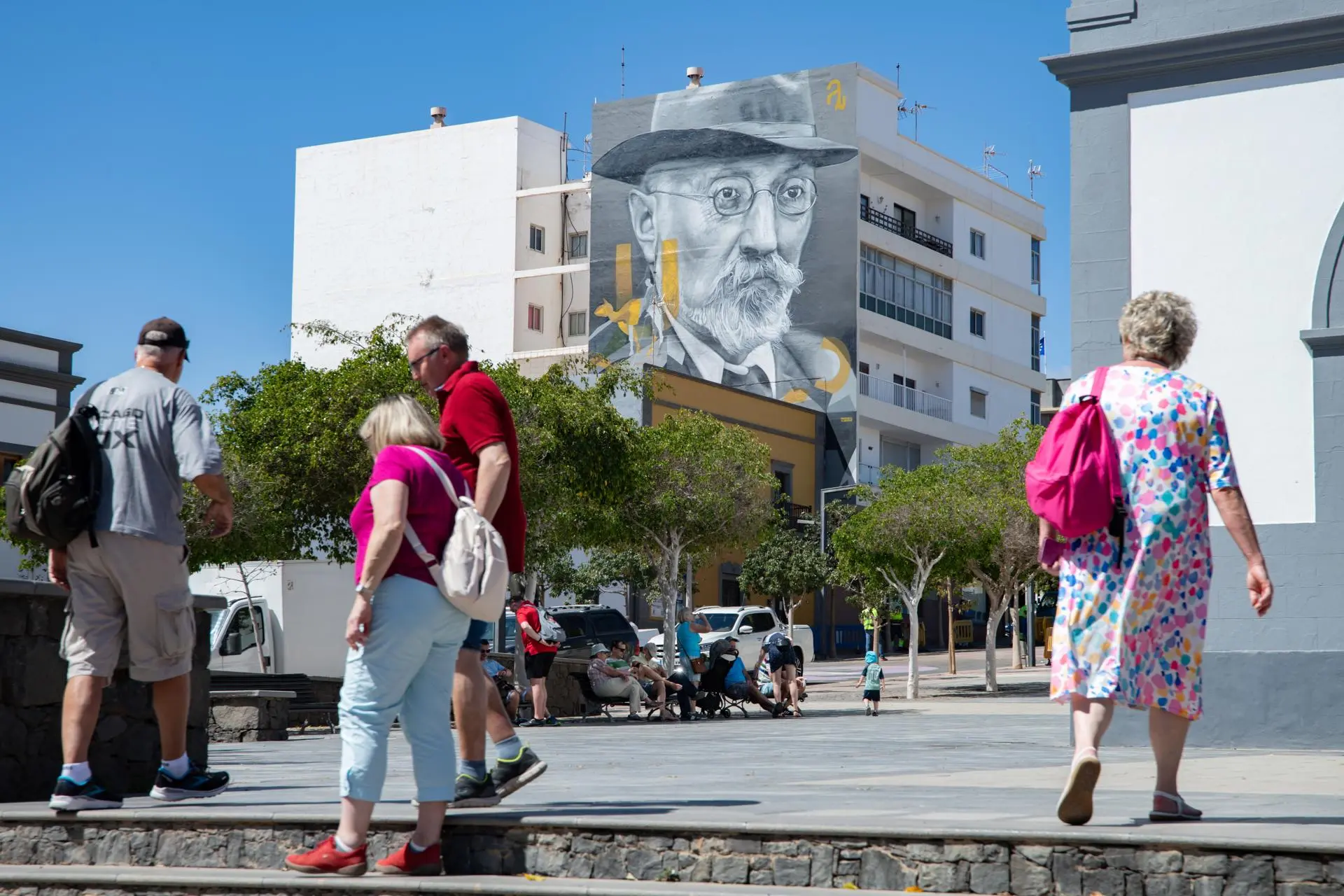
The former Hotel Fuerteventura is now the Casa Museo Miguel de Unamuno, one of the most visited cultural spaces in the capital of Fuerteventura. It preserves the rooms occupied by the writer, his bed, the desk where he wrote during his exile, the kitchen and the rooms where gatherings were held.
The walls of the museum collect fragments of his texts on the island, making the visit an intimate and literary experience. The museum is an essential part of the cultural heritage of Puerto del Rosario and allows us to understand the importance of Fuerteventura in the life and work of Unamuno.
Visitor information
Location: in front of the Parish Church of Puerto del Rosario, next to the Cabildo of Fuerteventura
Opening hours:
Monday to Friday: 9:00 to 14:00 h
Saturdays: 10:00 to 13:00 h
Sundays and public holidays: closed
Entrance: free of charge
Services:
Permanent exhibition hall
Museum and bibliographic holdings
Guided tours
Publications and facsimile editions
Cultural activities and conferences
Contact:
Phone: 928 862 376 / 928 532 299
E-mail: cultura@cabildofuer.es
Visiting the House Museum of Unamuno is to visit one of the most unique chapters in the cultural history of Fuerteventura and discover how, in the midst of exile, was born a literary work forever marked by the island.