Lime Kilns Interpretation Center
Lime Kilns Interpretation Center
Industrial memory and heritage in Puerto del Rosario
A space to recover industrial memory
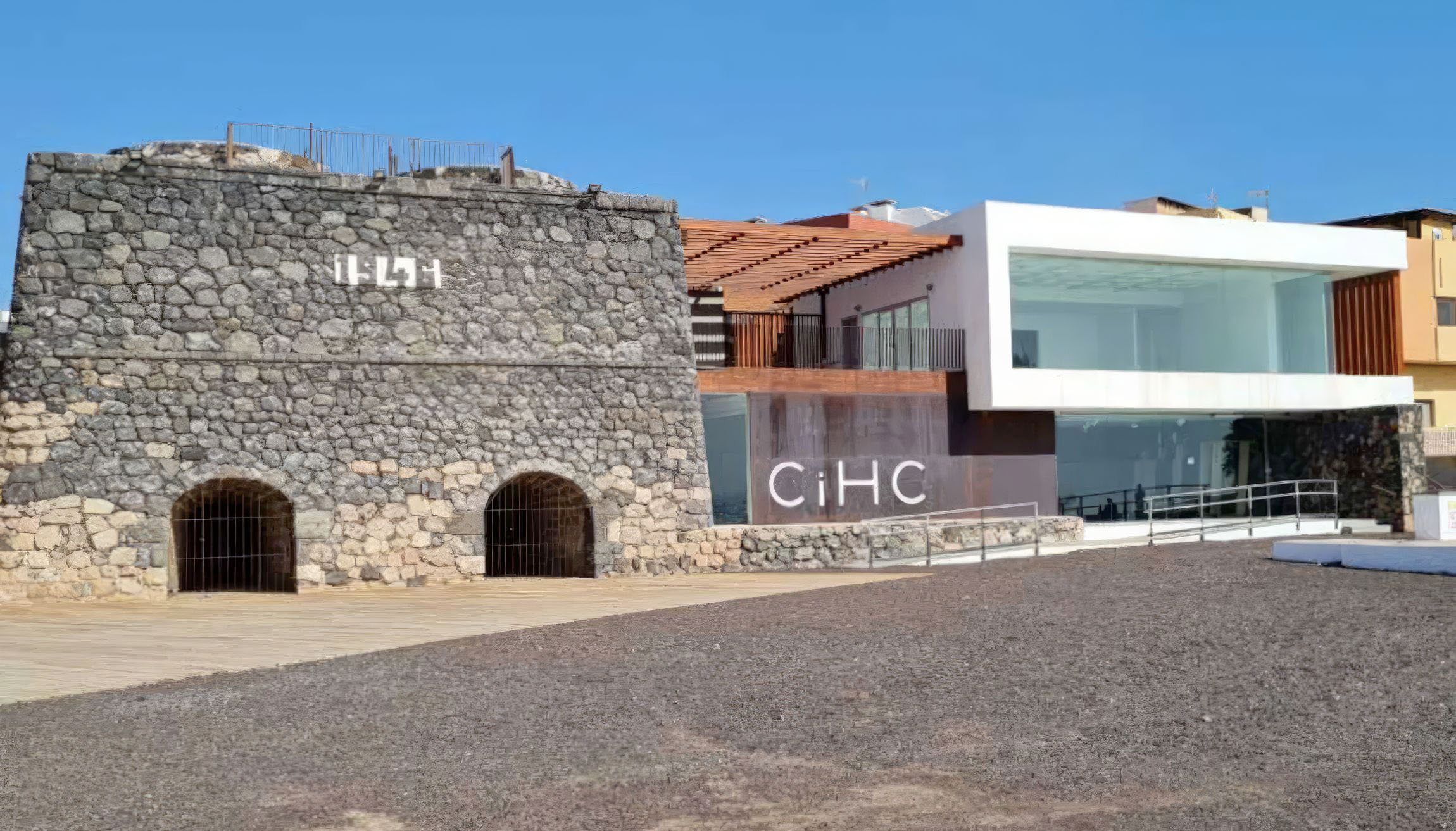
The Lime Kilns Interpretation Center is a unique cultural and museum space in Puerto del Rosario, located in the neighborhood of El Charco. Inaugurated in its refurbished version in September 2024, this center invites visitors to learn about one of the most relevant economic activities in the island’s history: the traditional production of lime. Also housing the city’s Tourist Office, it has become a meeting point between past and present, highlighting an industrial heritage that is fundamental to understanding the social, economic and urban development of the capital of the island.
What is lime and how is it produced?
Lime is obtained mainly by burning caliche stone (calcium carbonate, CaCO₃) in a kiln. The process, similar in artisanal and industrial kilns, consists of heating the stone between 800 ºC and 1000 ºC for several days, thus obtaining quicklime (calcium oxide, CaO). After firing, water is added to obtain slaked lime (calcium hydroxide, Ca(OH)₂), which can be white or grayish in color. Gray lime, contaminated by ash, is used for plastering walls and cisterns; white lime, which is purer, is used for whitewashing and other finer uses.
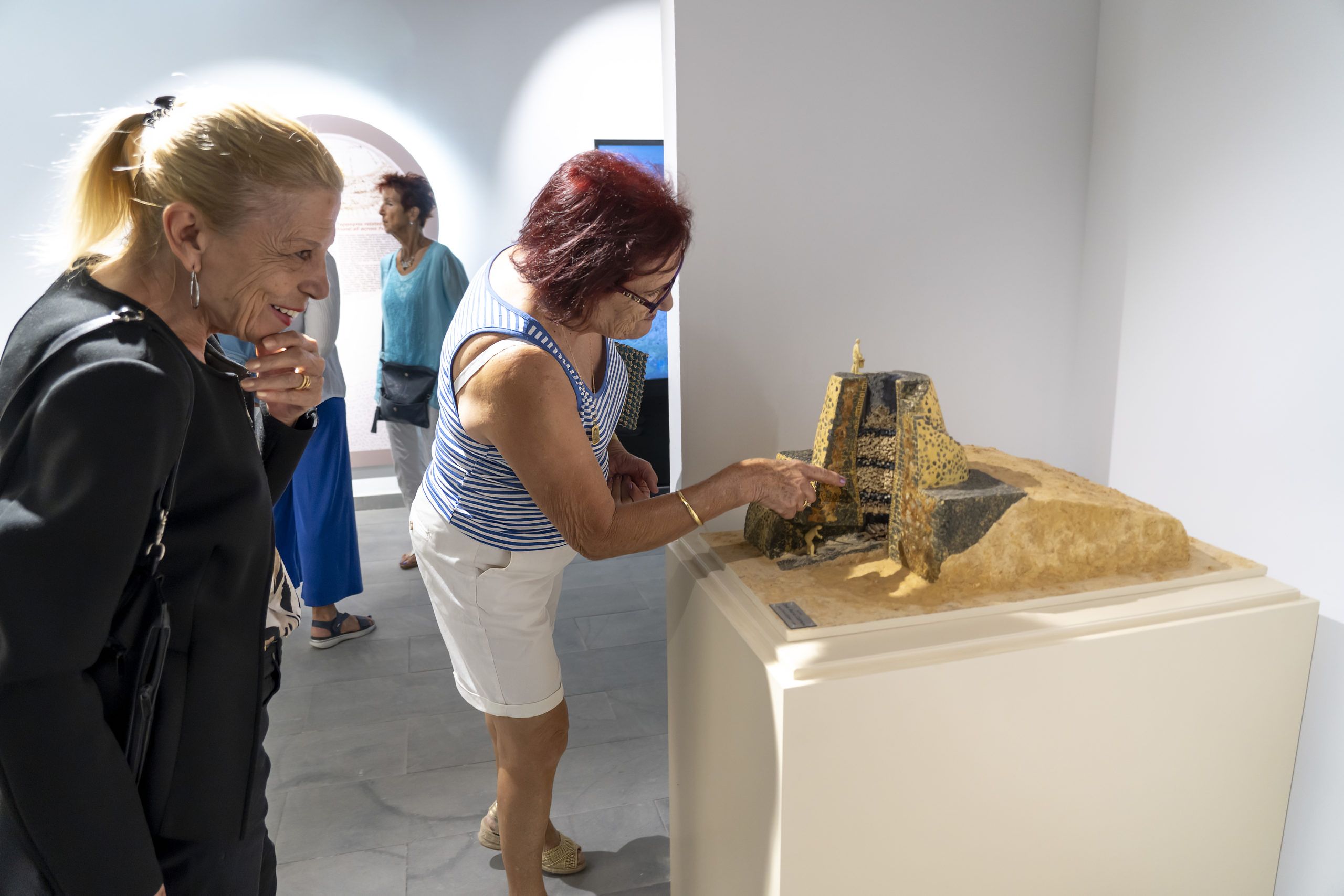
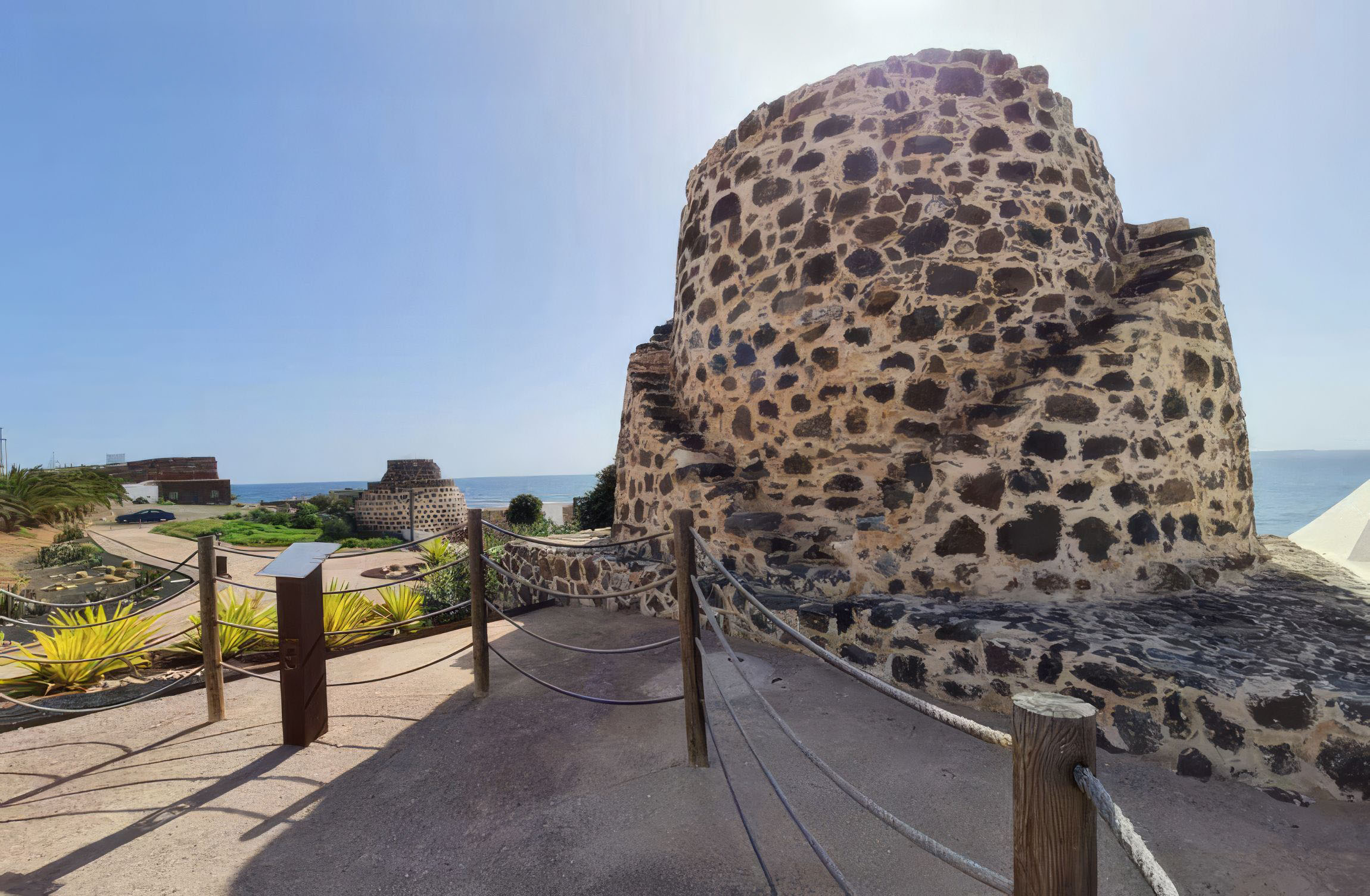
The traditional kilns of Fuerteventura have a truncated cone shape, with an upper opening to load stone and fuel, and a lower door to ventilate and extract the baked lime. They do not usually exceed eight meters high and four meters wide. The door is oriented in the opposite direction to the prevailing winds to control combustion.
A century-old industry in Fuerteventura
Fuerteventura is especially rich in caliche, so since ancient times the production of lime was a key economic activity. There are historical records dating back to 1560, when the Cabildo of La Palma ordered the purchase of lime stone from Fuerteventura. In the 1662 Agreements of the Majorero Cabildo, in view of the drought and the ruin of the crops, it was agreed to close the wheat and barley extraction, allowing ships to load only livestock and lime stone.
During the XVI, XVII, XVIII and a good part of the XIX centuries, the main wharfs for lime were El Tostón (north), Caleta de Fuste (east) and La Peña (west), controlled by the political and military administration of the island. Later, with the improvement of the natural harbors, kilns proliferated in practically all the coves that allowed the shelter of the ships: Ajuy, Los Estancos, Parque Holandés, La Torre, La Guirra, Puerto del Rosario, La Hondurilla, among others.
The economic importance of lime
The lime industry alleviated for centuries the crises of the economy of Fuerteventura, as it needed many workers and did not depend on the weather as the cereal production. Lime was the industrial activity of Fuerteventura par excellence, mainly for construction.
The uses of lime were multiple and essential in daily life:
- Construction and whitewashing of houses
- Hygiene of domestic spaces
- Preparation of mortars for public works
- Waterproofing of water tanks and cisterns
- Cistern disinfectant and insect and mosquito repellent.
Majorero lime was exported to other islands, to Madeira and even to the Iberian Peninsula. It was always transported already slaked to avoid its chemical reaction in contact with water, especially in wooden ships.
The heyday: Puerto del Rosario as “Puerto de la Cal”.
The greatest demand for majorera lime occurred between the end of the 19th century and the beginning of the 20th, coinciding with large infrastructure works in Tenerife and Gran Canaria -the Puerto de la Luz, masonry dams, irrigation ditches and ponds-. The engineer Juan de León y Castillo pointed out the importance of majorera lime for those resistant mortars.
But it was between the nineteenth and twentieth centuries, and especially during the Franco regime in the decades from 1950 to 1970, when the industry reached its maximum expansion. During this period, companies emerged that built real factories, with larger furnaces, ramps, sheds, rails and wagons. Puerto de Cabras then became the “Port of Lime”, thanks to two decisive advantages:
- It had the first dock on the island (inaugurated on October 7, 1894).
- Since 1877, the municipal coffers had been taxing loading and unloading operations, which allowed the City Council to benefit from the export boom.
The “white cargo” -lime stone and its derivatives- was the main merchandise leaving through the dock. At the same time, coal carriers arrived with anthracite from the United Kingdom or peninsular coal to feed the furnaces.
Furnace work: toughness and dignity
The process was exhausting. After choosing a quarry, they proceeded to the “slacking”: removing caliche blocks with picks, wedges, hammers and augers. With the mandarrias (large hammers) and the stone hammer, the blocks were reduced to flakes about 15 cm thick. The material was transported in baskets of about 10 kilos, on the shoulders of workers or with donkeys and mules, to the upper opening of the kiln.
In the furnace, layers of stone and fuel (wood, dried gorse, charcoal) were interspersed. The ignition was started and the fire was transmitted for days. The firing ended when the smoke turned white. Stowing the lime in the holds of the ships was one of the hardest jobs.
For many neighbors, remembering those times evokes the hardness of work on the island. As Juan de Vera Chocho wrote: “we were, are and will be slaves, although now we serve with jacket and tie”. But it was also a source of income for humble families, who supplemented their economy by pulling stone or collecting gorse for combustion.
Decline and end of an era
The lime industry succumbed to the strength of cement in the 1970s. In 1974, Mr. Manuel Castañeyra Schamann demolished the offices of the company Hornos de Cal Risco Prieto, closing an economic stage. Almost at the same time, other industrialists such as Don Federico (the “King of Lime”) or Don Jacinto Lorenzo, whose kilns in El Charco barely lasted twenty years, retired.
With them, a page of local history was closed. However, the collective memory deserves to know that stage with respect to the ancestors who worked hard to move the island forward.
The interpretation center today
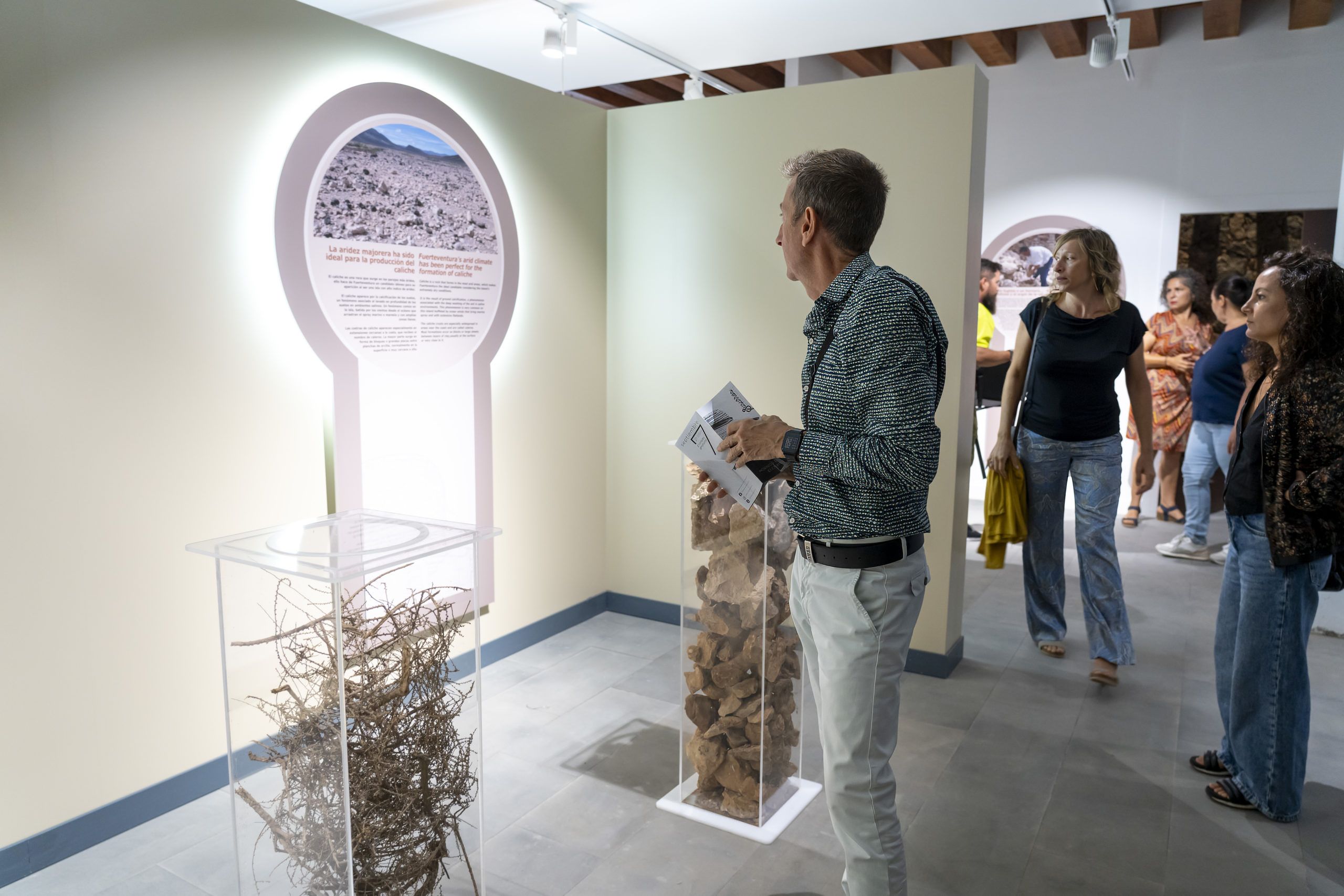
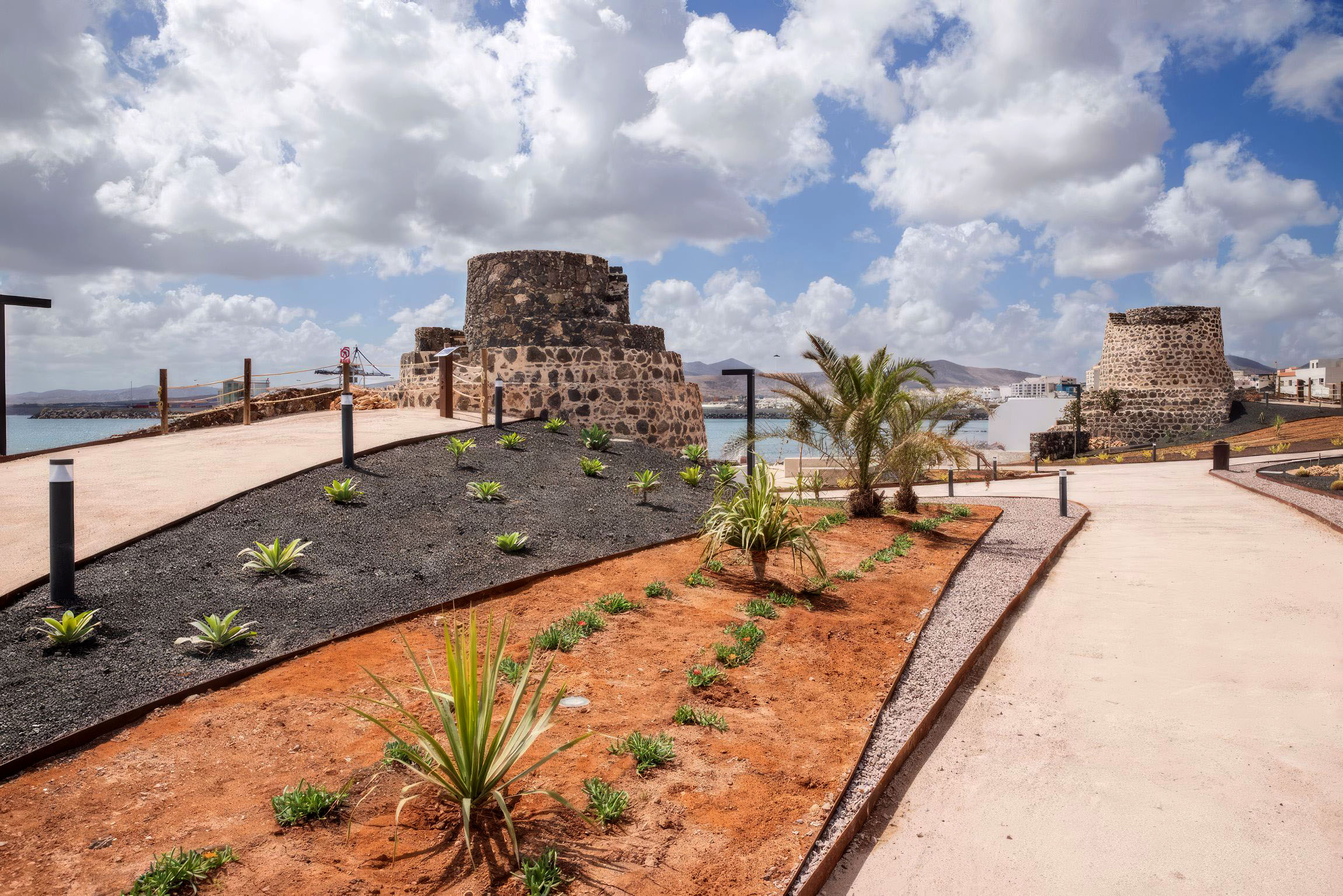
The museum is located in some of the original restored ovens in the El Charco neighborhood. The rehabilitation has harmonized the original industrial architecture with a contemporary museum space. Visitors can tour:
- Authentic ovens
- A didactic exhibition on the complete process of lime production.
- Explanatory panels, reproductions of traditional tools, and audiovisual materials
Since its reopening in September 2024, the center also houses the Puerto del Rosario Tourist Office, reinforcing its role as a point of information and reference for those who wish to delve deeper into the island’s culture.
A legacy to understand Fuerteventura
Visiting the Lime Kilns Interpretation Center allows to understand how a traditional activity, apparently modest, was for centuries a key economic engine for the island and a reflection of the adaptability of its population. This industrial heritage offers a historical reading of the economy of Fuerteventura and serves as a bridge to understand the transformation of Fuerteventura from an agrarian and artisan society to a diversified economy and connected with the outside world.
Unfortunately, only the ovens of La Guirra (municipality of Antigua) have merited legal protection under the Canary Islands Historical Heritage Law. Therefore, the opening of this center in Puerto del Rosario is particularly relevant: it represents a defense of heritage elements of undoubted historical and ethnographic value that, for too long, lacked a museum or interpretation center worthy of the island of lime stone and plaster.