Hermitage of San Agustín
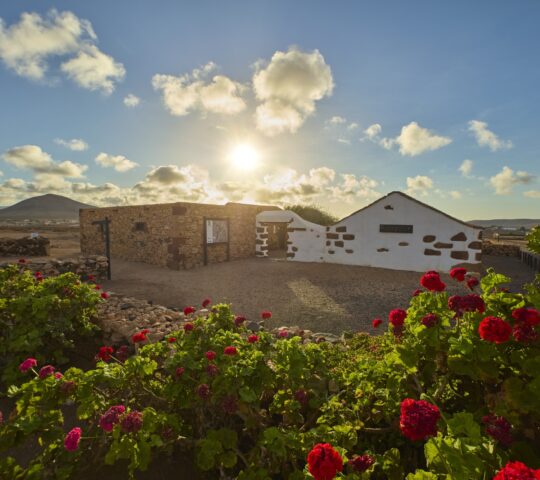
The Hermitage of San Agustín is located in the pago de Tefía, within the municipality of Puerto del Rosario, specifically in the enclave known as Tefía de Arriba. This temple is one of the oldest and most representative examples of the rural religious architecture of the municipality.
The eighteenth century was a period of relative economic prosperity for Fuerteventura, which brought with it an increase in population and the appearance of new hamlets in the interior of the island. In this context, the communities began to demand their own places of worship to comply with religious precepts, being Tefía one of the first nuclei in promoting the construction of its chapel.
In 1713, a license was requested from the Cathedral Chapter to begin the work, which was paid for entirely by the neighbors. On March 19, 1714, the church was blessed under the dedication of St. Augustine. The first building was modest, although with the passage of time, thanks to the contribution of the neighbors and the income obtained from the sale of products from the land and livestock linked to the chapel, the building underwent several extensions and renovations that gave it its current configuration.
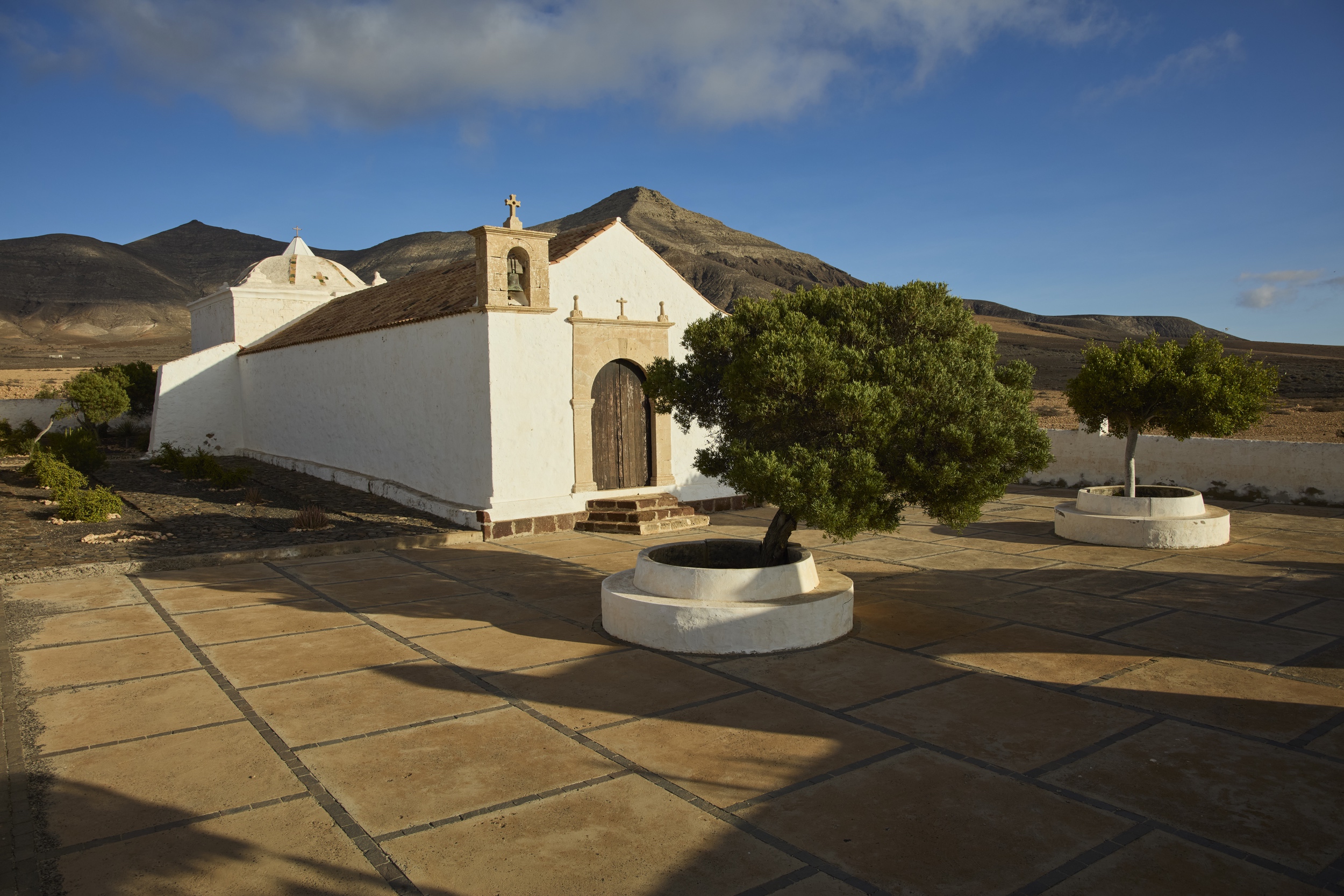
The oldest part of the complex corresponds to the nave, covered by a gabled roof with tiles. The presbytery, differentiated in height, is covered by segments of adobe that converge in the center and is finished off on the exterior with a spire crowned by a small wooden cross. The two-story sacristy is attached to the south wall in the chancel area.
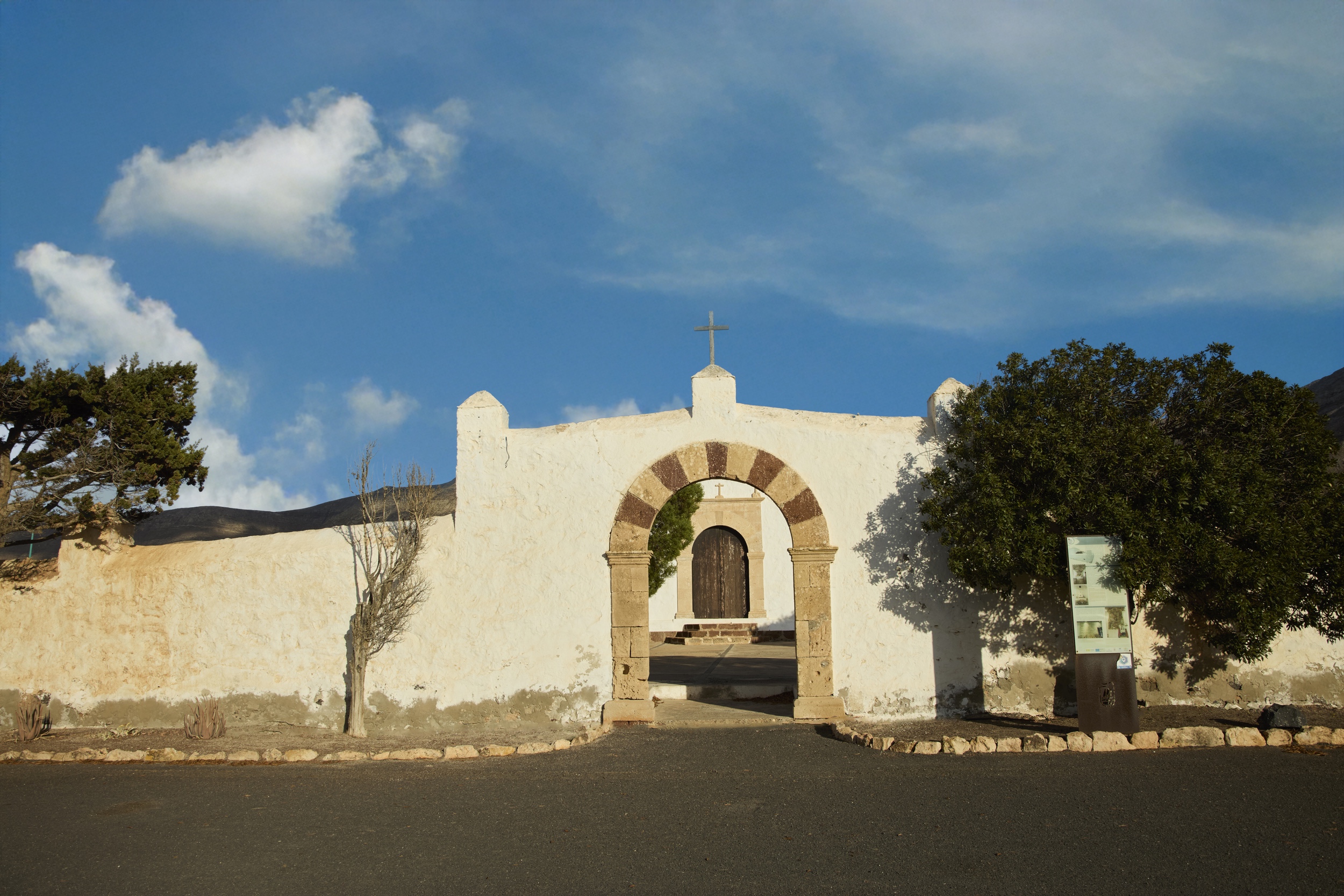
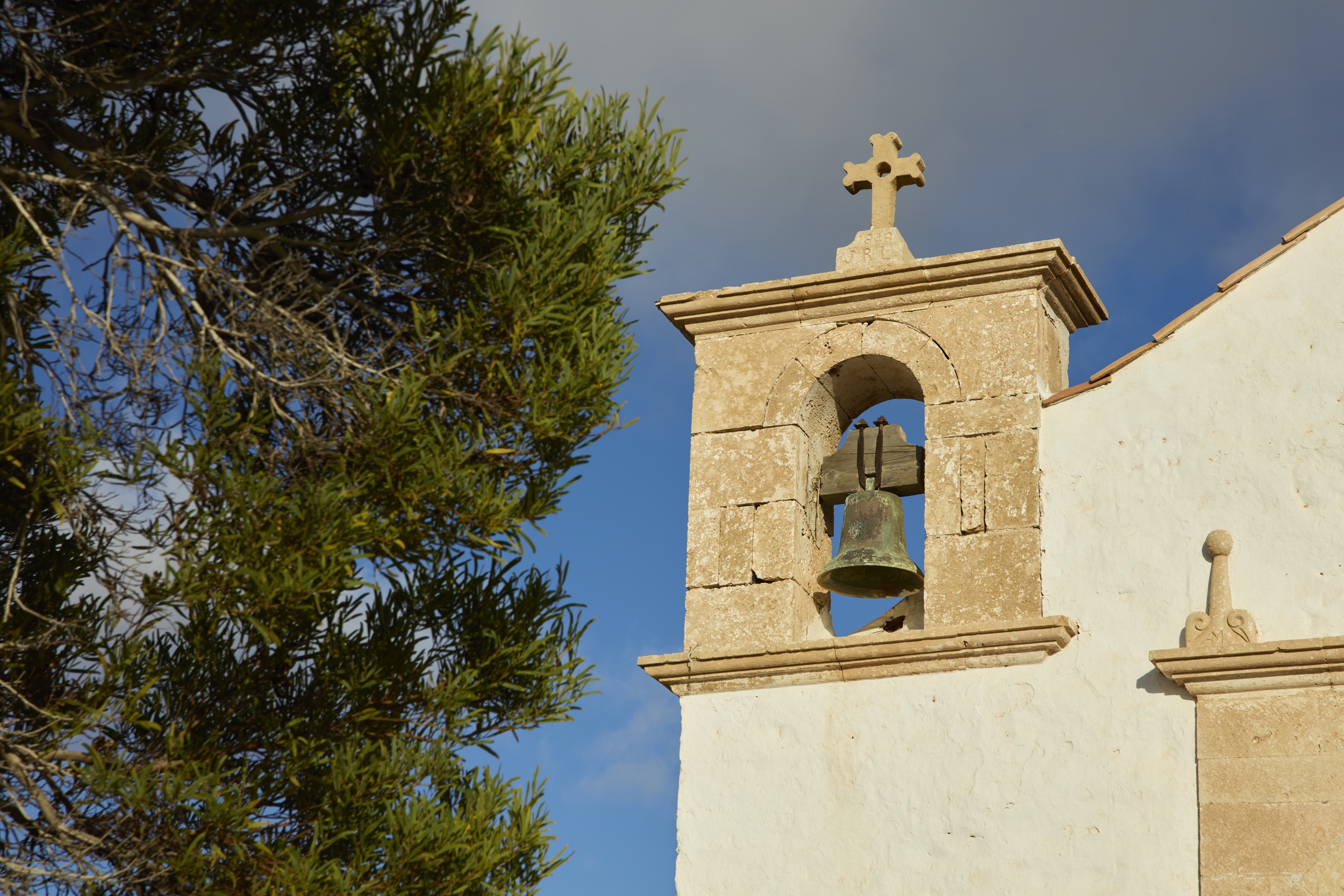
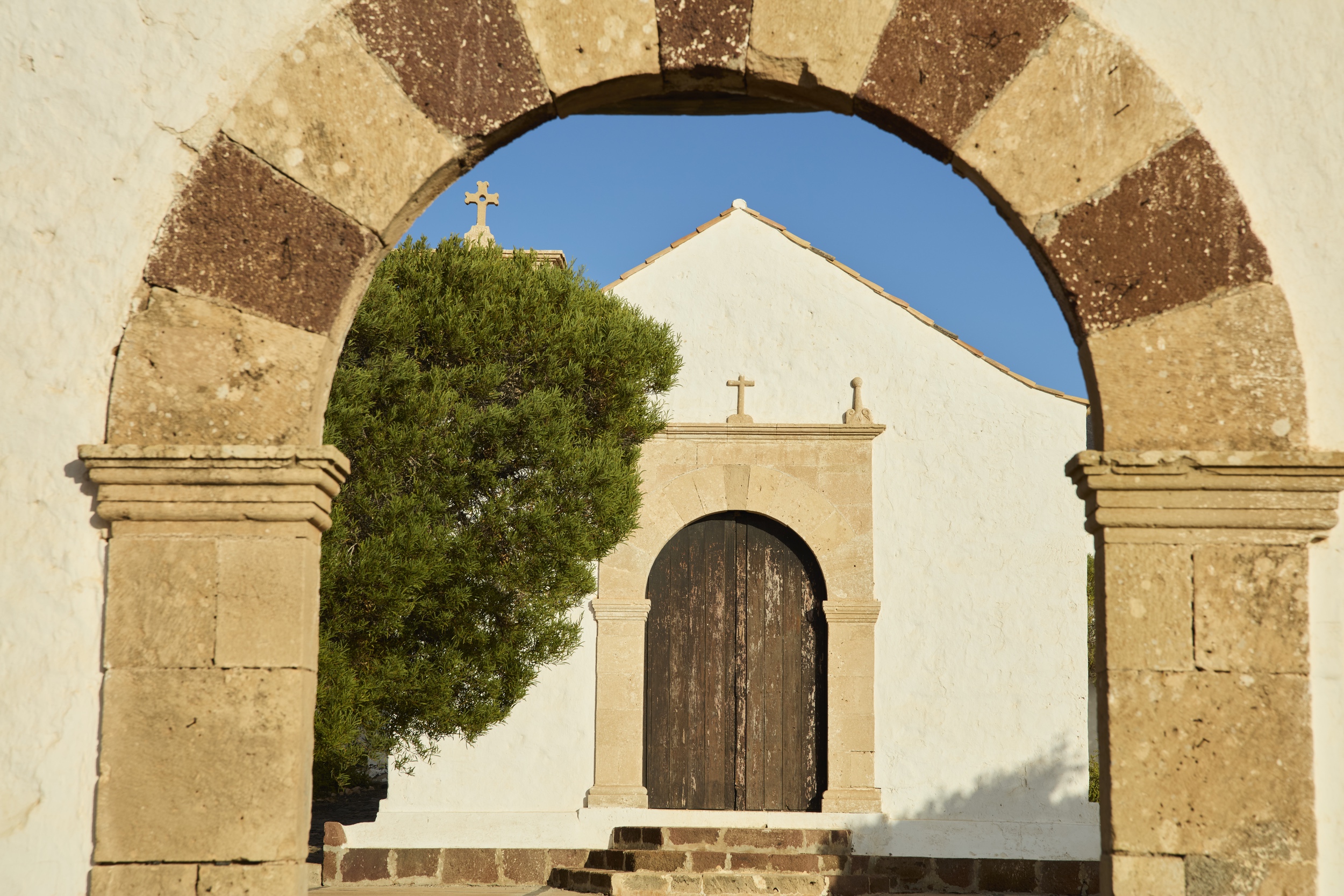
The façade, of clear Mudejar influence, has a door framed by a white-painted stone alfiz. The belfry on the upper left side of the gable is made of the same material. The barbican, built in the 18th century, has three entrances: two linteled doors open on the north and south walls, and a front doorway made of exposed stonework and topped by a semicircular arch, with voussoirs alternating in light and dark stone.
In the interior, the roof of the nave is made of wood, with a decorated musquetry with geometric motifs and cordon. The presbytery is separated from the nave by a step and is covered with a dome supported on pendentives, reinforcing its hierarchical character within the temple.
The main altar, located in the presbytery, houses an altarpiece of a single body made of stonework and painted white. It is organized in streets separated by columns of base, smooth shaft and Corinthian capital, on which rests a broken entablature, topped by a poly-lobed arch crowned by a cross. In the wall of the gospel is located a second altar dedicated to The Most Holy Souls of Purgatory, which houses an oil painting on canvas divided into three planes: Heaven in the upper part, Purgatory in the lower part and, in the center, the figure of the Archangel Michael.
The pulpit, made of wood, is divided into eight coffers decorated with Eucharistic symbols, while the image of St. Augustine, dating from the eighteenth century, is a candlestick carving with hands and face sculpted in wood and polychrome.
The Hermitage of San Agustin is today a valuable testimony of the historical, religious and social development of the town of Tefía, and an essential stop to understand the evolution of rural settlement in the interior of Fuerteventura.