Church of Our Lady of the Rosary
Our Lady of the Rosary Parish Church
Spiritual and historical heart of Puerto del Rosario
Location and urban presence
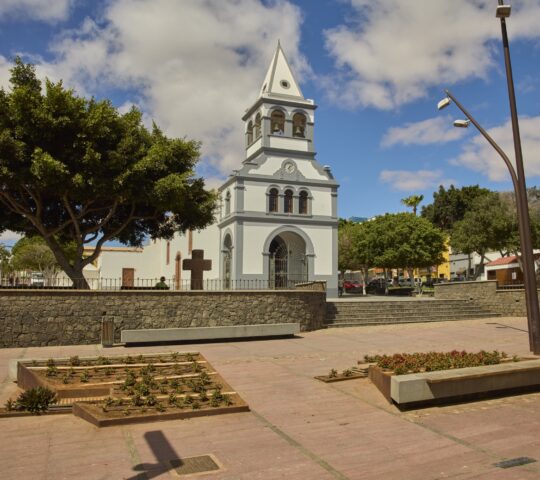
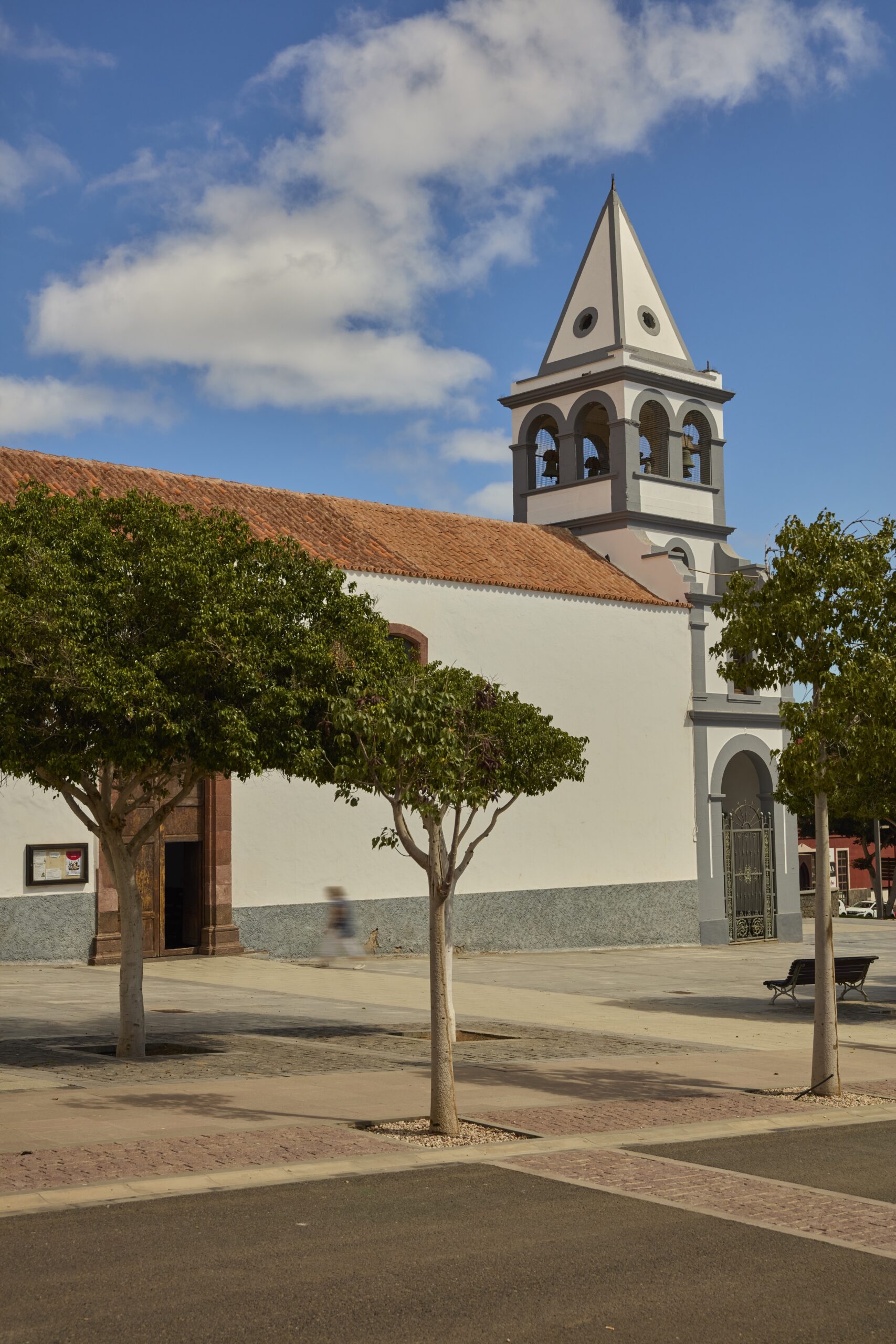
The Parish Church of Our Lady of the Rosary is located in the nerve center of the capital of Fuerteventura, between the streets Leon y Castillo, Virgen del Rosario and the now pedestrian Primero de Mayo, opposite the Cabildo of Fuerteventura and the Government Delegation. Its presence not only marks the geographical center of Puerto del Rosario, but also its symbolic and emotional center, articulating community life since the beginning of the final settlement by the sea.
Origins: the first oratorio (1812)
The need for a stable religious space in Puerto Cabras, historical name of the town until 1956, arose with the growth of the port and its population. In 1812, a group of neighbors, encouraged by the English merchant James Miller (also known as Diego Miller Seroton), vice-consul of Fuerteventura, requested a license from the bishopric to erect an oratory next to the pier.
Miller also pointed out to the settlers the site for a church that was already under construction. While it was being built, a warehouse on La Marina Street, a house on the present García Hernández Street, which is still standing, was set up as the first church. This humble space was the germ of the religious life of El Puerto, long before the locality was constituted as an independent municipality, since it then belonged to the parish of Santo Domingo de Guzmán, in the municipality of Tetir.
Construction of the temple (1824-1931)
The bishop undertook to build a new chapel and, in the 1820s, the first works on the parish church began, following a plan drawn up at the beginning of the 19th century by Diego Miller himself. The project was ambitious, in line with the commercial boom of the port as a point of export of barrilla and other goods.
However, the works suffered numerous interruptions. In 1835 they were resumed with force, even foreseeing the construction of two bell towers flanking a curved gable, but the project had to be rejected. The causes were the barrilla crisis, the successive plagues and the famines that devastated the island.
The chronicles of the time are eloquent: on May 8, 1843 they speak of the deplorable state of the town and the whole island due to the decline of trade; on June 3, 1844 they mention the massive emigration due to the miserable harvests since 1827; on November 13, 1844 they even report the appearance of Berber cigars on the beaches.
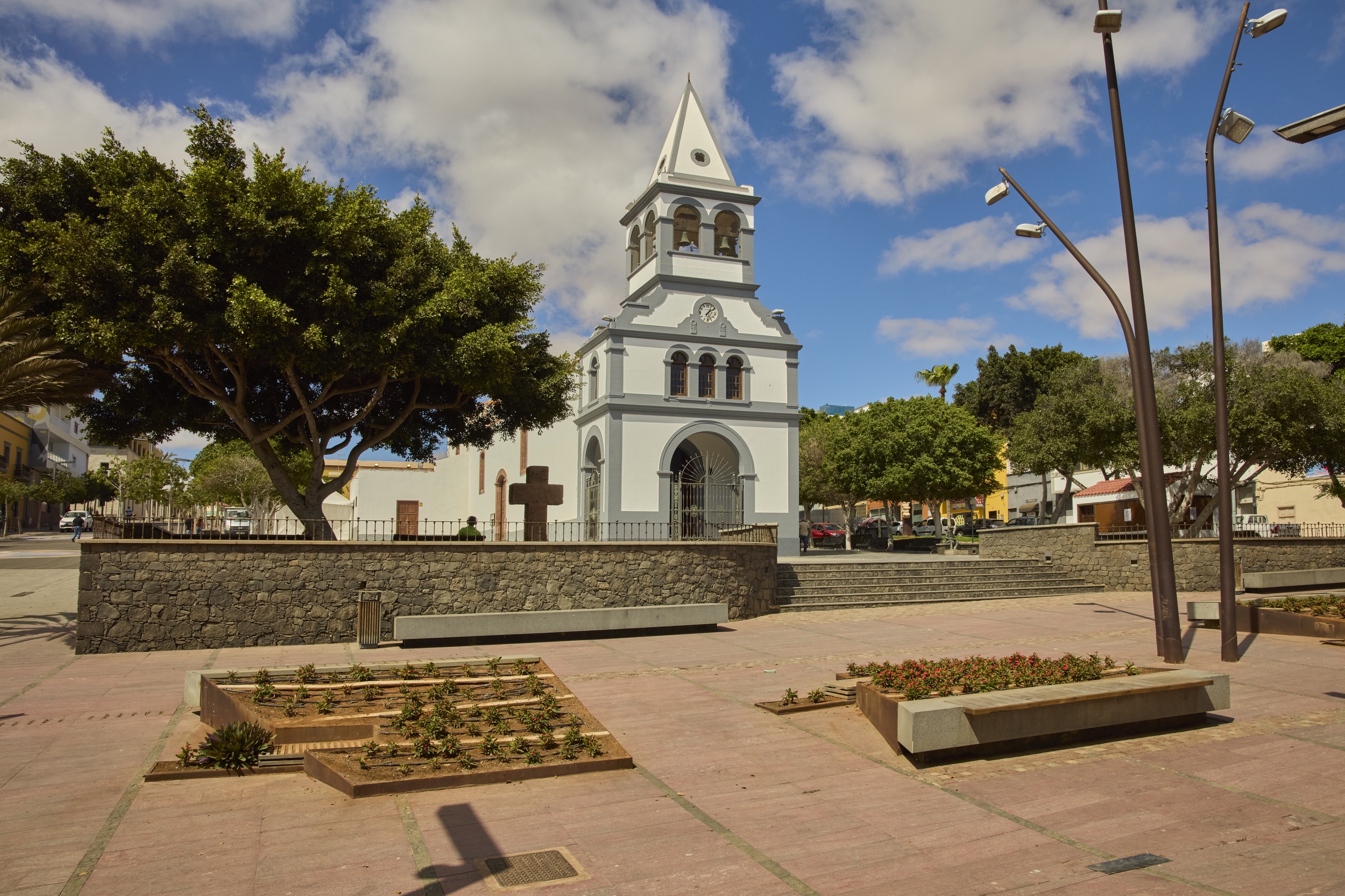
Despite all the difficulties, the will to provide the city with a worthy temple was never lost. In 1888 the bell tower was added, which houses two bells from Marseilles. In 1929, a Board for the Enlargement and Repair of the Temple was created and, finally, in 1931, the works were completed with the construction of the current tower-facade, as we know it today.
Architecture: insular neoclassical style
Exterior
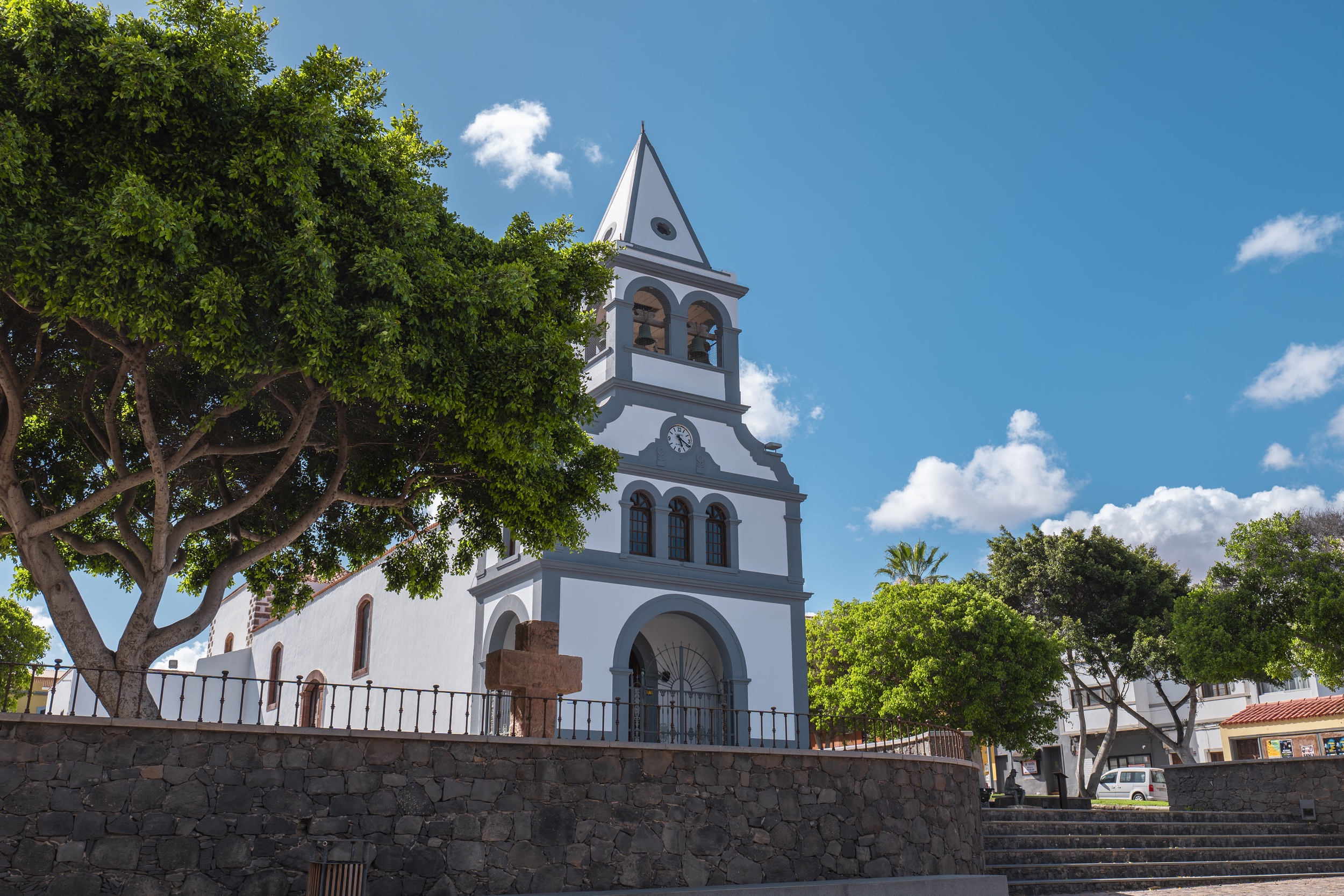
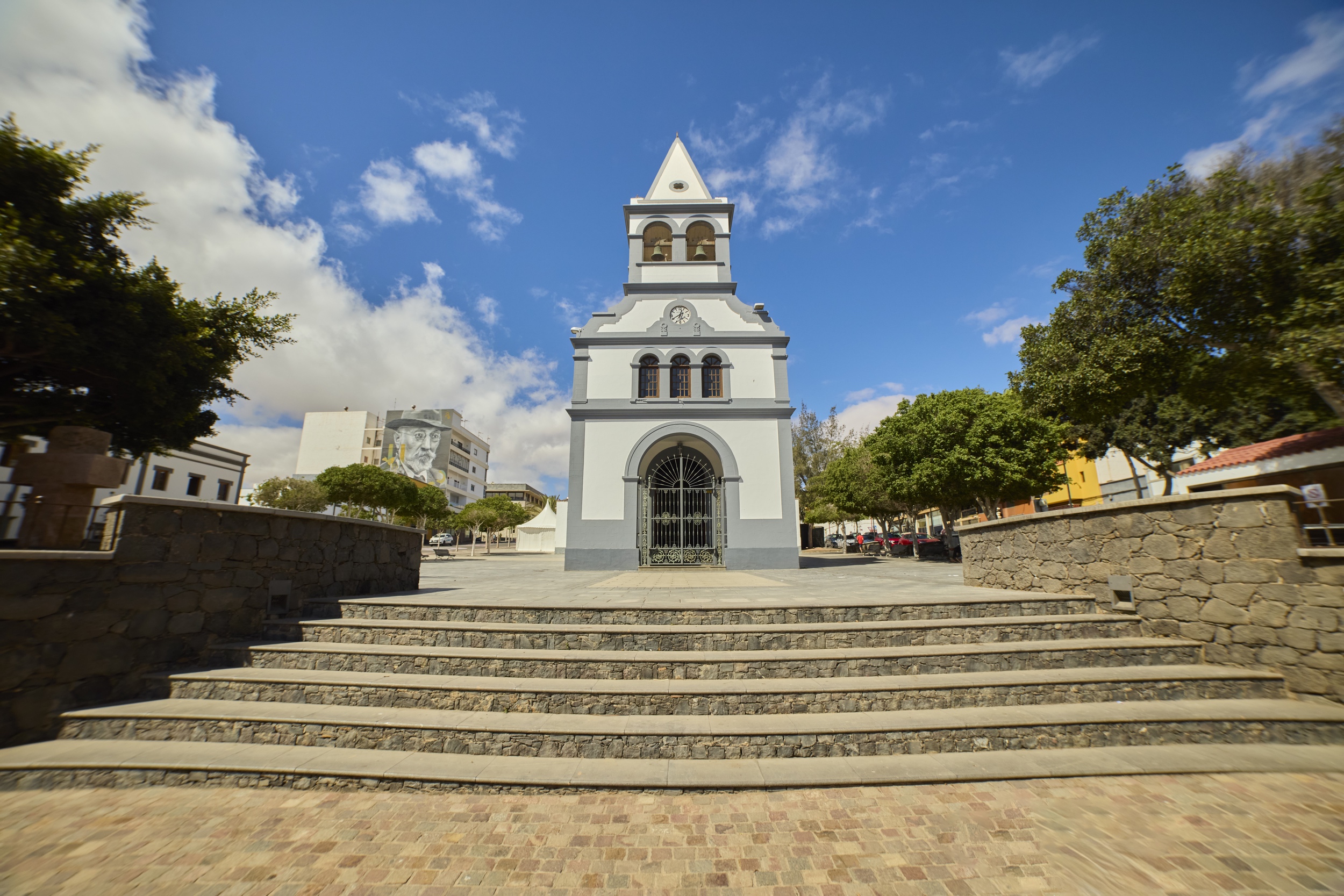
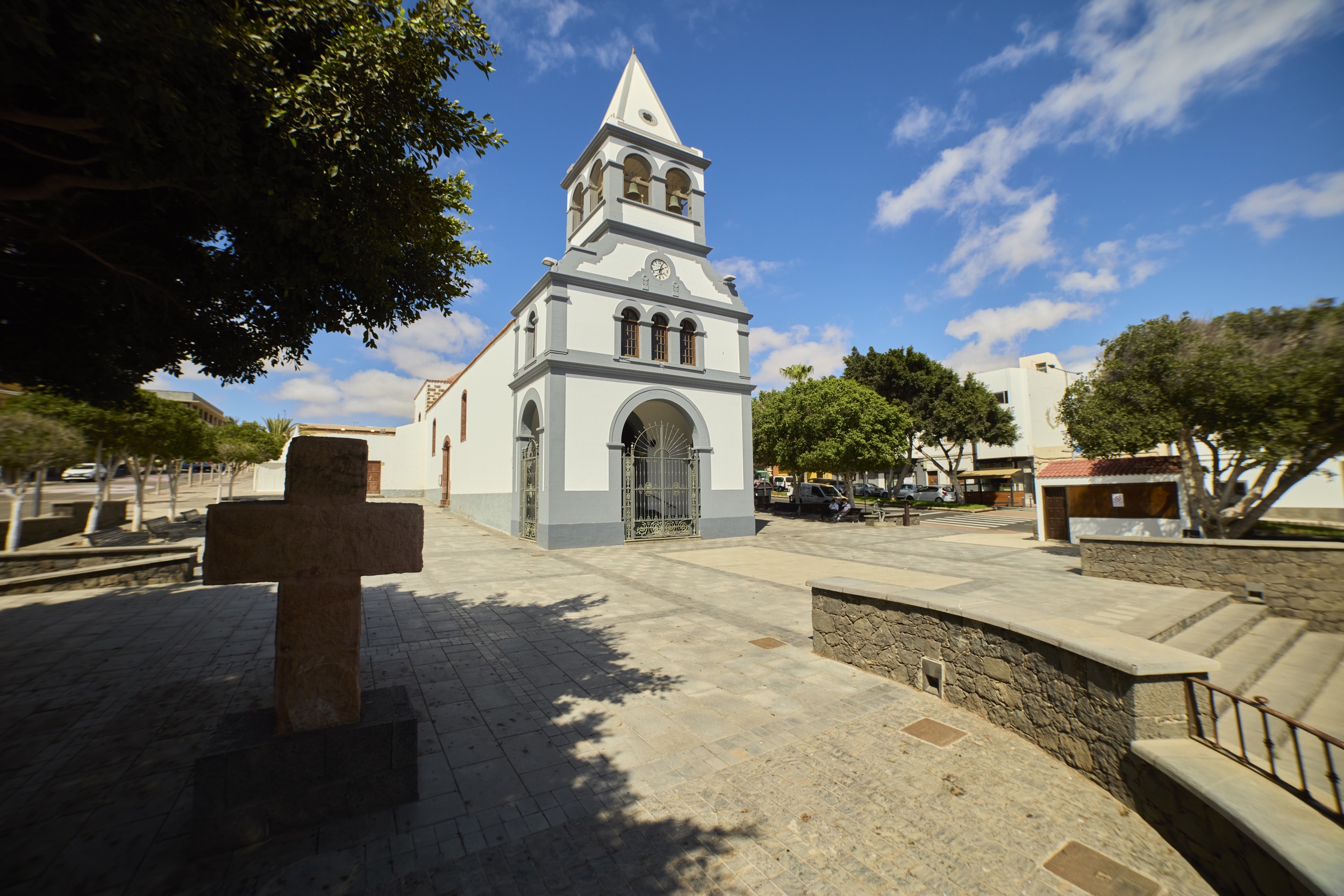
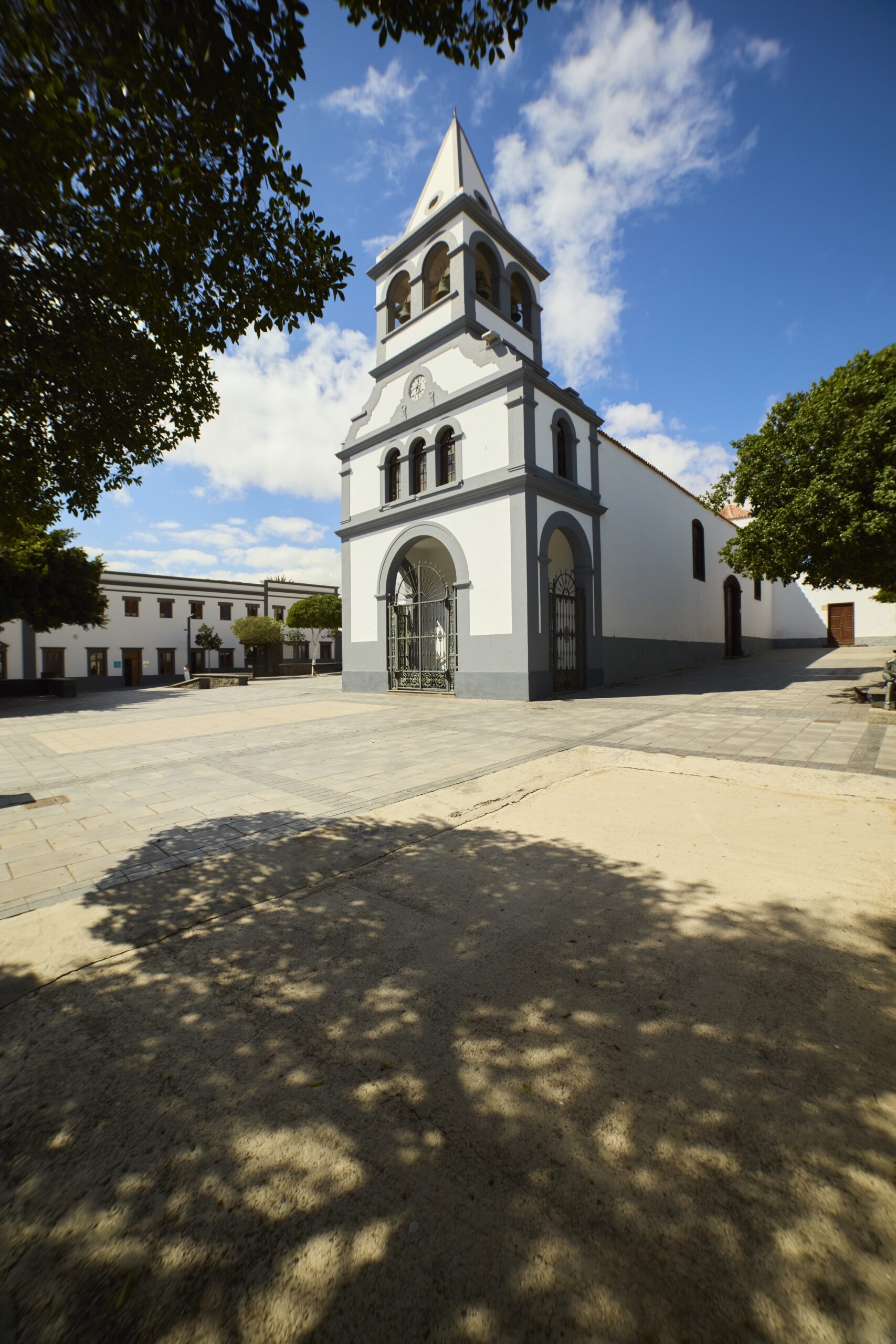
- Rectangular plan with a single nave, gabled roof with tile.
- Presbytery differentiated in height, covered to four waters with corners worked in stonework.
- On both sides of the main chapel there are sacristies with direct access from the street.
- Large windows in the side walls, framed in red stonework with lowered arches, as well as the side doors.
- The main façade is integrated into the imposing tower-façade of three sections:
- First body: three semicircular arches.
- Second body: three arched windows on the front and one on each side.
- Third body: of smaller size and profile trimmed in wavy lines, it houses the clock.
- Bell body: quadrangular, with a double bell hole on each side, topped by a pyramid with a cross at the top.
Interior
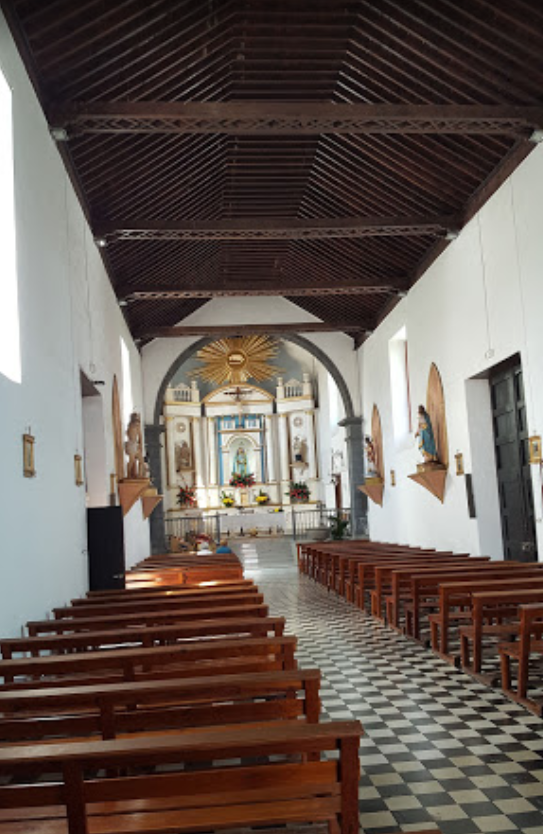
- Wooden structure roof.
- The main altarpiece is a reproduction of the one that existed previously. It consists of a central body with a niche flanked by columns, crowned by a curved pediment. The lateral ones present bodies with shelves closed by a balustrade. The whole is polychromed in blue, pink and gold tones on a white marbled background, culminating in a circular body with a Divine Lamb from which large rays emerge.
- In the central part a sculpture of Our Lady of the Rosary of the XIX century is venerated. To the left is located a San José with the Child and, to the right, a San Luis Gonzaga. The original 19th century image, a polychrome wood carving, is currently kept in the sacristy.
Historical landmarks and heritage recognition
- 1906: the temple acquires the rank of parish, consolidating as a center of worship and axis of social, cultural and spiritual life.
- 1956: the Marian vocation of the town is made explicit when the town council, picking up the secular aspiration of the neighborhood, proposes and obtains that the old name of Puerto de Cabras be replaced by Puerto del Rosario.
- 1990: declared an Asset of Cultural Interest with the category of Historic-Artistic Monument by the Government of the Canary Islands (order of publication of the agreement of November 19, 1990, published on July 2, 1993).
Popular devotion and festivities
Every October 7, the festivities in honor of the Virgin of the Rosary, patron saint of the city, are celebrated with the offering and procession of the image through the streets. It is a living expression of popular devotion that attracts both the faithful and visitors.
Historical testimony: the chronicler’s view in 1958
The municipal secretary and chronicler Juan José Felipe Lima, in a text published in 1958 in the newspaper Falange, offers a valuable testimony about the church and its significance for the town. In his words:
“Puerto del Rosario is a young town. Administratively, it was incorporated into history in 1835. […] The temple is clearly insufficient. […] Since Puerto was a port, its inhabitants lived under the invocation of the Virgin of the Rosary. And first in a small room in a tenement house, later in a warehouse, which is still preserved in Garcia Hernandez Street, and then in the chapel that later became a parish church; every night the neighbors gathered to pray the Holy Rosary.”
Lima tells the story of how the cultured Don Teófilo Martínez de Escobar, who arrived around 1905, became attached to the town, created the parish and acquired the image that would preside over the religious life. It also evokes the struggles of the municipality for its development – the pier, the crises, the merger of municipalities – and the collective effort to consolidate the growth of the capital.
Conclusion
The Parish Church of Nuestra Señora del Rosario is much more than a religious building. It is the spiritual and historical heart of Puerto del Rosario, a silent but eloquent witness of the evolution of the city from its modest origins as a seafaring neighborhood to become the capital of the island. Its architecture, its artistic heritage and the devotion that surrounds it make it an essential place to understand the majorera identity.