Casillas del Angel
History of a majorero town with municipal past and living heritage.
Casillas del Angel is a town whose origin dates back to the territorial organization after the European conquest of Fuerteventura, initiated by Jean de Béthencourt and Gadifer de La Salle in the early fifteenth century. Although the area was previously used for grazing by the first inhabitants of the island, the mahos, it would not be until after the conquest when they began to form small rural settlements, mainly linked to goat farming and subsistence agriculture, within the system of manors established.
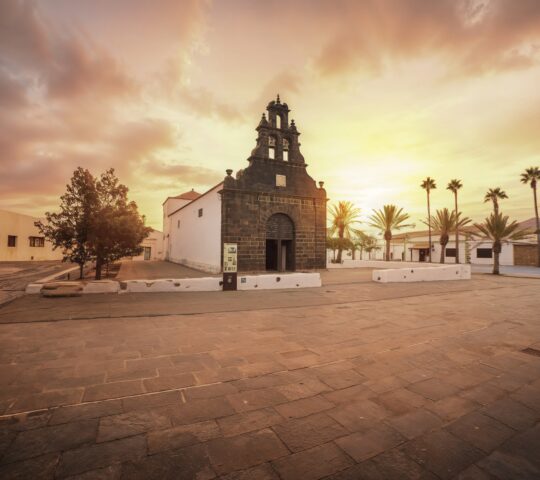
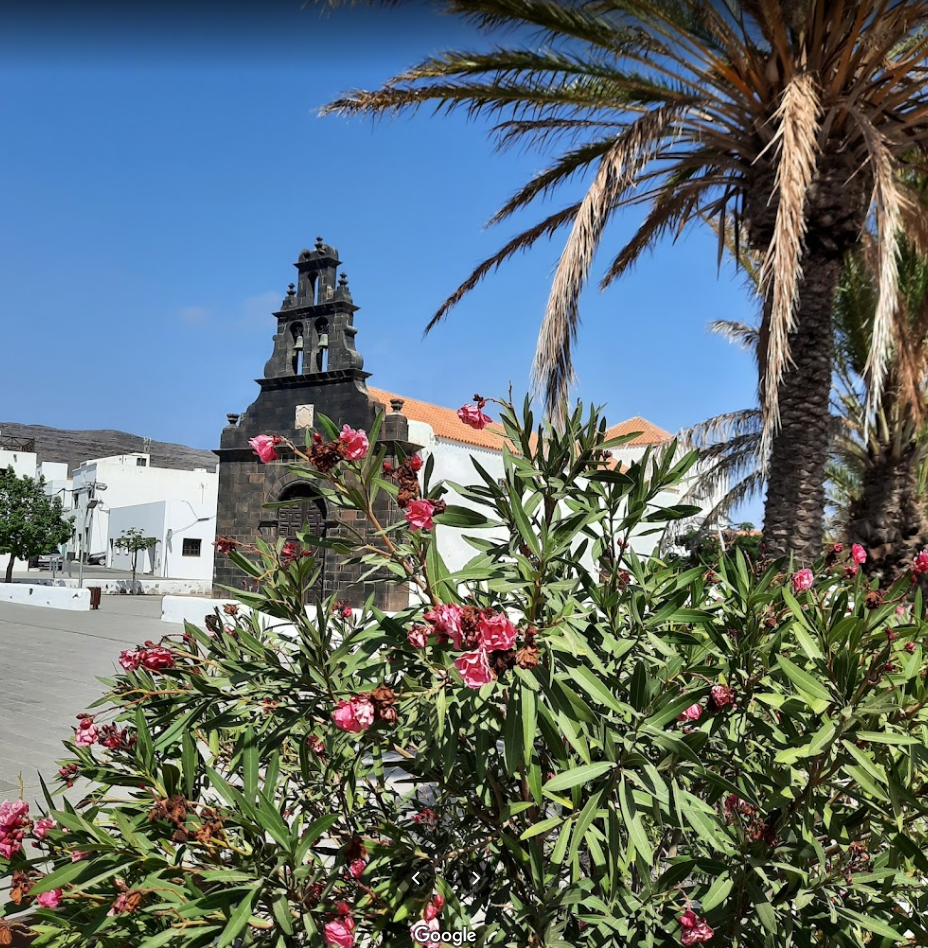
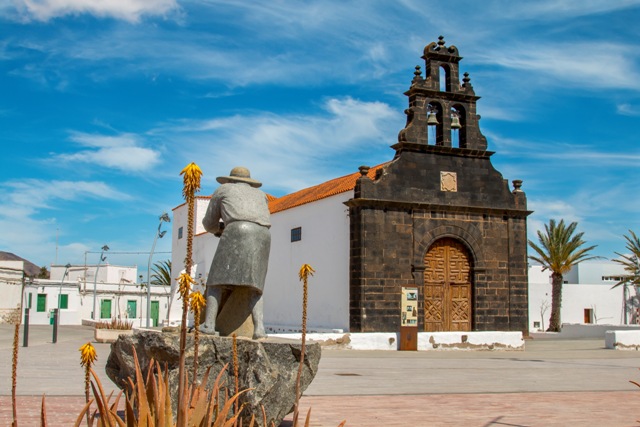
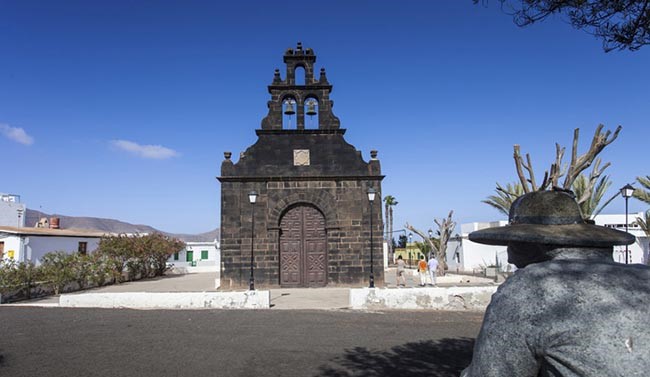
The settlement of Casillas del Ángel was consolidated around a settlement of modest houses located in an area of farmland and gullies next to roads that connected the different pagos of the interior. This nucleus was initially known as “Las Casillas”. Its present name, Casillas del Ángel, comes from the construction of a small hermitage dedicated to the Santo Ángel de la Guarda, erected in the 17th century thanks to the donation of Doña Ana Rodríguez Sanabria and which still preserves its original image. This temple, together with the later and larger Iglesia Parroquial de la Plaza (built between 1730 and 1781), turned the village into an important spiritual center in the north of the island for centuries, to which inhabitants from other areas came for religious celebrations.
However, the real historical significance of Casillas del Angel lies in its administrative role. In 1790 it was established as a parish and, in 1812, with the formation of its first municipal corporation, it became one of the historic municipalities of Fuerteventura. Its jurisdiction was one of the largest on the island, covering numerous payments and hamlets such as La Ampuyenta, Almácigo, Majadillas, Llanos de la Concepción, Tao, among others. Its territory extended to the southeast (bordering Antigua) and west (bordering Betancuria and La Oliva), even reaching the east and west coasts, with the ports of Tegurame and Los Molinos.
This broad demarcation not only reflects its geographic and political importance, but also the legacy of aboriginal territorial organization, especially visible in the persistence of the mancomunal zone on the west coast. These lands of collective use, heirs of the mahos, have survived to the present day as communal grazing areas. It is precisely in these places where the traditional “apañadas” are held, a livestock practice of aboriginal origin that consists of the collective herding and gathering of goats that are in a semi-wild state. The apañadas are not only a livestock management technique, but a true living testimony of the Maho culture, a community ritual that has survived centuries of history and continues to bring together shepherds and neighbors, keeping alive the ancestral memory of the territory and its shared use.
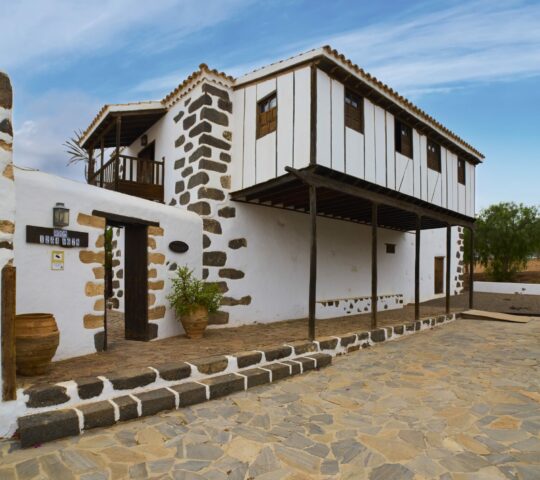
The status of independent municipality was maintained for more than a century, a period in which the locality maintained a markedly agrarian and livestock economy and way of life, deeply linked to practices such as the “apañadas”. Life revolved around the grazing of goats, the artisanal production of Majorero cheese, cultivation using the traditional system of gavias to capture rainwater and a rural architecture of low whitewashed stone houses mainly next to some more stately multi-storey houses, among which the house of “Los Rugama” stands out. However, recurrent droughts and emigration, especially during the 19th and 20th centuries, limited its demographic and economic growth.
In 1926, an administrative reorganization marked a turning point in its history: Casillas del Ángel was dissolved as a municipality and its territory became part of the former municipality of Puerto Cabras, today Puerto del Rosario. Although it lost its political autonomy, the town has managed to preserve with remarkable integrity its historical heritage, its cultural identity and its traditions, among which stand out the Fiestas de Santa Ana in July, one of the oldest devotions of the island, which combine religious events with popular celebrations.
Today, Casillas del Angel is presented as a quiet village integrated in Puerto del Rosario, which treasures among its streets the imprint of a past in which it was an important religious center and a key municipality in the articulation of the interior of Fuerteventura. Its well-preserved historical-religious heritage, its rural landscape and the vestiges of its traditional architecture are silent witnesses of a time when this town was one of the vital centers of Fuerteventura. But above all, Casillas del Angel keeps in its territorial memory and practices such as apañadas held in their coastal mancomunes a direct and tangible link with the culture of the first inhabitants of the island, the mahos, making this town an active guardian of the deepest identity of Fuerteventura.