Gofio tradition, religion and culture
Introduction
This itinerary connects two historic villages in the interior of Fuerteventura through an agricultural landscape shaped by centuries of human effort. Churches, chapels, manor houses and mills tell the story of a society deeply tied to the land and water.
Santa Ana Church
Located in Casillas del Ángel, this 18th century church is one of the most singular temples of the island, standing out for its black stone façade and its value as the backbone of the village.
Rugama’s House
Former rural hacienda belonging to one of the aristocratic families of the area, now converted into an agro-hotel and gastronomic space. Its structure reflects the traditional use of water by means of cisterns, gavias and strainers.
Hermitage and Cross of San Andrés
In Tetir, the hermitage of San Andrés and the cross associated with the ancient tradition of prayers for rain are one of the most vivid examples of the intangible heritage of the island.
Every November 30, the people revive ancient rituals to ask for rain from the fields, keeping alive an ancestral tradition.
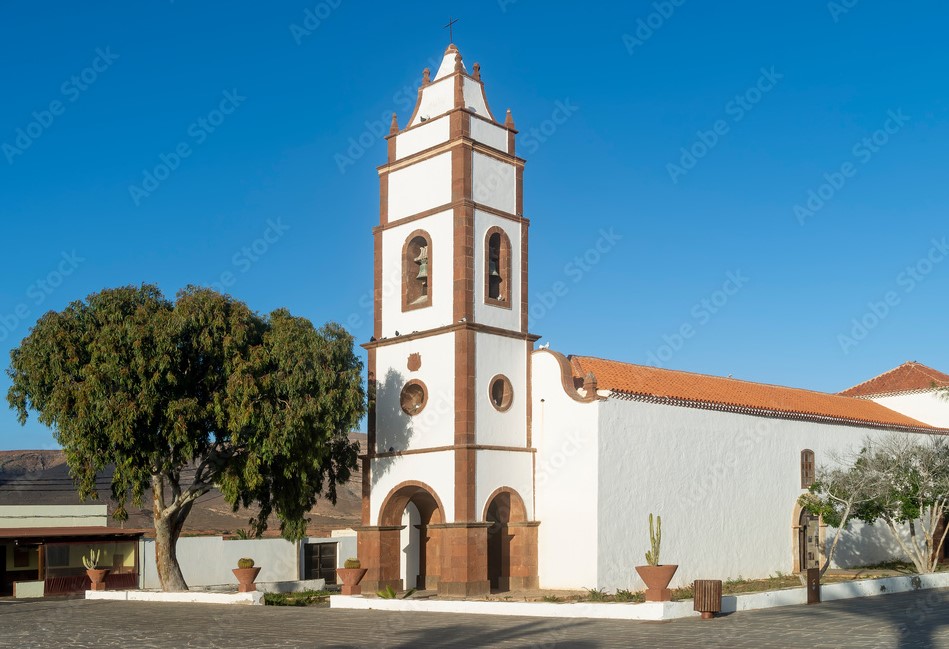
Church of Santo Domingo de Guzmán
With its characteristic tower visible from afar, this church is one of the most important temples in the interior of Fuerteventura. Its construction lasted more than a century, reflecting the growth and relevance of Tetir as an agricultural center.
Active Gofio Museum
The route culminates in one of the most unique places in the Canary Islands: an old gofio factory still in operation, considered the largest mill in the archipelago.
Here visitors can learn first-hand about the artisanal process of making gofio, an essential foodstuff in the Canarian diet since aboriginal times.