
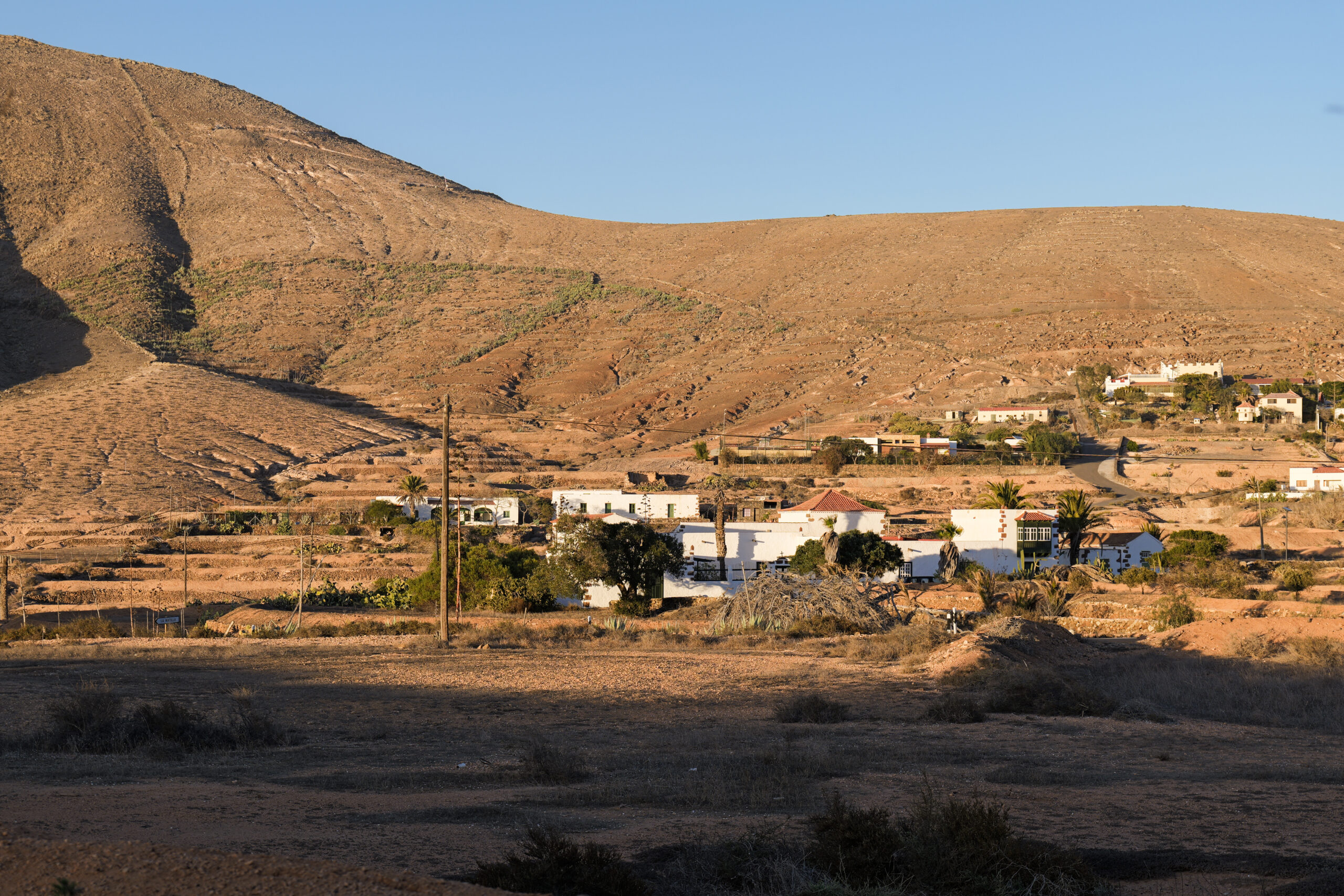
Town of La Matilla
LA MATILLA: AN INLAND TOWN DEEPLY ROOTED IN ABORIGINAL CULTURE
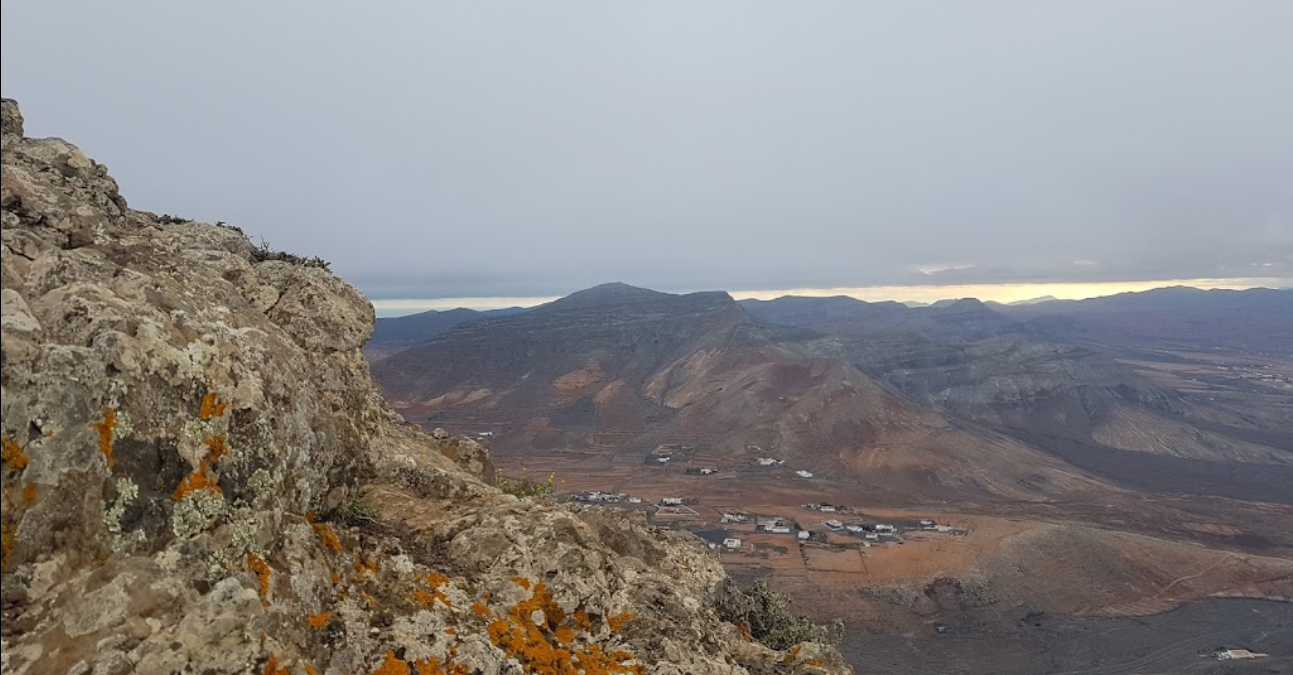
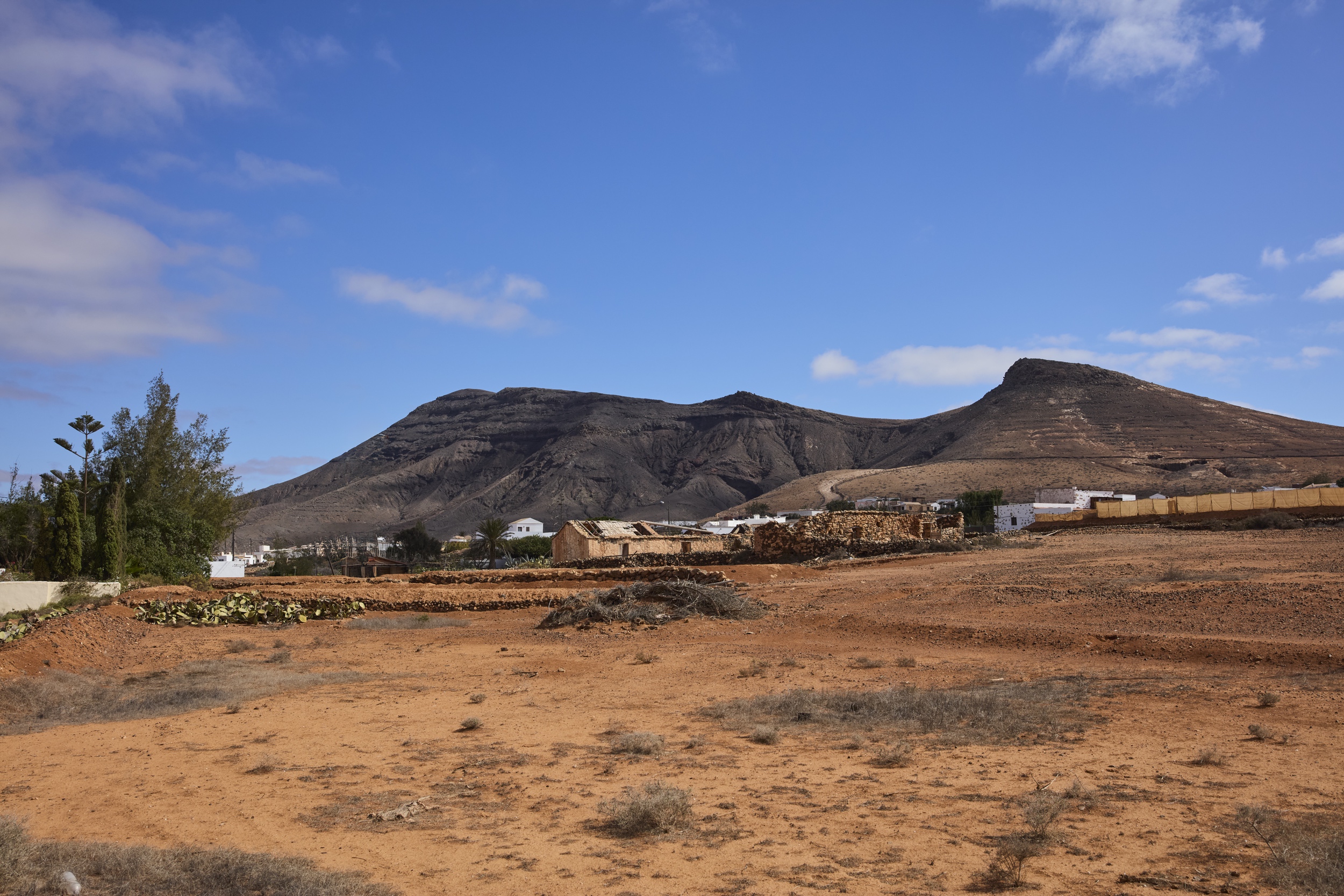
La Matilla is a rural nucleus of the municipality of Puerto del Rosario located in the interior of Fuerteventura, north of the town of Tetir, between two of the highest mountains of the island, La Muda and Aceitunal. Its configuration responds to the dispersed settlement model that was consolidated on the island after the European conquest initiated in the early fifteenth century by Jean de Béthencourt and Gadifer de La Salle.
Before this process, the island territory was inhabited by the Mahos, whose economy was mainly based on livestock. The area where La Matilla is located today was part of the vast territory used for grazing and the exploitation of natural resources, within an organization adapted to the climatic conditions of the island. The numerous archaeological remains found in this area give an idea of the importance of this place for the ancient settlers.
ORIGIN AND DEVELOPMENT OF THE CORE
After the establishment of the seigniorial regime, the island was structured in rural settlements linked to dry farming and grazing. La Matilla was consolidated as one of these inland settlements, where the combination of small cultivable plots and large pasture areas allowed the development of a subsistence economy based on cereals and goats.
The toponym “La Matilla” seems to be linked to the presence of shrub vegetation – “mata” or “matilla”-, a common reference in traditional toponymy to describe landscape features. However, as with many historical names, its exact origin is not documented in early written sources.
La Matilla belonged to the Curato de La Oliva; however, after the visit of Bishop Tavira at the end of the 18th century, it was integrated into the Curato de Tetir. In 1925, both La Matilla and the other villages of the municipality of Tetir were incorporated into the municipality of Puerto Cabras, now Puerto del Rosario.
THE MOUNTAIN OF LA MUDA: A SACRED LEGACY IN THE HEART OF FUERTEVENTURA
Considered one of the most traditional corners of Fuerteventura, the Montaña de la Muda stands as a silent witness to the history of the island. Long before the arrival of the first Europeans to Maxorata, this place was already a revered space. Experts point to it, along with the mountain of Tindaya, as an important center of rituals for the ancient mahos, an enclave where the spiritual and the earthly went hand in hand.
This place is not just a simple mountain, but an archaeological site of the first order. It has been found remains of settlements, an area for ceremonies and several tombs, some in natural caves and others in small stone cists. In addition, near its springs, pieces of decorated pottery from before the conquest have been found, as well as engravings and other constructions that tell us about the life of the aborigines.
Its privileged location, overlooking the mountains of Tindaya and Quemada, its abundance of water and its role as a lookout point made it a fundamental place. It is not surprising that, already in the 15th century, the conquerors baptized it with such revealing names as “Iglesia de los Majos” or “Oratorio de los antiguos majos”. The connection of the majoreros with this place did not end with antiquity; at the end of the 80s of the last century, the mountain was the epicenter of a social mobilization against the military plans for the area.
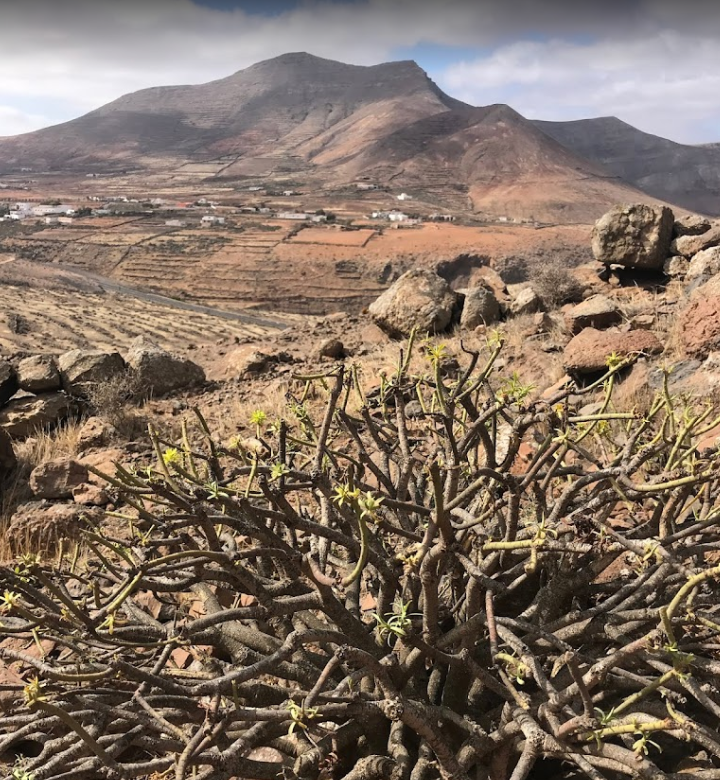
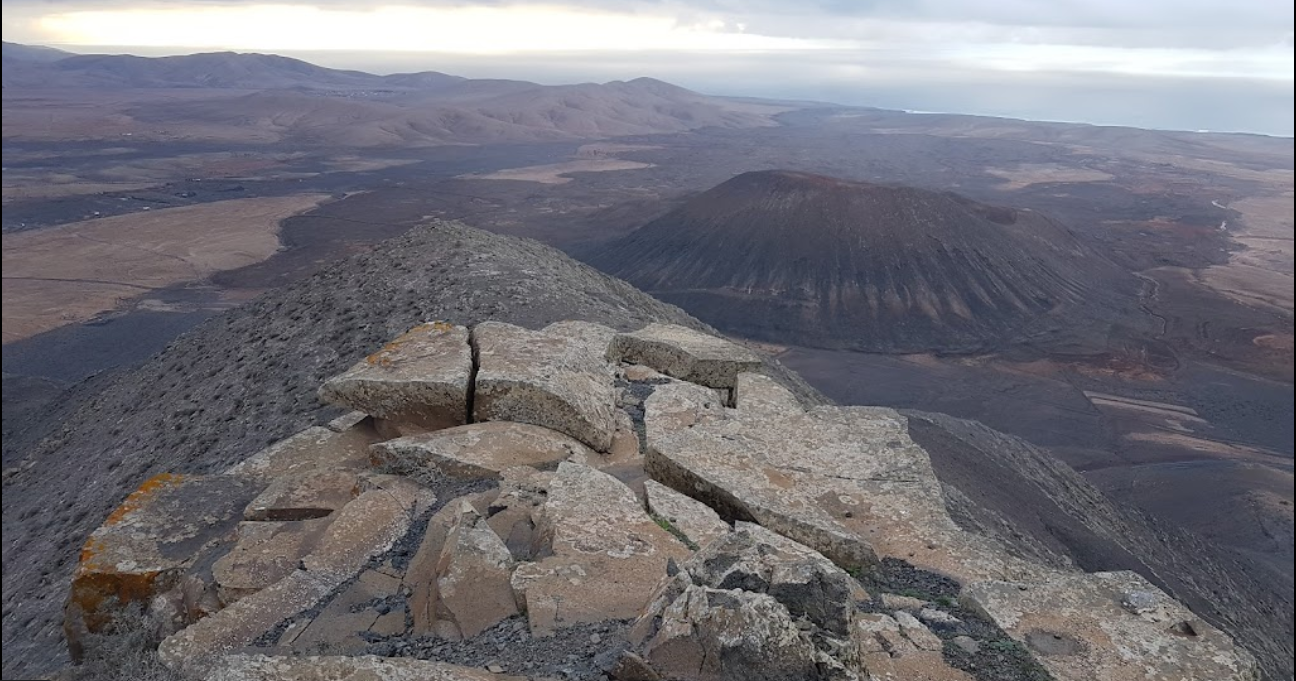
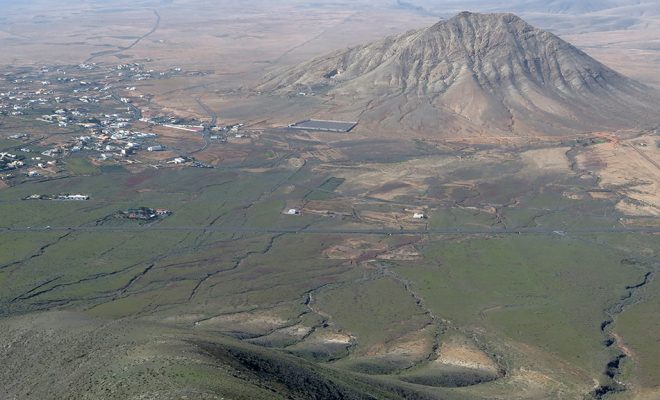
With its 689 meters of altitude, the Muda is the roof of the north of Fuerteventura and the source of the Valhondo ravine. It is integrated in the Protected Landscape of Vallebrón, a geological formation of great beauty. Despite the scarcity of rainfall typical of the island, acts as a magnet for moisture from the trade winds, generating a microclimate that makes it a point of great water wealth.
This characteristic has led to the development, since time immemorial, of devices to take advantage of water, both groundwater and rainwater. Proof of this are the dozen fountains that dot its surroundings, such as the Fuente de la Aceituna, Tagasote or those of the Chupadero, whose care and maintenance were already recorded in the minutes of the Cabildo of the seventeenth century.
A WALK WITH HISTORY
Climbing to the summit, known as “La Mesa”, is an experience. It can be accessed either by the PR-FV 9 trail, on the north face, or by a more suggestive route from the south. This path of about two kilometers is an authentic ethnographic museum in the open air.
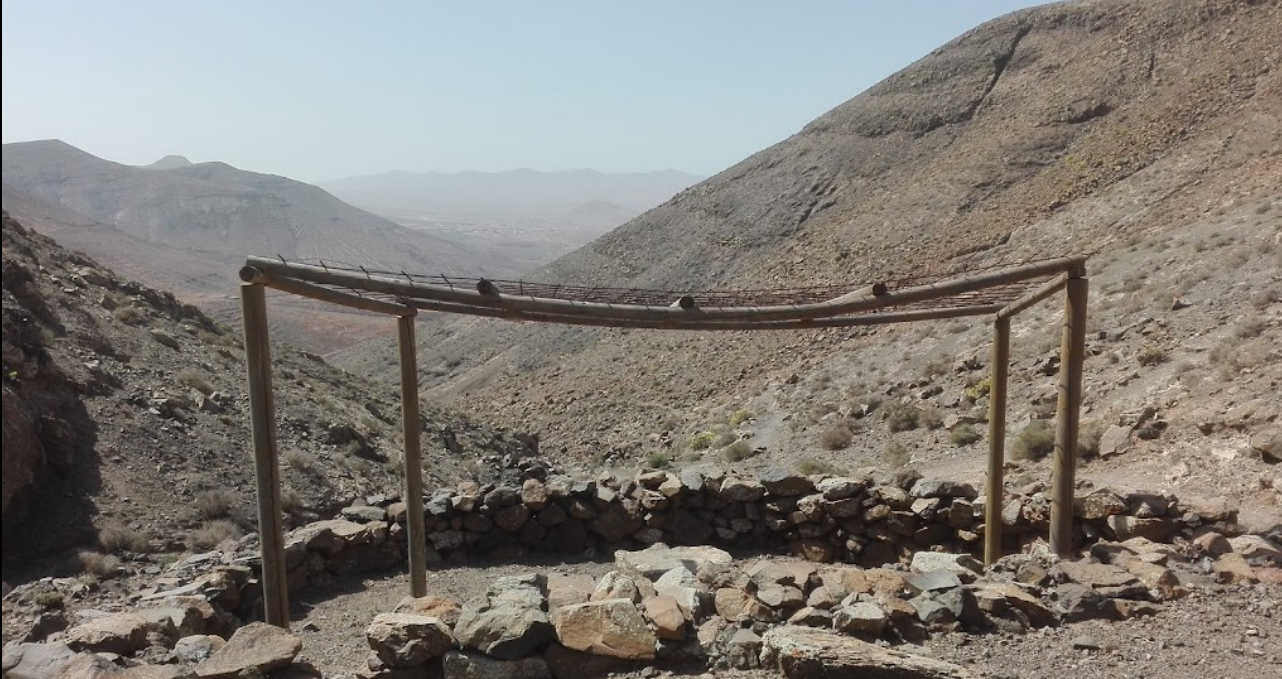
It begins at the base with a “soco de pastor” and small “gateras” for livestock. On the way up, the three Chupadero springs appear, reinforced with stone walls, and near the top, a threshing floor where cereal was threshed in the past.
From the top of La Mesa, the view is a spectacle that ranges from the Aceitunal and Tindaya Mountain to the neighboring islands of Lobos and Lanzarote. But the interest is not only scenic. The southern slope, more arid, is populated by tabaibas and gorse, while the northern shady side is home to species such as tasaigos and turmeros, and surprises with ancient wild olive trees that look like real natural bonsais.
The fauna also plays a leading role: the song of the lark, the flight of the kestrel and the ever-vigilant presence of crows are the perfect counterpoint to a place where history, nature and spirituality come together.
ARCHITECTURE AND WATER CULTURE
The landscape of La Matilla preserves characteristic elements of the Majorero agricultural system. The gavias, designed to collect rainwater by retaining runoff, are an example of the ingenuity developed to cope with the arid climate. This system allowed for centuries the cultivation of wheat and barley in favorable years; however, its clay soils were not very suitable for agriculture.
The traditional architecture responds to the rural pattern of the island: earthen masonry houses, whitewashed, with simple and functional lines. Many of them are integrated into small family groups, reflecting a social organization based on neighborhood cooperation and community work.
It is worth mentioning in the village the Taro de Los Quintana, a circular construction whose stone walls with mud mixed with straw and then whitewashed maintained ideal conditions inside for curing meats and cheeses. It is one of the few taros still standing in the municipality.
LA MATILLA TODAY: RURAL IDENTITY AND AUTHENTICITY
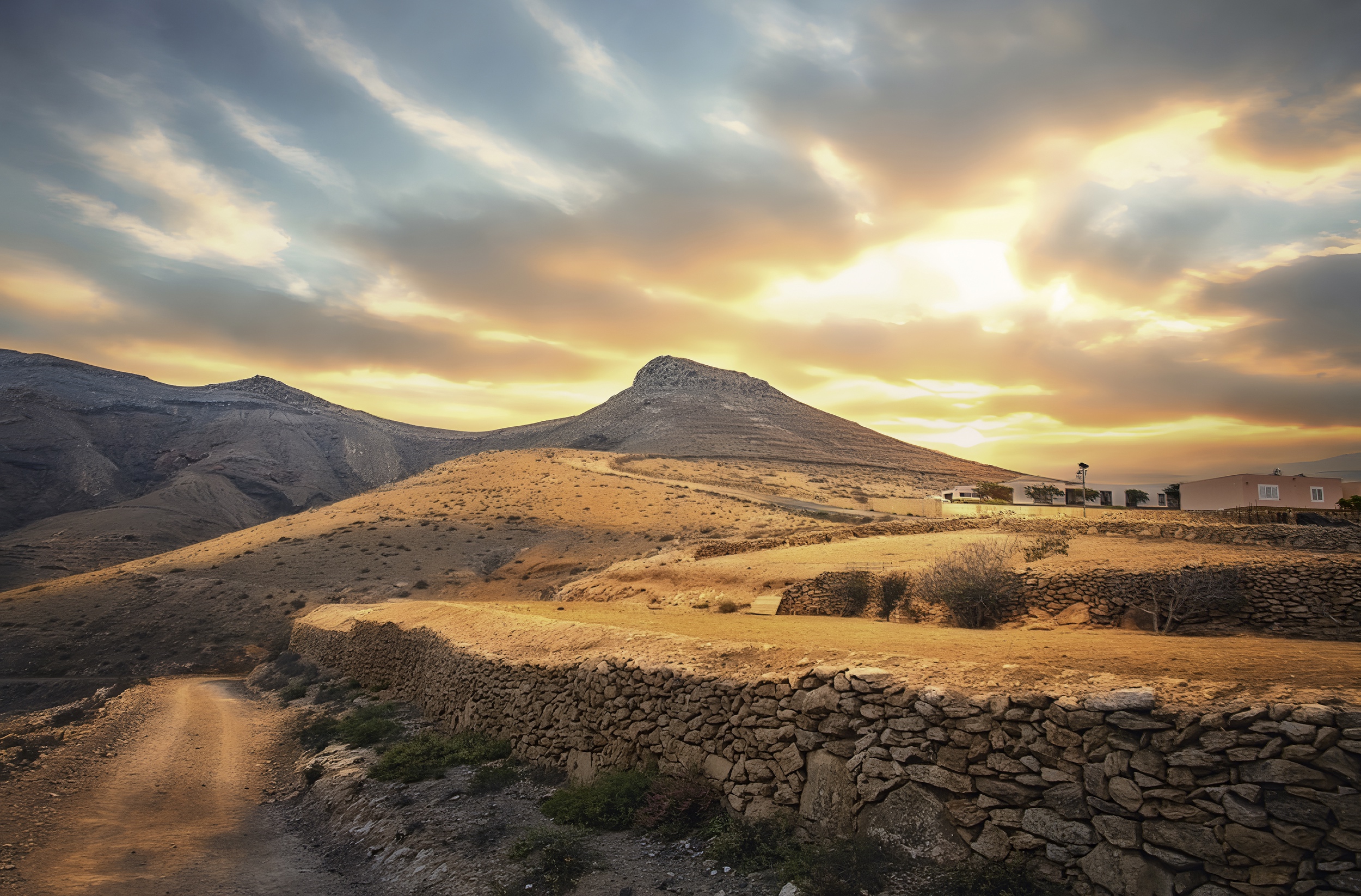
Nowadays, La Matilla preserves the peaceful character of the old majorero pagos. Its value does not lie in great monuments, but in the continuity of its cultural landscape: traditional paths, agricultural plots, dry stone walls and houses that still evoke the way of life linked to the countryside.
For the visitor interested in history and territory, La Matilla offers the opportunity to understand how life was organized in the interior of Fuerteventura for centuries. It is a place where the landscape speaks of effort, adaptation and balance with the environment, constituting an authentic expression of the rural identity of the municipality of Puerto del Rosario.
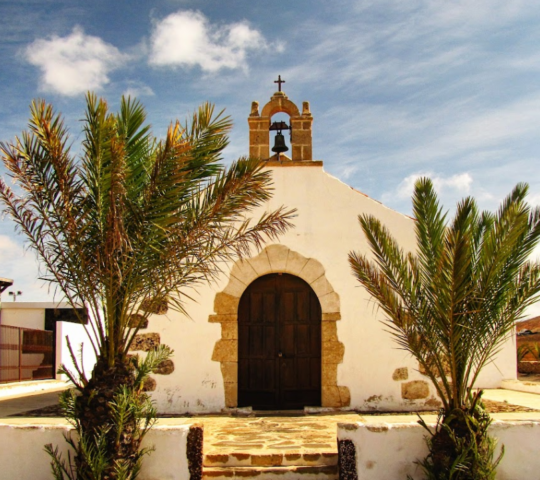
Its patron saint festivities in honor of Our Lady of Succor are celebrated in August, whose religious acts are officiated in one of the most culturally valuable hermitages of the municipality.