The Time
El Time: living history and an enclave between ravines
The village of El Time sits in a landscape of scattered houses at an altitude of almost 300 meters, wedged between the ravines of La Herradura and Valhondo, in the municipality of Puerto del Rosario. Its location is no coincidence: the first settlers, after the Norman conquest, sought refuge in the interior valleys, away from the coast, to protect themselves from the feared attacks of corsairs and Barbary pirates who ravaged the coast.
The name of the village preserves the memory of those first inhabitants, since “Time” is the Spanish version of the aboriginal word temi, present in the Amazigh languages of North Africa, which means “high cliff, cliff, end or edge”, a perfect description of its location .
Origin and consolidation of the hamlet
Although the main population centers after the conquest were Betancuria, Valle de Santa Inés or La Oliva, around these small hamlets were emerging in the shelter of the most fertile land. This is the case of El Time, whose permanent settlement, linked to the municipality of Tetir, was consolidated in the early years of the 17th century.
The first time it appears in the agreements of the Cabildo is in 1620, mentioned as “Letime”, when the neighbors are urged to remove the cattle from the meadows to protect the crops. In later documents of 1654 it is already mentioned with its current name, ordering its inhabitants to clean the Fuente de Río Cabras.
Traditional economy and social organization
Life in El Time has traditionally been linked to the use of rural resources. Its people were dedicated to goat farming, to the collection of barrilla and orchilla for commercialization and to dry farming, which made the production of dried figs famous in this place.
During the eighteenth century, the hamlet had about 40 inhabitants and a certain administrative relevance, as some of its neighbors were appointed administrators of the pósitos (grain stored to lend to farmers), a position of trust that was renewed annually.
Time belonged to the municipality of Tetir until 1925, when it became part of the newly expanded municipality of Puerto Cabras, now Puerto del Rosario.
Description of El Time according to the Diccionario geográfico-estadístico de España y sus posesiones de Ultramar by Pascual Madoz (1849)
Payment dependent on the municipality and parish of Tetir, on the island of Fuerteventura, in the province of the Canary Islands, judicial district of Teguise.
Located in a calcareous and shallow land, which produces in rainy years wheat, barley and barrilla in enough quantity, but nothing in which there is scarcity of water. It grows some cochineal, although much less than it could, because its soil is suitable for tuneras.
In this pago, as in almost all those of the island, if the rain waters were collected by leveling the land and making it flood, the harvests would be assured. Some trees are cultivated, but they do not prosper, either because the natives are not very dedicated to the work, or because they lack the proper protection by the owners, or because the cattle cut down and destroy everything.
It has a hermitage dedicated to Nuestra Señora de las Mercedes, where mass is said every feast day, paid for by the neighborhood. Industry: some linen and wool loom, whose linen and clothes are used by the inhabitants.
The Hermitage of Our Lady of Mercy
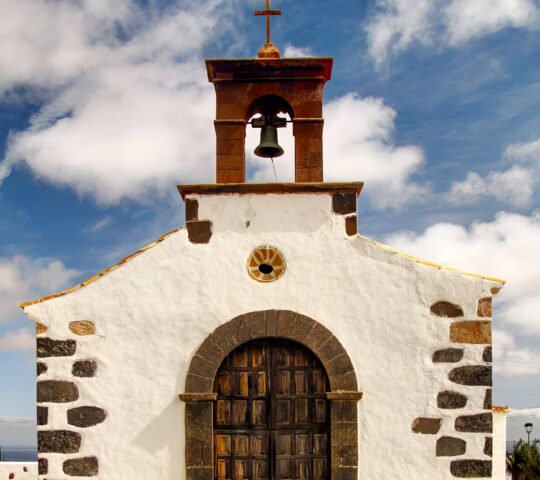
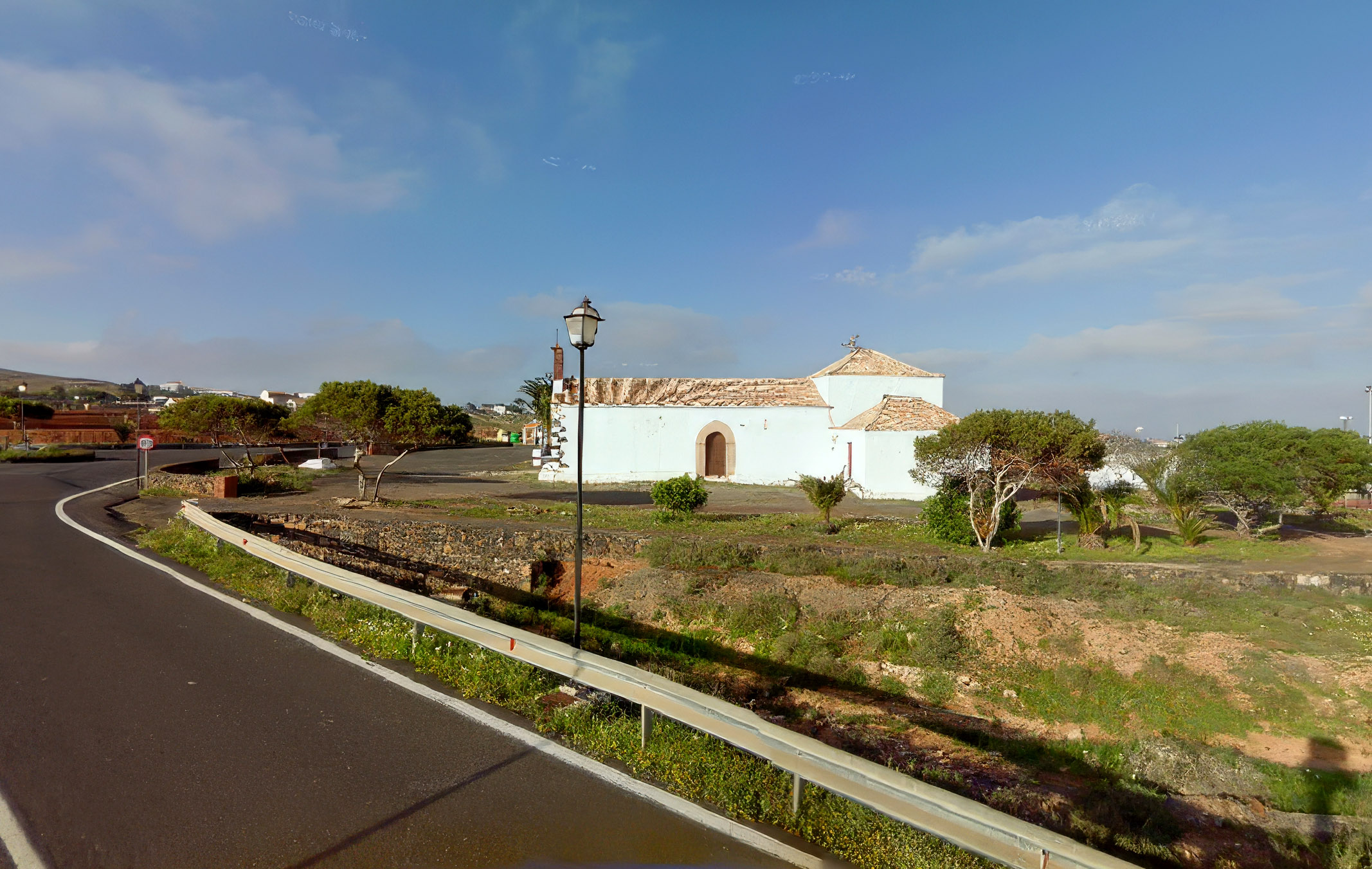
Given the antiquity of its population, El Time preserves an appreciable heritage. In addition to some stately homes of great value, the heart of the town is the Hermitage of Nuestra Señora de la Merced, built during the seventeenth century by endowment of the neighbor Manuel de la Trinidad, who requested a license in 1670. By 1674 it was finished and equipped for worship.
This hermitage is one of the three in Fuerteventura that, without being a parish, has a larger chapel of greater volume than the nave. Its red stone belfry shows the inscription “Year 1909”, probably when the bell brought from Cuba by returned local residents was placed.
The current image of the Virgin is not the original, but one acquired between 1724 and 1741, and her devotion, linked to the redemption of captives, made special sense on an island so exposed to pirate landings.
In 1758 the Brotherhood of La Merced was founded, which celebrated two consecutive festivities every September 24 and 25, a tradition that lasted until the twentieth century.
The legacy of Felipe Ruiz: Felipito
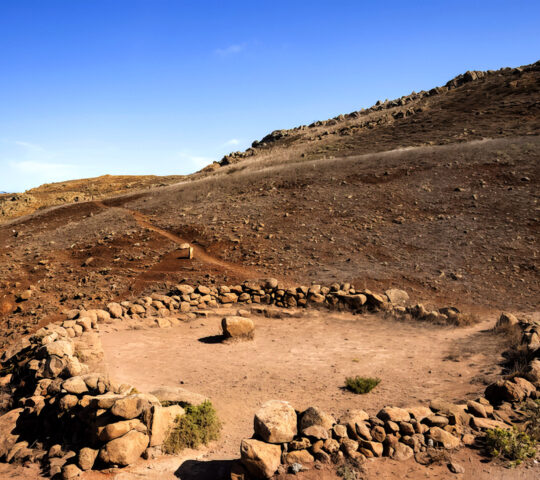
One of the most impressive testimonies of the struggle of the majorero to dominate the territory is located in the Llano del Triguero, very close to the population center of El Time. There is located the old farm of Felipe Ruiz, known as Felipito.
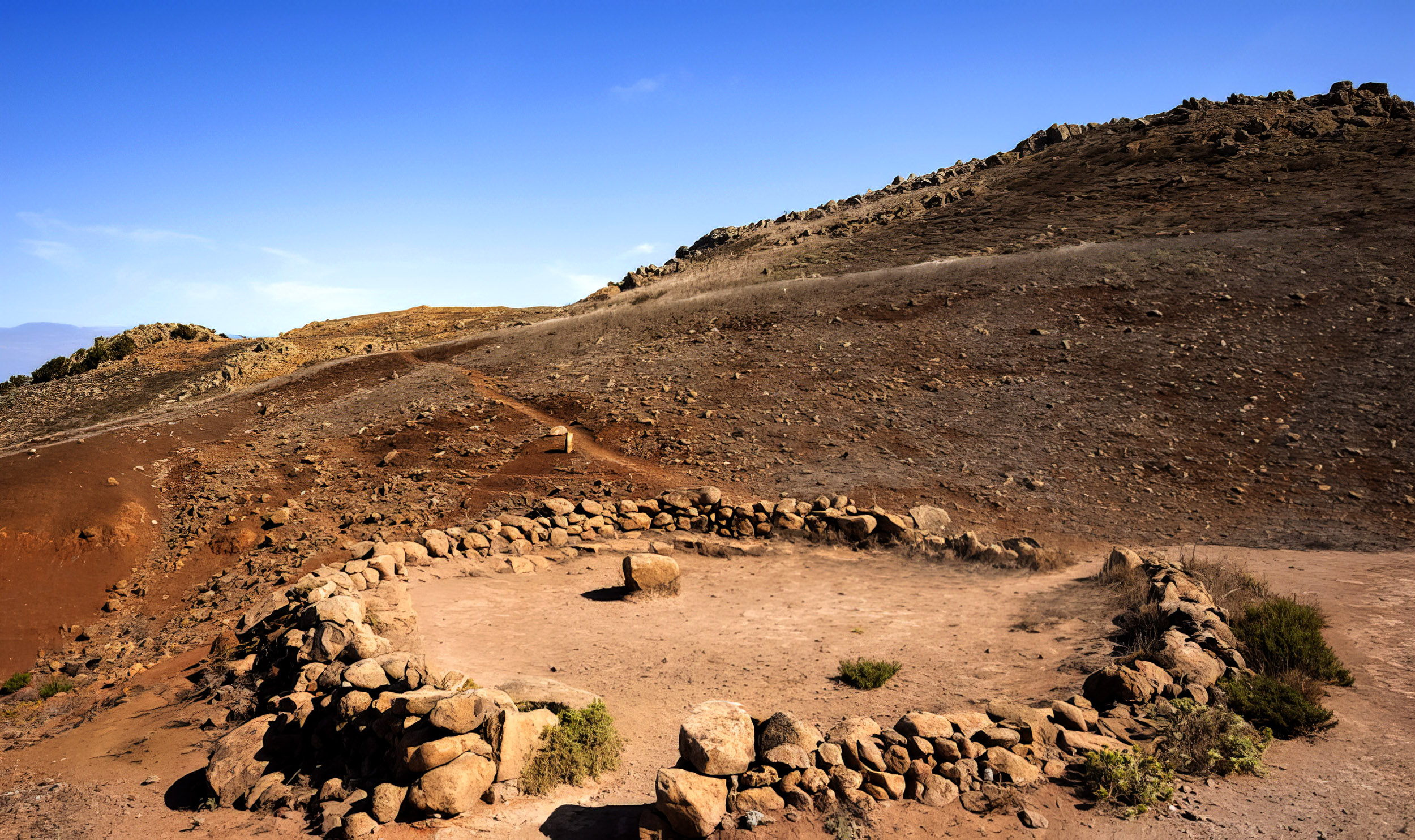
This farmer put all his efforts into erecting a complex dry stone infrastructure to cope with the limestone soil and prevailing winds. Obsessed with taking advantage of the scarce rainfall, he built thick walls, some more than three meters high, limestone corrals to protect himself from the wind and an ingenious system of turnstiles, drains and pipes to channel water runoff to his gullies.
Today his house – a modest stone building with three rooms and a spare room –and the entire estate have been restored by the Cabildo of Fuerteventura, reopening its doors in October 2021 as a recreational area.
The space, which has barbecues, covered picnic areas, a children’s playground and canary ball courts, allows visitors to walk among Felipito’s walls and socos, understanding what peasant life was like and admiring the ingenuity of a man who transformed stone into his greatest ally.
Actuality and patrimonial value
Over the years, the low profitability of traditional crops and the rise of the tourism sector led to the abandonment of many farmlands.
However, El Time maintains its essence and its landscape value, where nature and the action of man have shaped an agricultural environment of great beauty. Today, places like the recreational area of Felipito allow you to enjoy this valley, while its hermitage and its old houses remain silent witnesses of the majorera history.
A landscape that recalls how life was forged in the interior of the island, sheltered by the cliffs and the fear of the sea.