Puerto del Rosario
History, sea and urban life in the capital city of Fuerteventura
Puerto del Rosario, known until 1956 as Puerto de Cabras, is today the main administrative, cultural and service center of the island. Its evolution is deeply linked to the sea, trade and its role as island capital, making it an ideal destination for those who want to know the most urban and authentic Fuerteventura, without giving up direct contact with the coast.
Origins and historical evolution
Since the 15th century, the bay of Puerto de Cabras has been used as a natural refuge for boats and an occasional point of exchange for merchandise and provisions. For centuries there was no stable population center, due to the scarcity of pastures and the poor quality of the soils, sandy and saline.
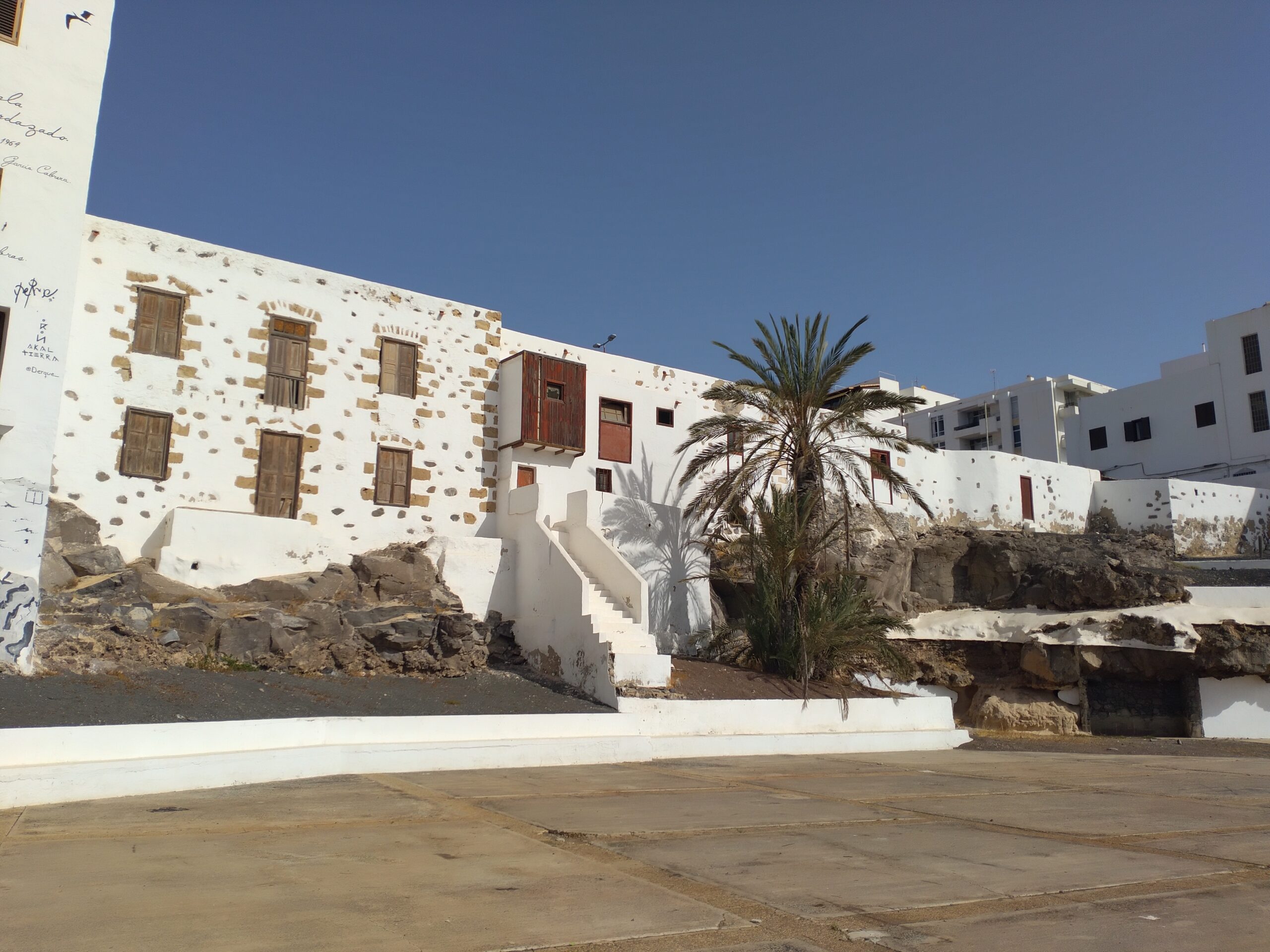
The first documented constructions in the surroundings of the bay date from 1795, and at the beginning of the XIX century the place had only a few humble houses and a very small population. Growth came with the development of maritime trade, especially from the export of barrilla, cereals, cochineal and lime, fundamental products in the Majorero economy of the 19th century.
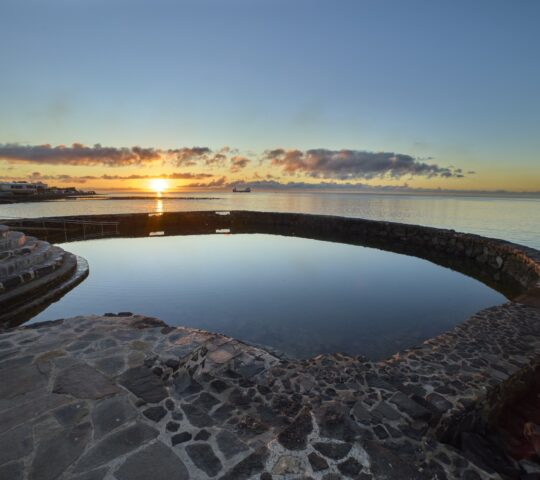
Between 1890 and 1895 the first municipal wharf was built, financed by the local commercial bourgeoisie, and in the 20th century the port was expanded and key infrastructures were built, such as the La Charca water reservoir.
Puerto de Cabras was established as an independent municipality in 1834, and by 1860 reached the island capital, the third in the history of Fuerteventura after Betancuria and Antigua. Since then, its growth has been continuous, consolidating as the political and administrative center of the island.
Administrative and cultural capital
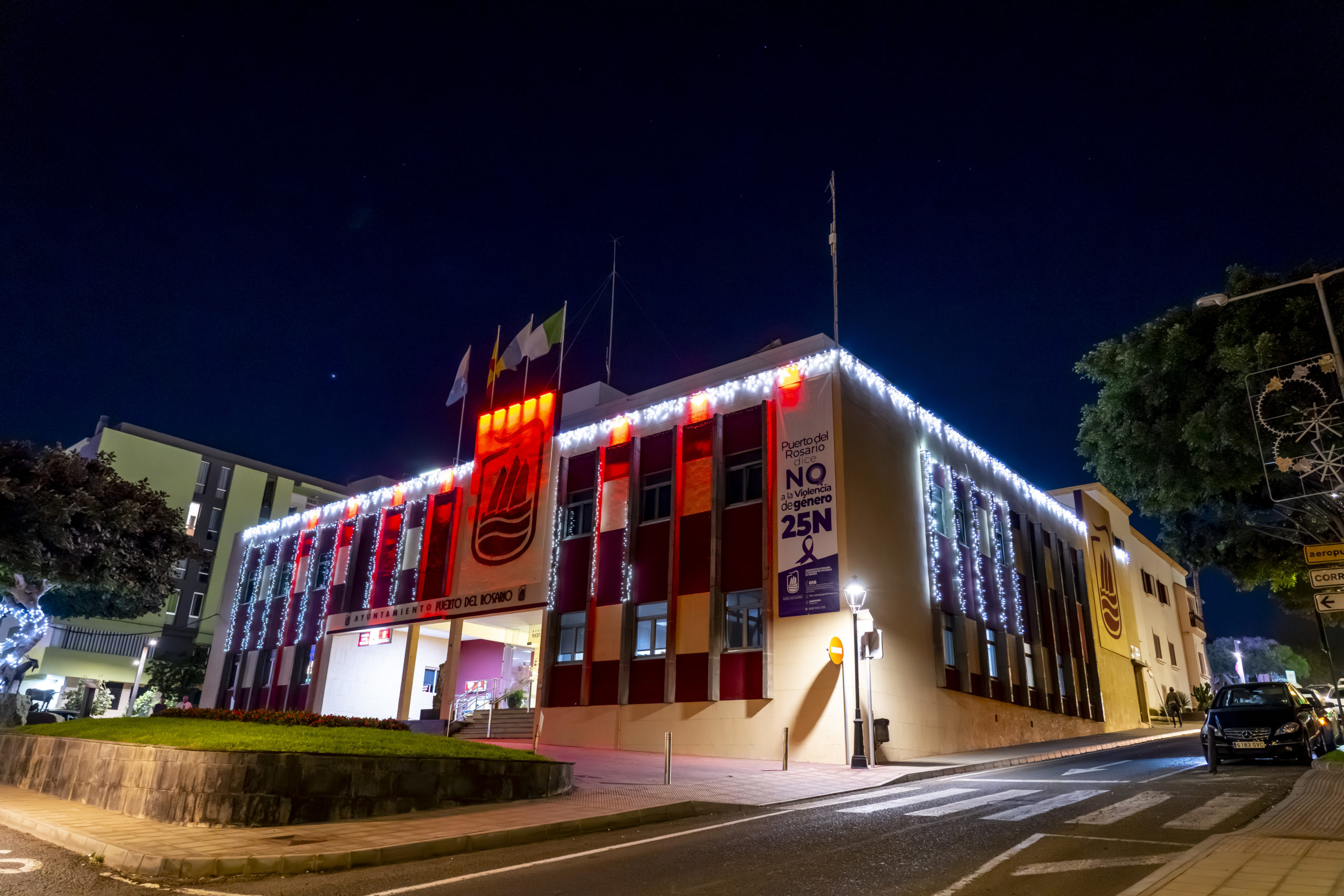
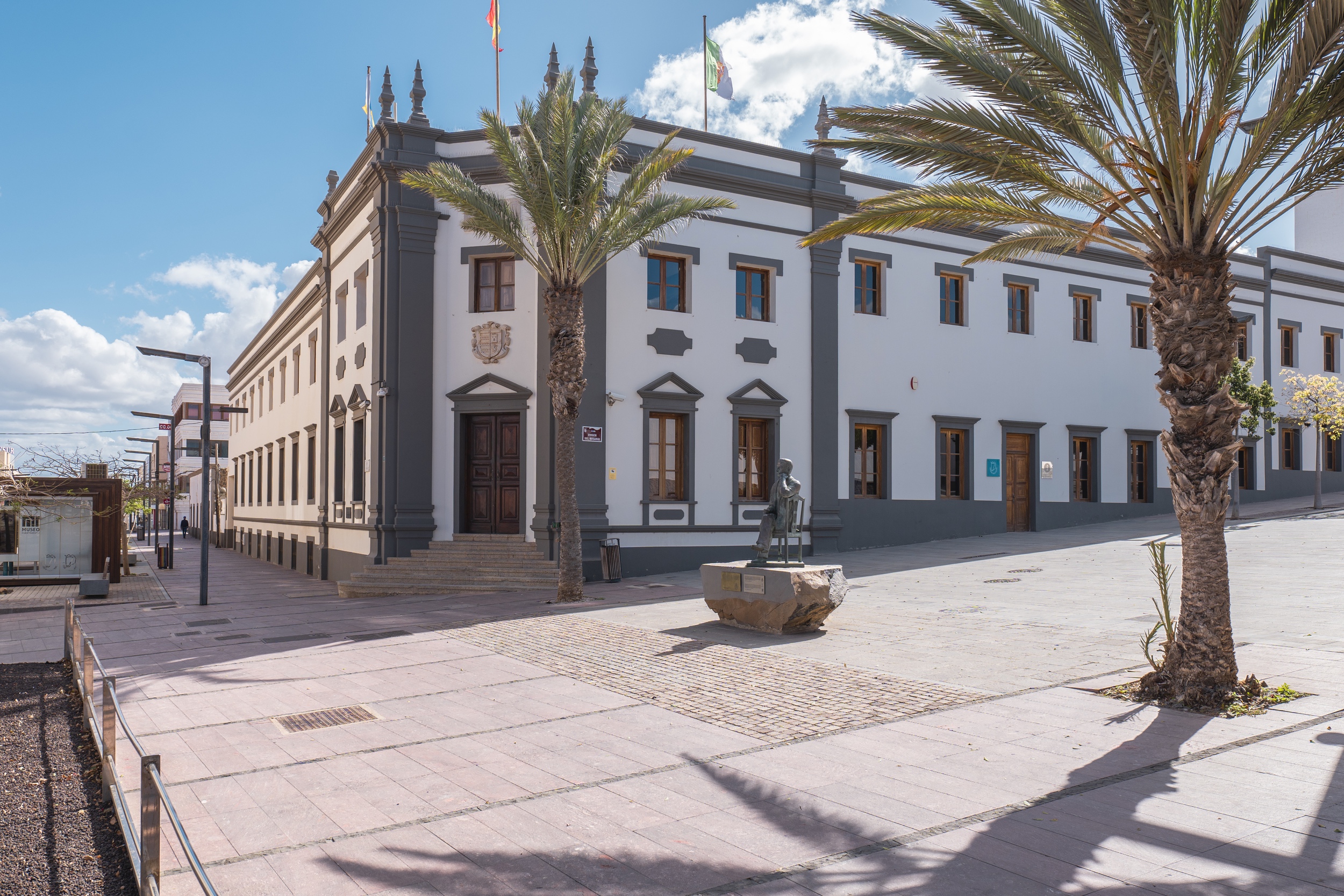
In Puerto del Rosario has its headquarters the Island Council of Fuerteventura, whose main building, built in the 1940s, is one of the architectural landmarks of the city. Next to it is the Casa Museo Miguel de Unamuno, former Hotel Fuerteventura, where the writer lived during his exile in 1924.
In front of the Cabildo stands the Insular Directorate of the General Administration of the State, a building from the fifties that reinforces the institutional character of this central area.
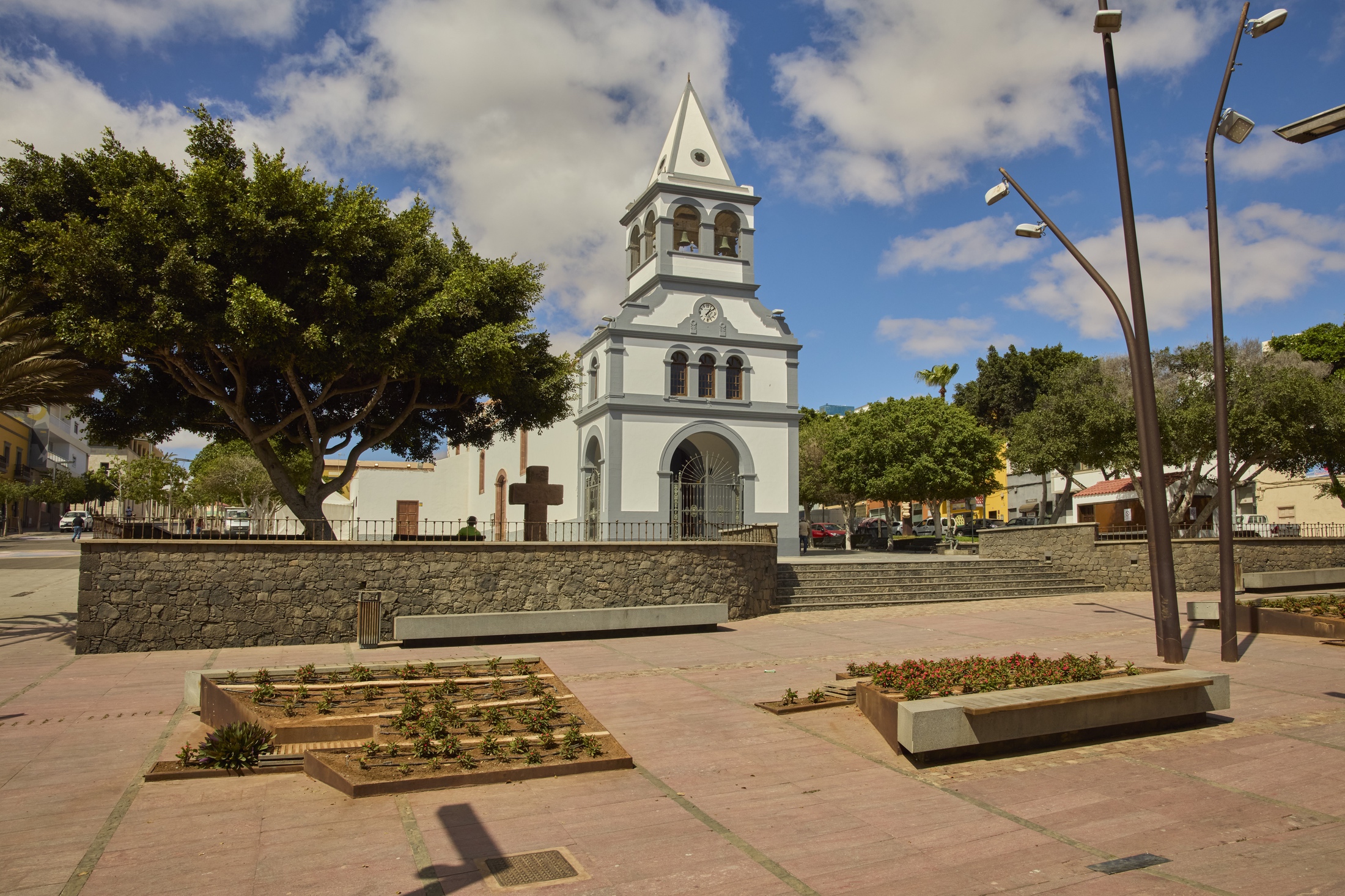
Nearby is the Parish Church of Our Lady of the Rosary, patron saint of the municipality, a neoclassical temple whose construction lasted more than a century and today is one of the main heritage landmarks of the capital.
A city for strolling by the sea
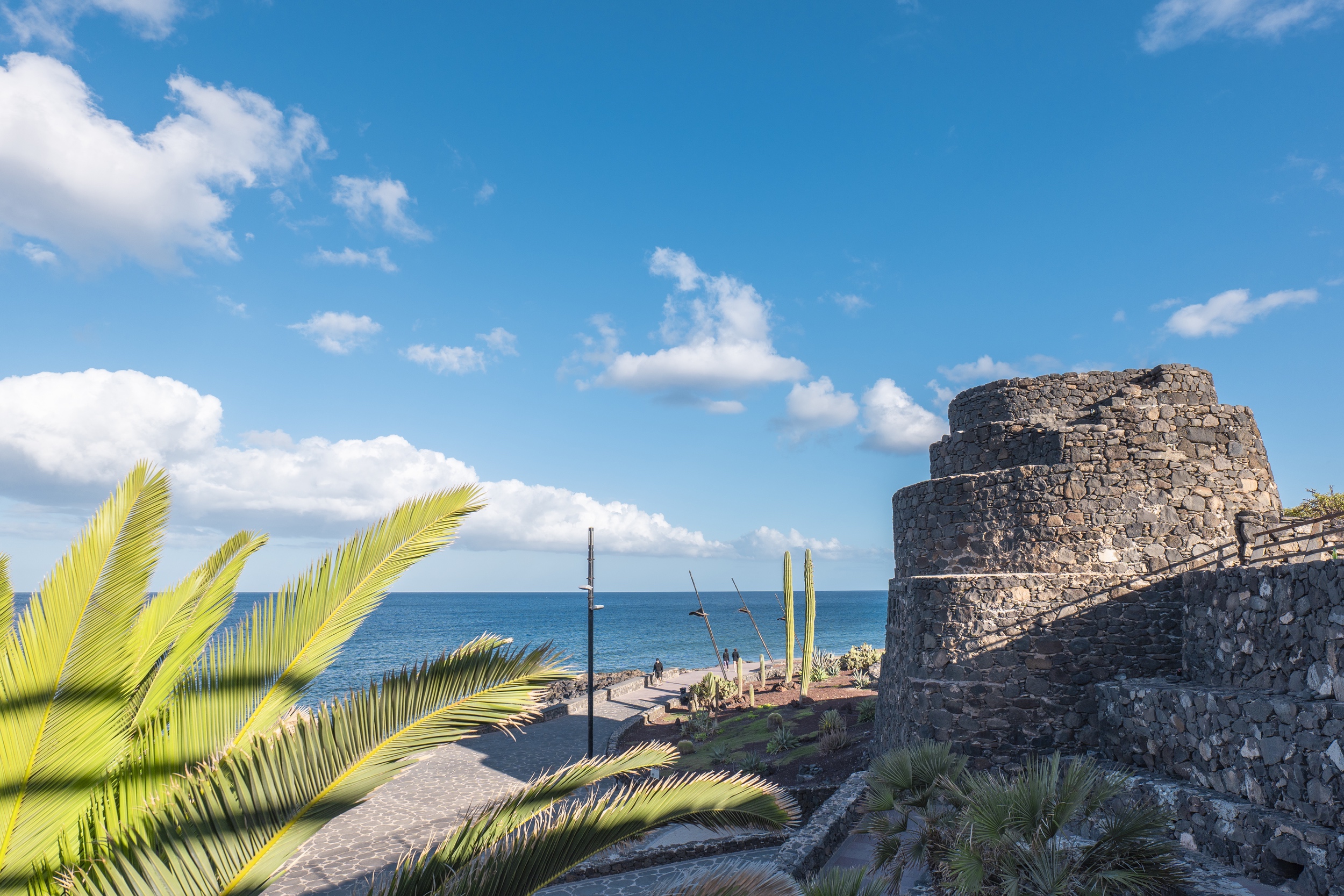
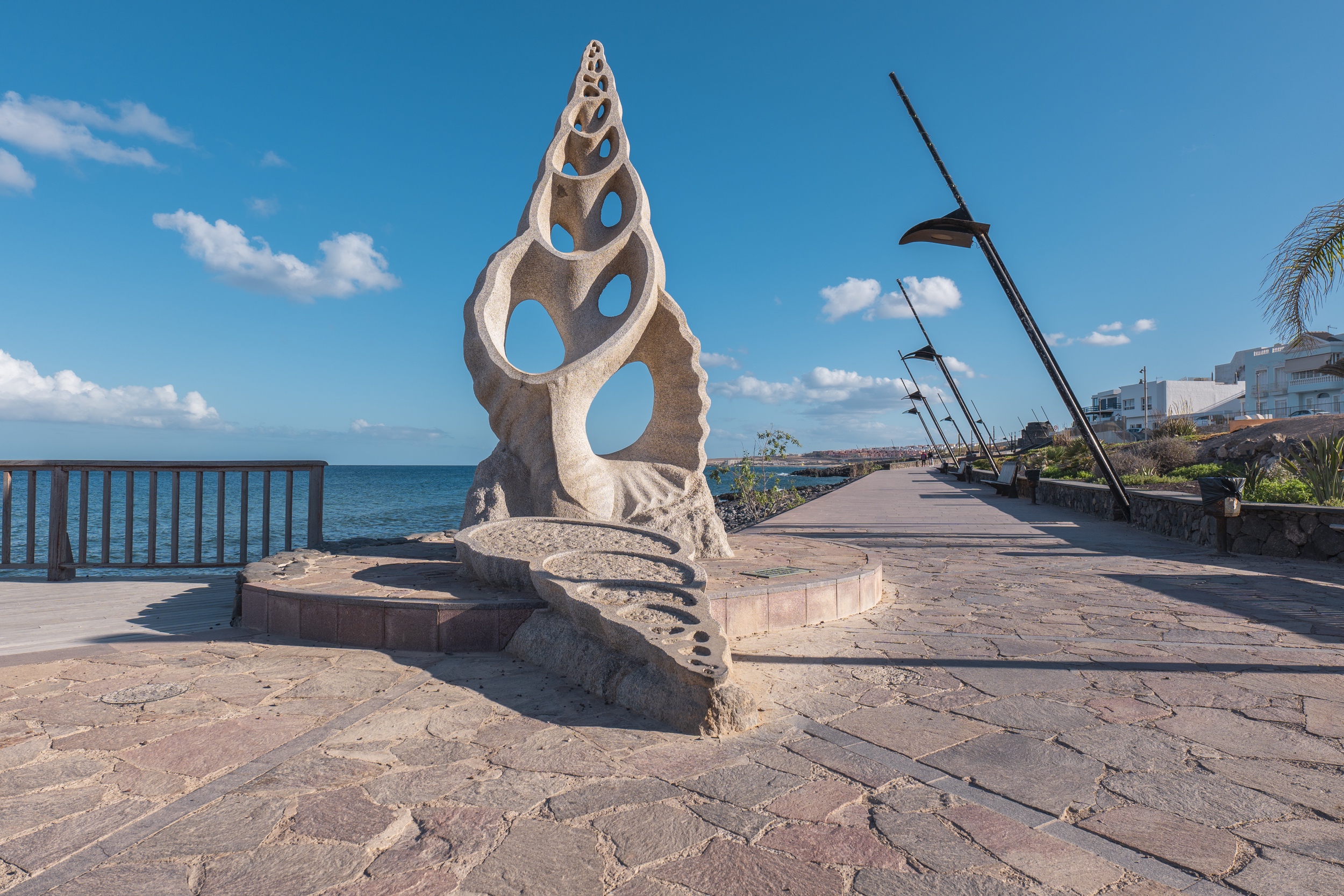
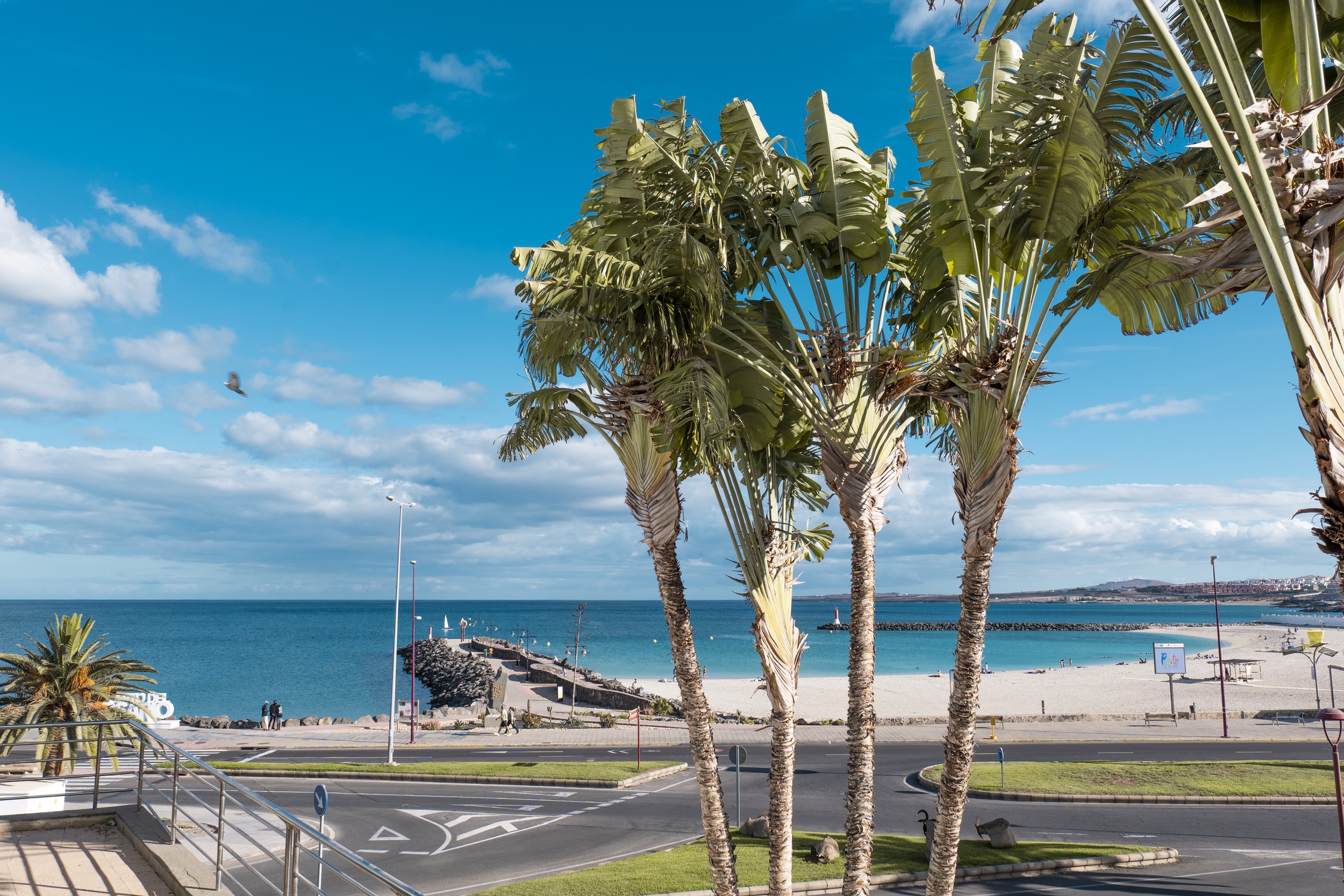
One of the great attractions of Puerto del Rosario is its Avenida Marítima, a wide promenade that runs along the coast and connects urban beaches, leisure areas, public art and gastronomic spaces. Walking at sunset by the ocean is one of the most recommended experiences for visitors.
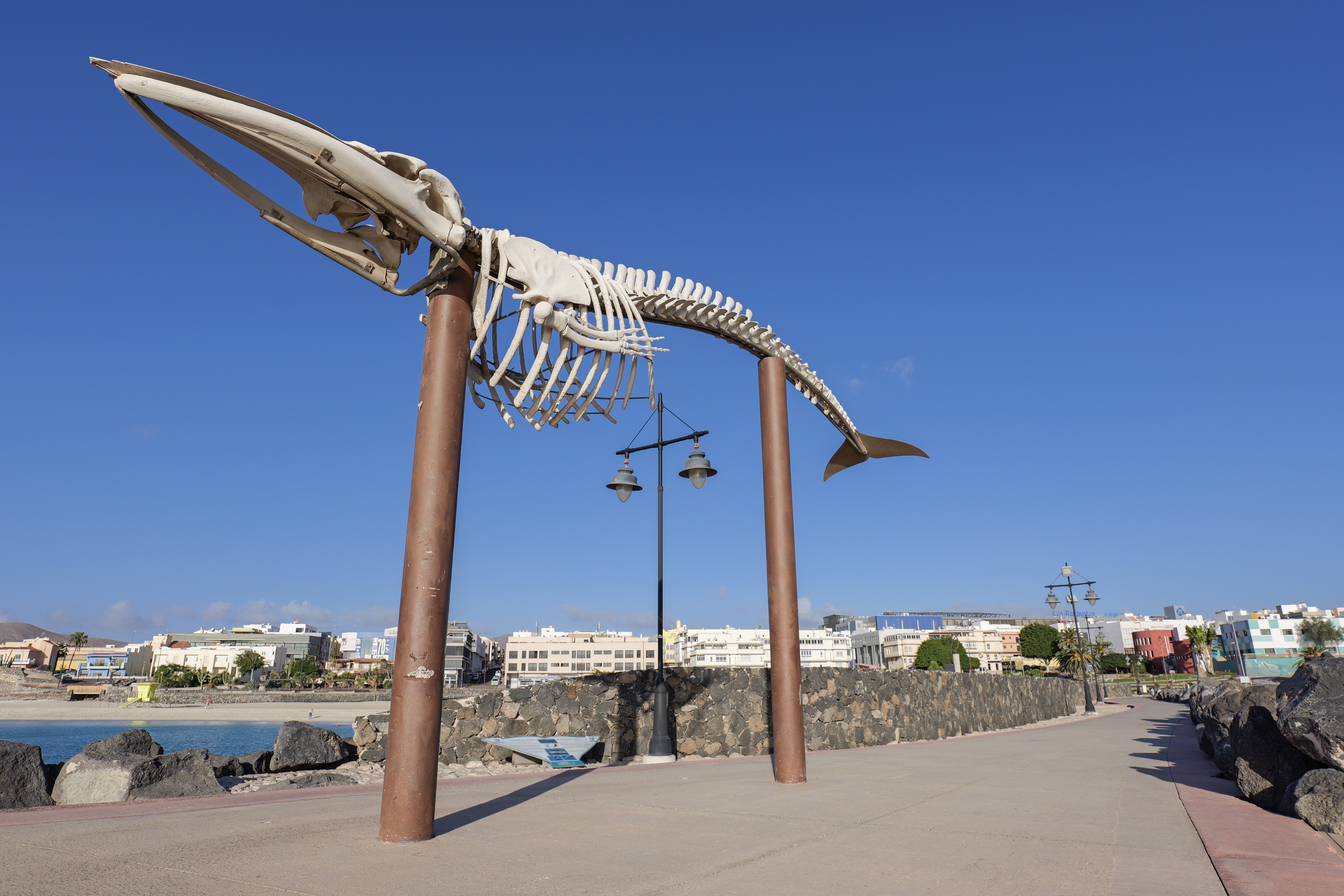
The city is also home to an outstanding outdoor sculpture park, with numerous works scattered along streets, squares and traffic circles, integrating contemporary art into everyday life.
Urban beaches and natural environment
Puerto del Rosario has two urban beaches ideal for swimming:
- Playa de Los Pozos (Playa Chica), in the center of town, with calm waters.
- Playa Blanca, wider and more open, very popular for water sports.
Within the municipality, but away from the town center, there are some of the most spectacular beaches on the west coast, such as Los Molinos and Jarugo, natural environments of great beauty, ideal for those seeking wild and uncrowded landscapes.
Services, culture and quality of life
As the capital of the island, Puerto del Rosario has a wide network of services:
island auditorium, public libraries, bus station, general hospital, educational centers, higher education, music and sports schools, as well as a perimeter bike path that facilitates sustainable mobility around the city.
Gastronomy and local life
The city offers a wide variety of bars and restaurants, where traditional Majorcan cuisine is combined with contemporary proposals. Among the most valued establishments for their home cooking is El Rinconcito de Doña Juanita, highly appreciated by residents and visitors.
Festivals and traditions
Celebrations are an essential part of the local identity. Among the most outstanding are:
- Carnivals of Puerto del Rosario, with events as unique as the Achipencos and the Arretrancos.
- Festivities of Our Lady of the Rosary, patron saint of the municipality, around October 7.
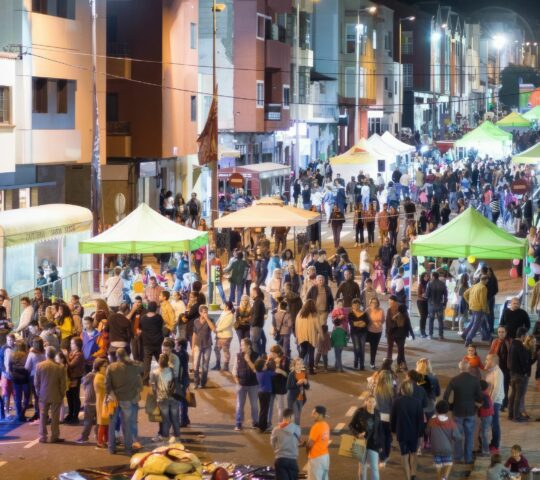
Throughout the year, the different neighborhoods also celebrate their traditional festivals, such as those of El Charco, Los Pozos, Fabelo or Majada Marcial, bringing life and color to the capital.
Puerto del Rosario, a capital to discover
Puerto del Rosario is much more than a point of passage: it is a city open to the sea, with history, art, services and living traditions. A perfect place to combine culture, shopping, beach and local life, and to understand the evolution and present of Fuerteventura from its urban heart.