
Town of La Ampuyenta
La Ampuyenta: history, heritage of inland majorero
An approach to the long history of a majorero village
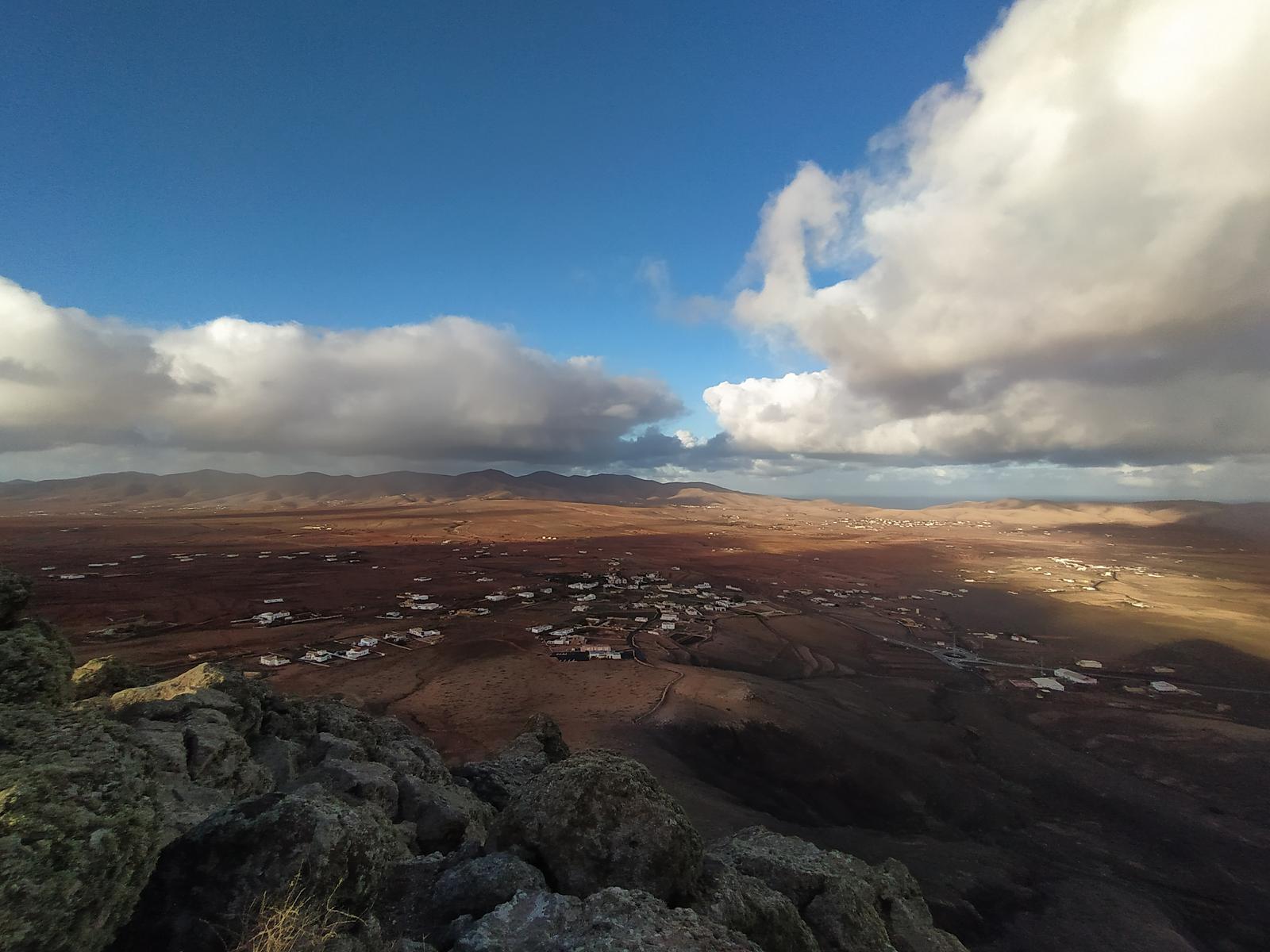
La Ampuyenta is an enclave in the interior of the municipality of Puerto del Rosario that treasures a rich historical, cultural and social heritage. Located just over 15 kilometers from the capital of Fuerteventura, in a strategic position between Puerto del Rosario and Antigua, this rural town offers a deep insight into the agricultural, livestock, religious and artistic past of Fuerteventura, in a quiet environment of great scenic value.
The Maho territory: aboriginal roots and archaeological remains
The origin of La Ampuyenta dates back to pre-Hispanic times, when the ancient inhabitants of Fuerteventura, known as mahos, used these lands for goat grazing and the exploitation of natural resources.
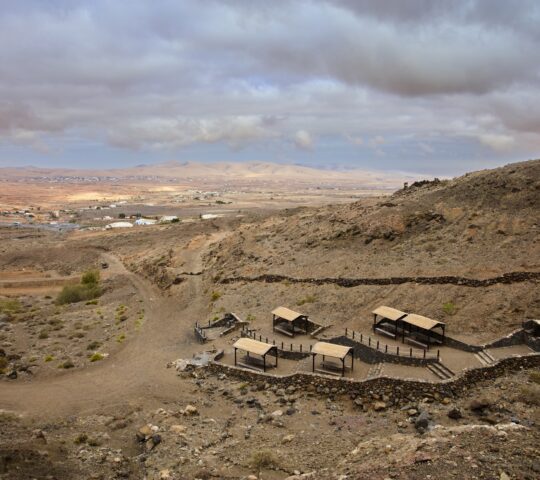
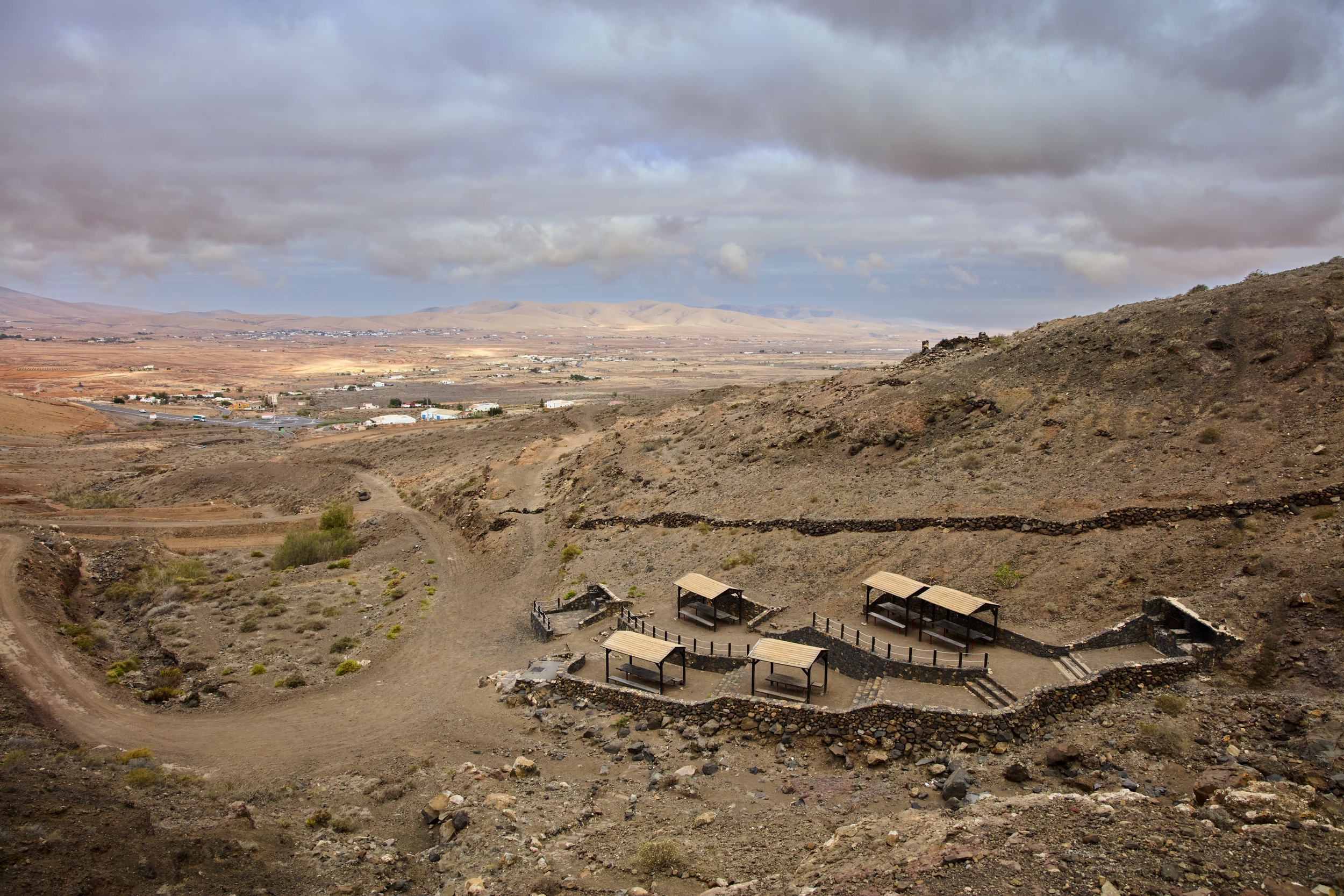
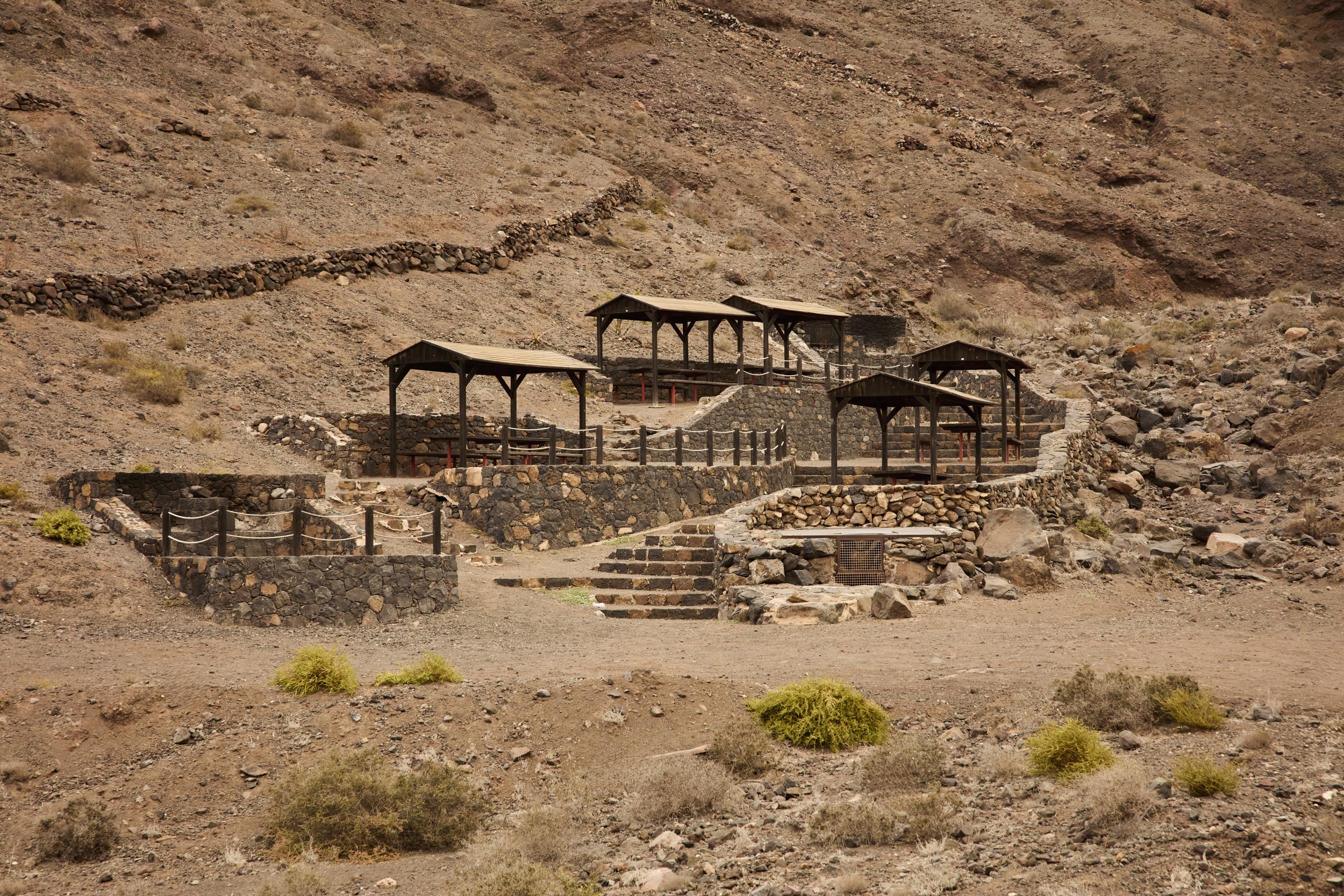
The water wealth of La Ampuyenta was already known in pre-Hispanic times. The Mahos moved their goats to these lands to water and graze, and important archaeological remains are preserved from this intense activity. In Montaña de la Rosa and Degollada de la Culata there are circular and semicircular structures, aboriginal burials and cave engravings. Other remains, such as natural caves with archaeological materials, disappeared under the present road without being adequately studied.
The territory where La Ampuyenta is located is situated on the edge of a wide and fertile valley, protected to the west by the Betancuria massif and to the east by the mountainous complex of Montaña del Campo and other lower elevations. This privileged location, with a higher proportion of clay soils that allow better moisture retention, increased its agricultural potential and made it a suitable place for human settlement since aboriginal times.
The communal use of large areas for grazing, documented after the conquest as “mancomunes”, has a clear antecedent in these aboriginal practices, revealing a remarkable continuity in the collective management of the territory.
Traditional economy: the fertile valley and the gavias
La Ampuyenta is located in a site of great water richness for the insular parameters and, therefore, rich in pastures and land dedicated to agriculture. This natural fertility, combined with the technique of gavias – a traditional hydraulic system designed to capture and retain runoff water – allowed the cultivation of cereals and leguminous plants in an environment of low and irregular rainfall.
The gullies of La Ampuyenta, which can still be seen in the surroundings of the village, were a source of wealth and agricultural economy for centuries. This ingenious system of floodable terraces, unique in the Canary Islands, transformed the landscape and made possible a rainfed agriculture adapted to the arid environment, constituting the economic base that sustained the settlement and community life for generations.
Goat breeding, a structural nucleus since aboriginal times, continued to be an essential complement to the local economy. Artisanal cheese production, the predecessor of today’s majorero cheese with denomination of origin, was part of a domestic economy oriented both to self-consumption and island exchange.
The San Pedro de Alcántara Chapel: the “Sistine Chapel” of Majorca
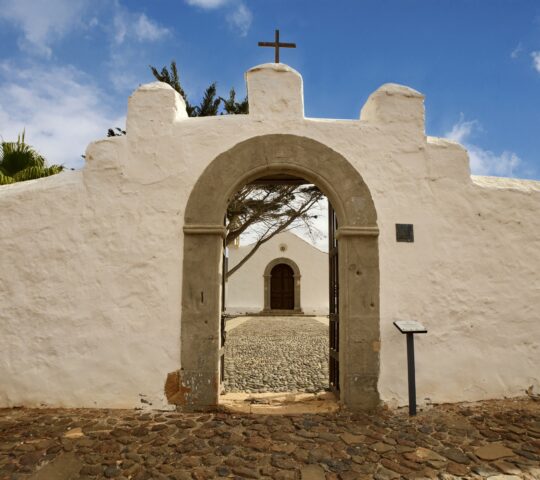
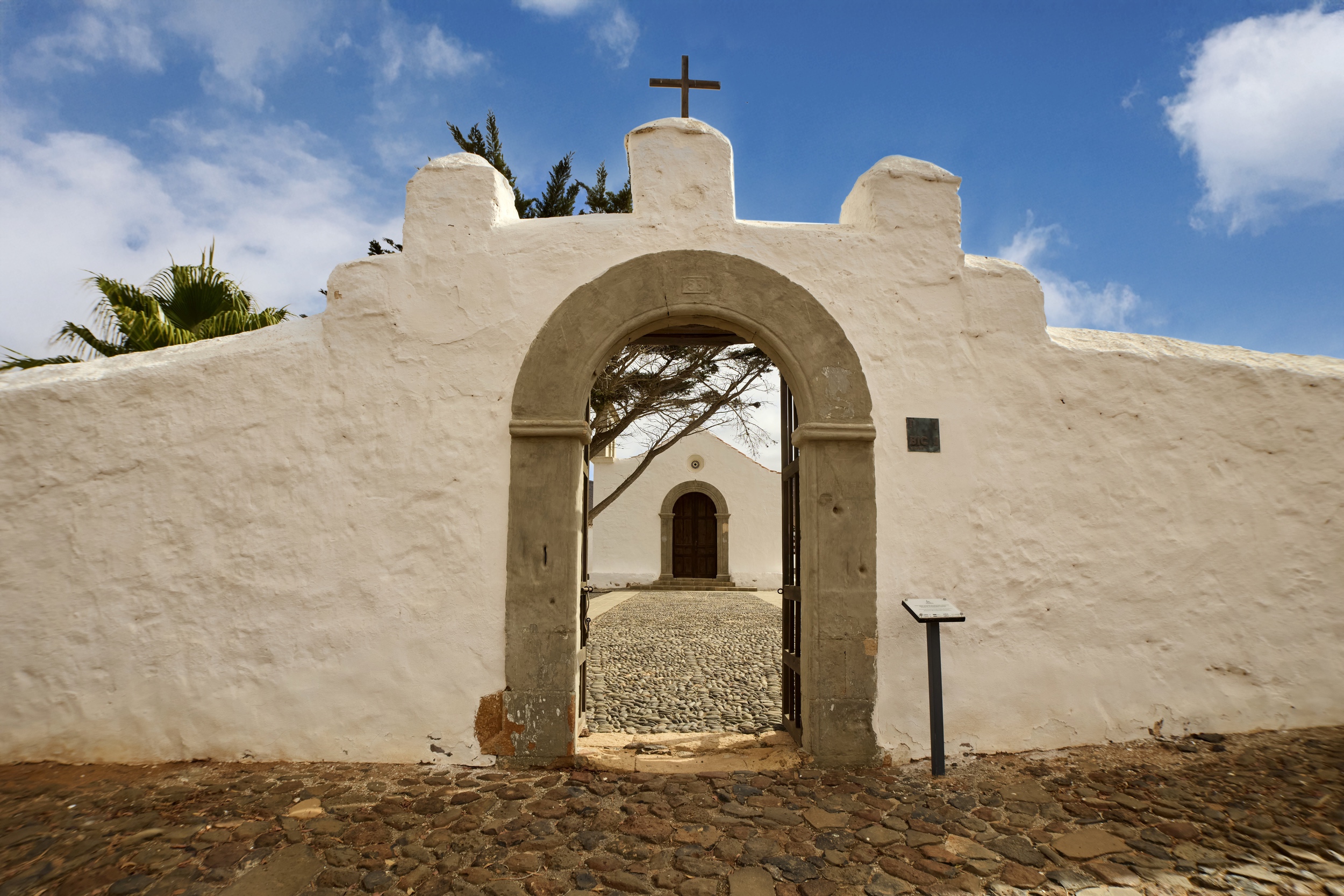
The village of La Ampuyenta stands out especially for its religious and artistic heritage, whose greatest exponent is the chapel of San Pedro de Alcántara, built in 1681 by Pedro Medina and his wife Agustina de Bethencourt. This temple is an artistic reference of Majorero Baroque and is considered one of the 28 temples declared of Cultural Interest (BIC) in Fuerteventura.
The chapel is known as the “Sistine Chapel” of Fuerteventura by the large number of old paintings hanging on its walls, artistic works of the eighteenth century that make its interior in an exceptional space. The paintings practically cover the walls of the temple with representations such as the Allegory of Salvation, the painting of Souls or St. Peter levitating, among others.
Among the most valuable pieces are:
-
A series of paintings on the life of St. Peter of Alcantara.
-
An 18th century altarpiece.
-
A set of mural paintings located on both sides of the altar, made between 1773 and 1782, considered by some scholars as the most important of the Canary Islands.
-
A choir with remains of pictorial decorations.
-
A pulpit in which the apostles are represented.
-
The canvas “El Tránsito”, from the XVIII century, which represents the mourning of the first presbyter and church steward, Manuel Benítez, who died drowned in the ravine of Río Cabras.
The temple also preserves an extraordinary wooden coffered ceiling that contributes to its heritage value. Because of its artistic richness, the chapel has been the object of several conservation and restoration projects.
Illustrious Sons: Doctor Mena and Fray Andresito
La Ampuyenta has also distinguished itself for being the cradle of two exceptional figures whose memory survives in the town and beyond its borders.
Dr. Tomás Antonio Mena y Mesa
Doctor Tomás Antonio Mena y Mesa (1802-1885), known simply as Doctor Mena, was born in La Ampuyenta into a very humble Majorero family. Motivated by his studies, he traveled the world and lived in cities such as Havana, Paris, Seville and La Laguna, before settling again on the island.
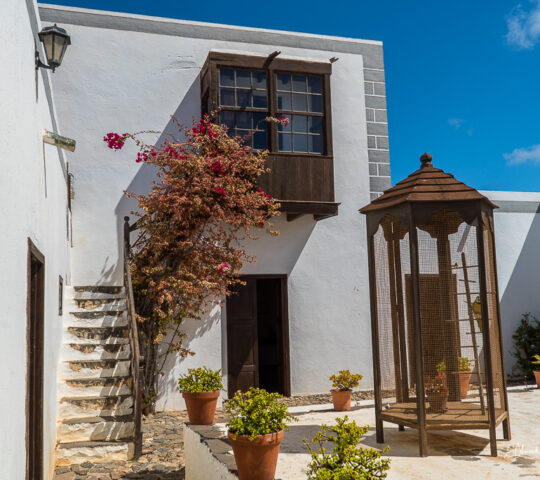
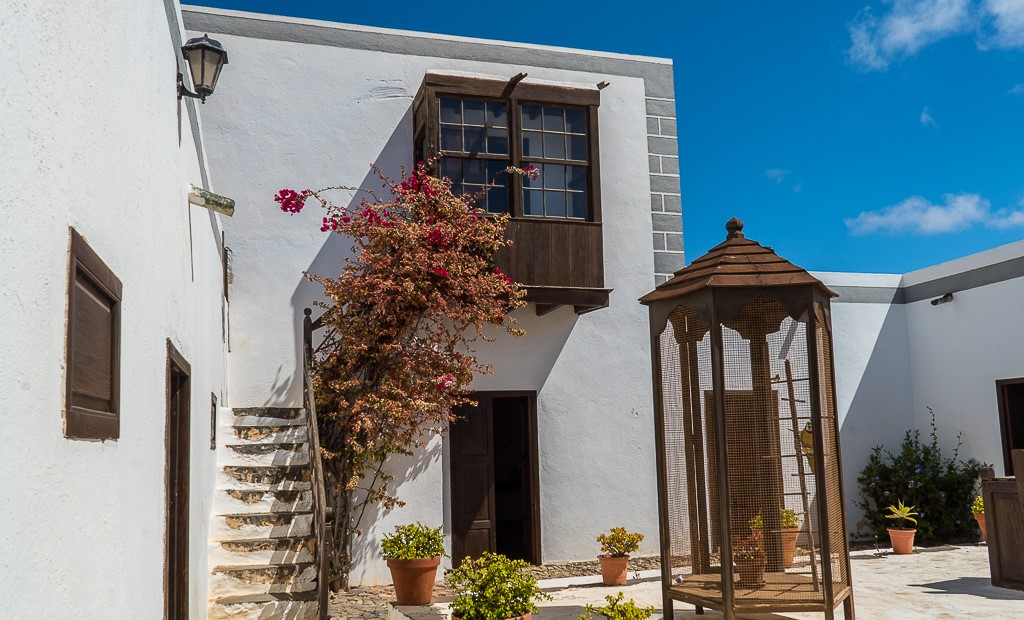
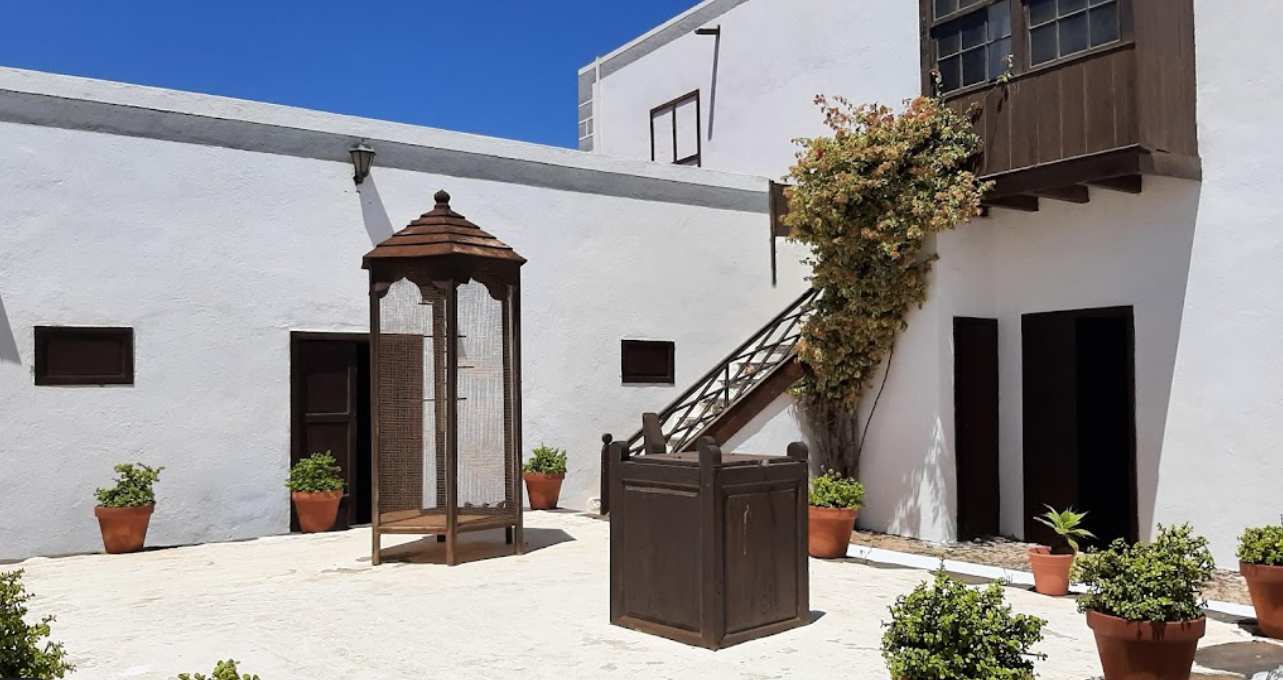
Back in his hometown, he practiced his profession as a doctor at the service of the people of Majorca, always free of charge, by vocation. His commitment to the most disadvantaged and his philanthropic work made him a beloved figure throughout the island. His social and educational legacy lives on in the Casa Museo del Doctor Mena, a traditional house that houses documents, objects and furniture of personal use of the doctor, allowing to know his life and work.
The “Hospitalito” of La Ampuyenta
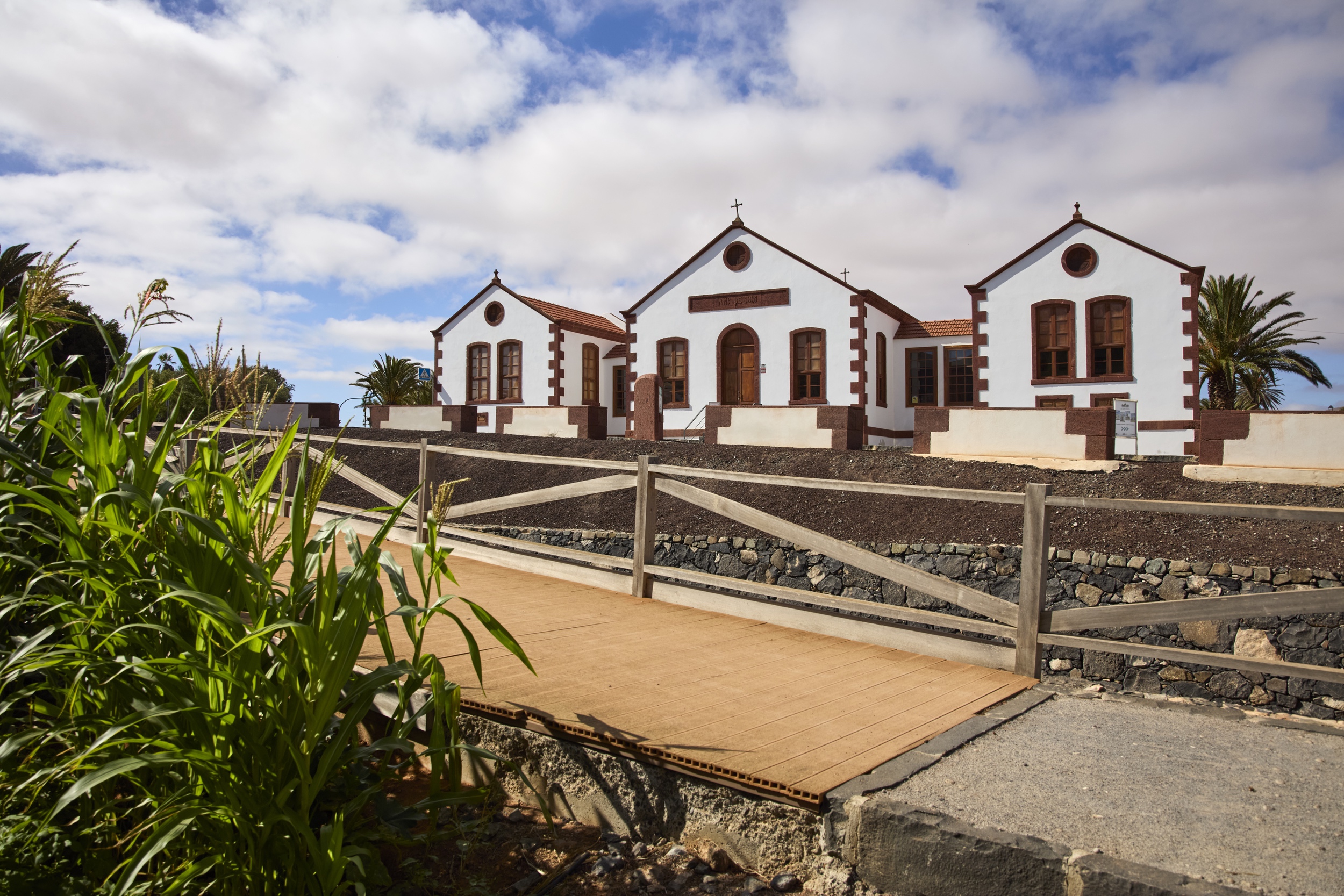
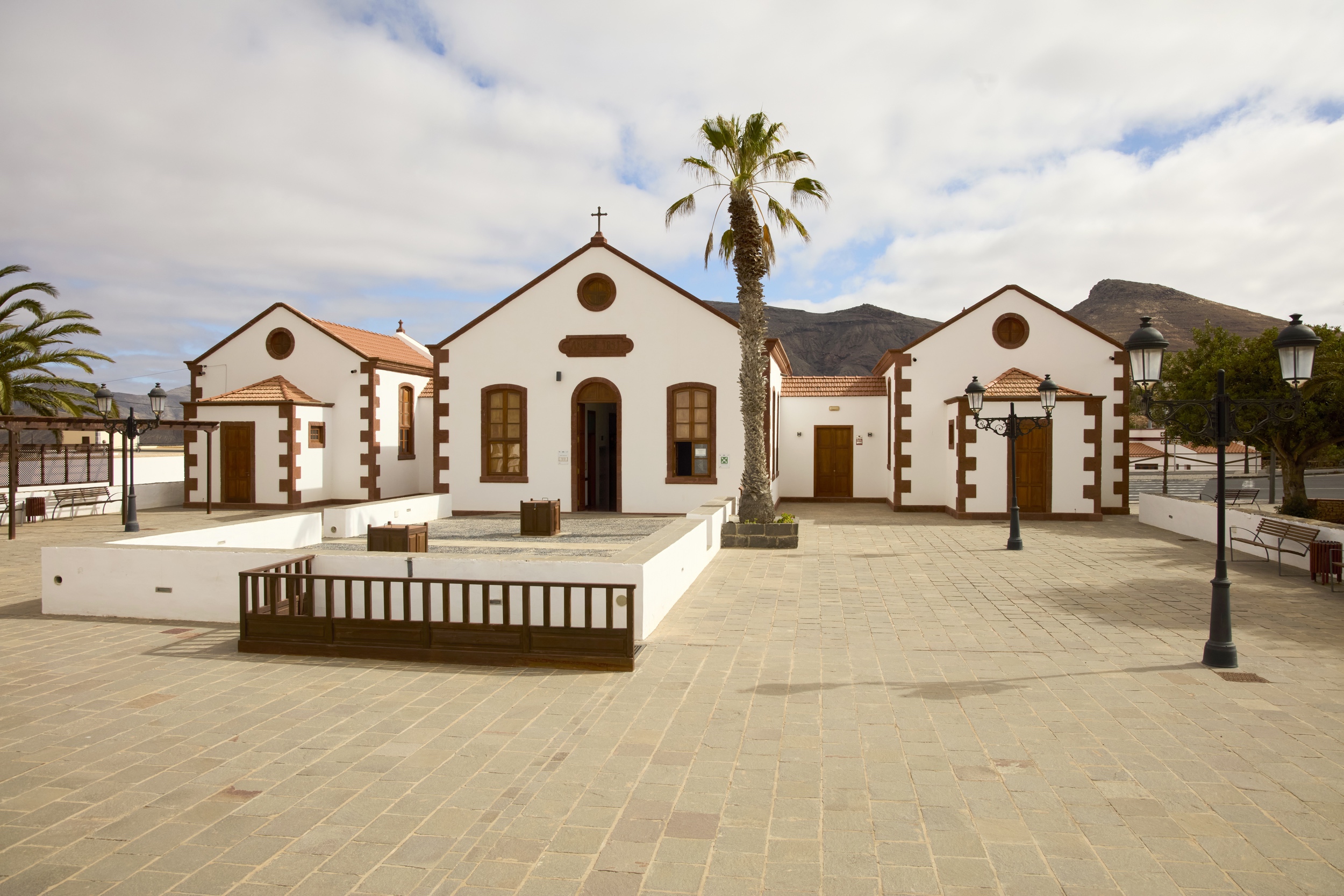
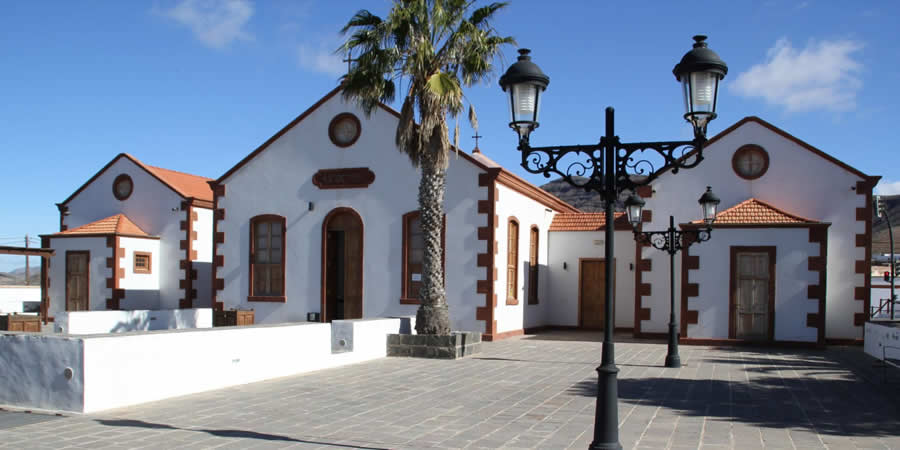
Next to Doctor Mena’s house is the so-called Hospitalito de La Ampuyenta, a distinguished building with three pavilions joined together that represented an important architectural innovation. Its construction, promoted by Doctor Mena a few years before his death, lasted for three decades, although the building was never used as a hospital. Today it is part of the patrimonial complex that preserves the memory of the illustrious doctor from Majorca.
Fray Andresito
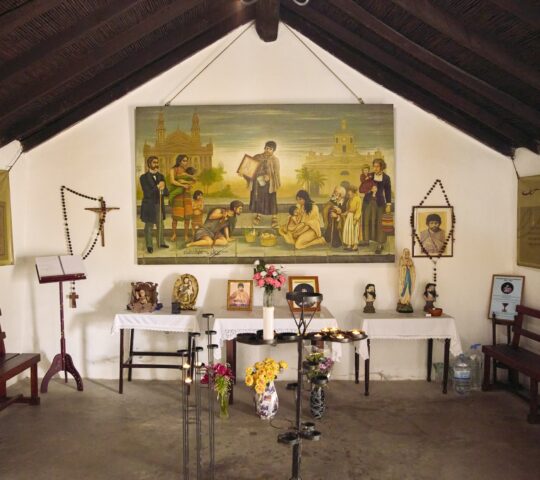
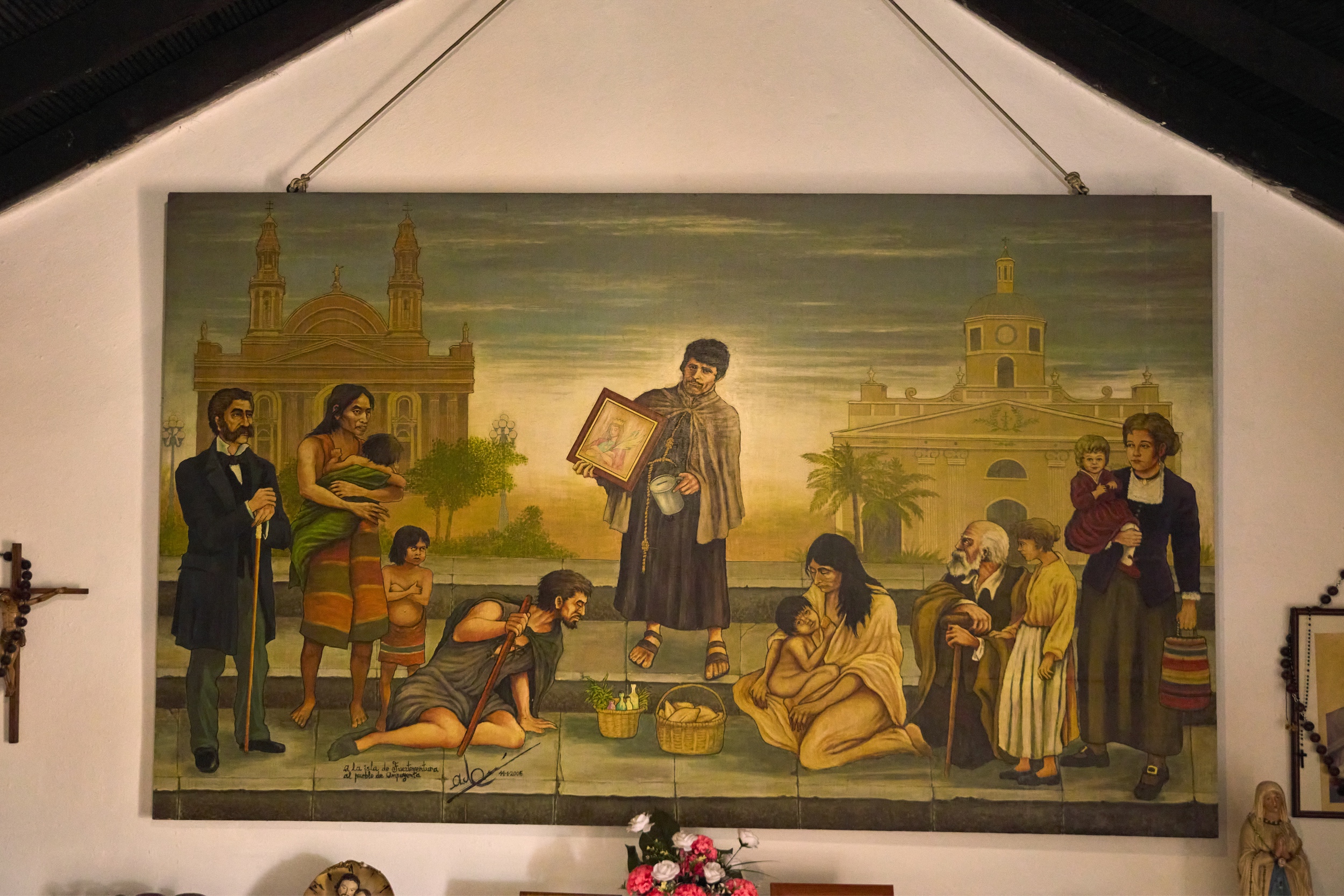
La Ampuyenta was also the birthplace of Fray Andresito (1800-?), the name by which Andrés Filomeno García Acosta is known, a Franciscan friar whose pastoral and charitable work achieved international recognition. Born into a humble family, he left for America in 1833 and did not return to the island, developing his work in Chile and Uruguay, where his example remains in force and is revered for his social and evangelizing work.
In La Ampuyenta is preserved the humble house where the friar lived with some relatives in the first half of the nineteenth century, which now houses a shrine in his honor. Every January, religious celebrations dedicated to Fray Andresito are organized, attracting devotees from all over the island.
Traditional architecture and ethnographic heritage
The traditional architecture of La Ampuyenta responds to the functional logic of rural life in Majorca: whitewashed earthen houses, dry stone walls, livestock corrals, threshing floors, cisterns and, especially, the gullies that still draw the agricultural landscape.
The set formed by the chapel of San Pedro de Alcántara, the House of Doctor Mena, the Hospitalito and the House of Fray Andresito is a cultural heritage complex of the first order, which allows visitors to take a trip to the past of Fuerteventura through a small walking tour of the village and its charming rural setting.
This complex, surrounded by cultural and historical elements of great interest, has been the subject of educational and tourist visits that seek to highlight the rich heritage of this enclave in the interior of Majorca.
The Lucha Magna of 1875: living memory of a traditional sport
La Ampuyenta has been the scene of social events that reinforce its historical identity, such as the Lucha Magna of 1875, a legendary fight that pitted the northern and southern sides of the island against each other.
This event, which is part of the intangible heritage of the Canary Islands, has been recreated as an expression of the collective memory and sporting tradition of the island. The recreation respects the ritual of the 19th century, with the teams led by mandadores and enlivened with rasquera challenges, just as it happened. The event also included the unveiling of a commemorative bust of the event, the work of sculptor Roberto Mesa.
Administrative assignment: from Casillas del Ángel to Puerto del Rosario.
Administratively, La Ampuyenta was part of the old municipality of Casillas del Ángel, whose jurisdiction covered a large part of the interior of the island. From the 19th century until the first quarter of the 20th century, the town depended on this historic municipality.
After the territorial reorganization of 1926 it was integrated into the municipality of Puerto Cabras, today Puerto del Rosario, preserving its identity as a rural nucleus with important cultural and patrimonial relevance within the capital territory.
Festivities and living traditions
Traditions are still very much alive in La Ampuyenta through its annual festive calendar:
-
Festivities in honor of San Pedro de Alcántara: they are celebrated in October and include different popular events that congregate neighbors and visitors.
-
Celebrations dedicated to Fray Andresito: every January, religious events are organized in honor of the Franciscan friar that attract devotees from all over the island. One of the most awaited events is the “Andrés Valerón” Cheese and Wine Tasting, an event that highlights the value of local products, the agri-food tradition and the work of the primary sector.