Hermitage of San Andrés
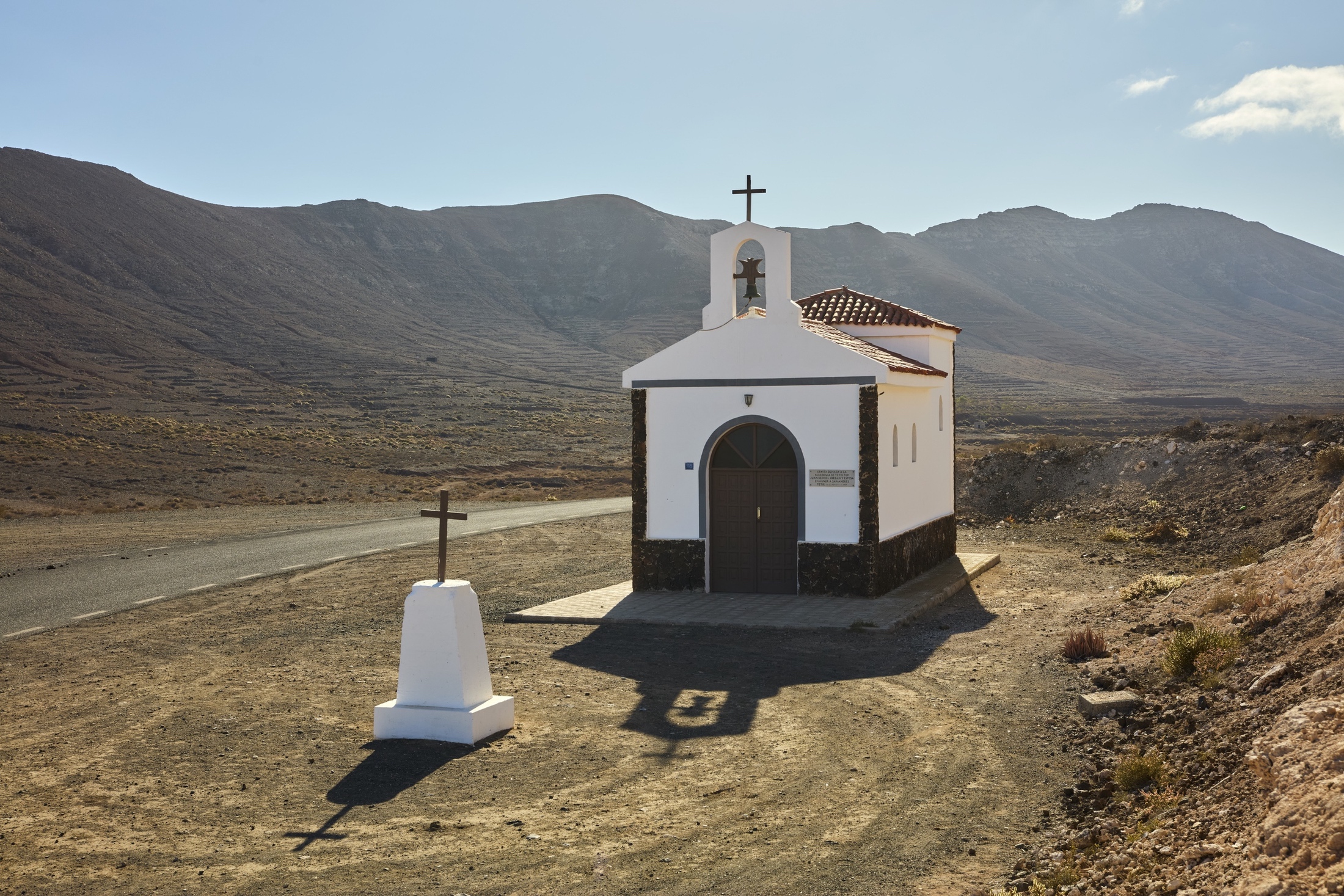
The Chapel of San Andrés is located in the village of Tetir, in the valley of La Sargenta, within the municipality of Puerto del Rosario, and is deeply linked to the agricultural tradition and popular culture of the interior of Fuerteventura.
The original temple was built by the inhabitants of Tetir between 1650 and 1652, with the purpose of housing the image of San Andrés, proclaimed patron saint of farmers and rain. This first hermitage played a fundamental role in the religious and social life of the valley, remaining active until the middle of the 18th century.
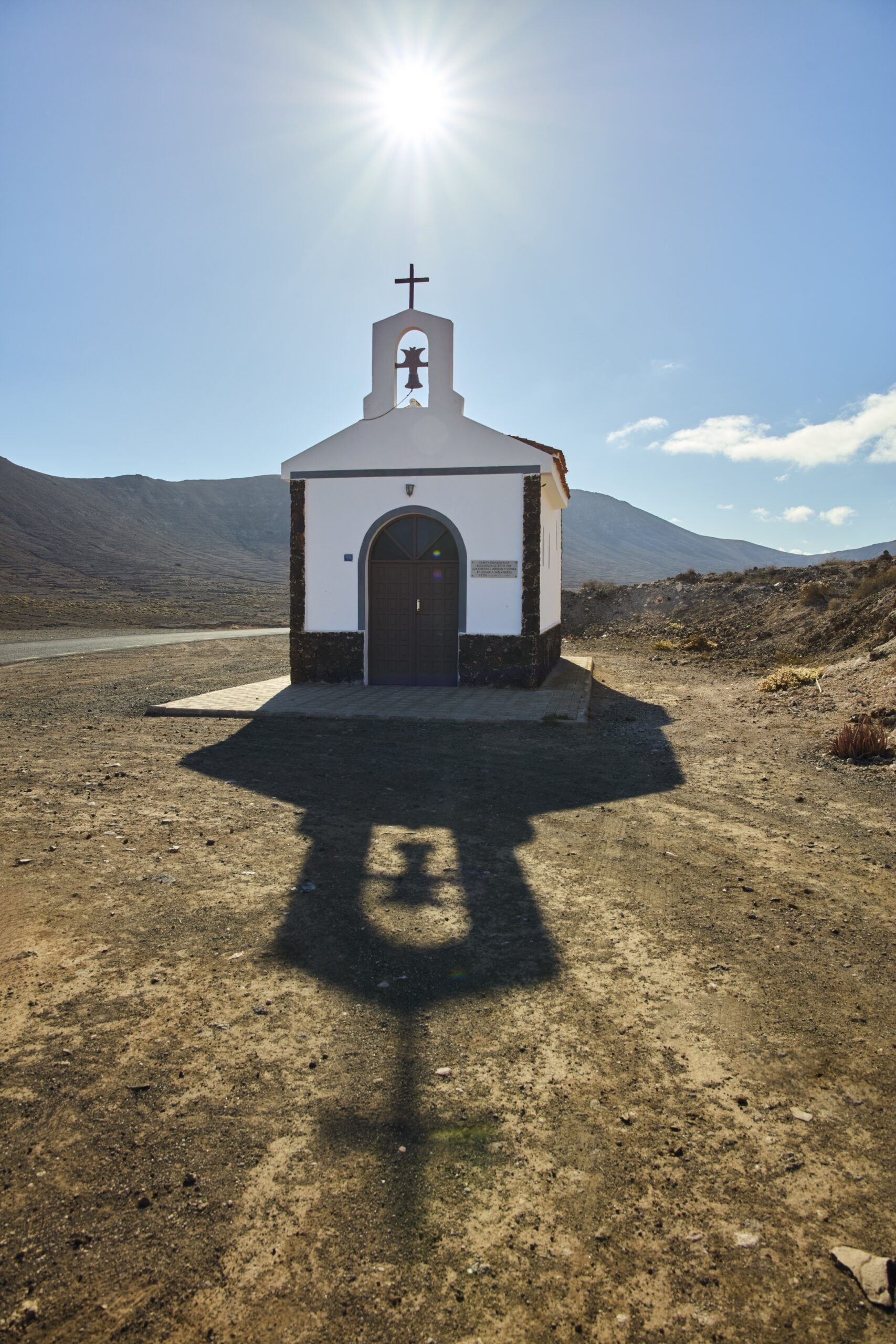
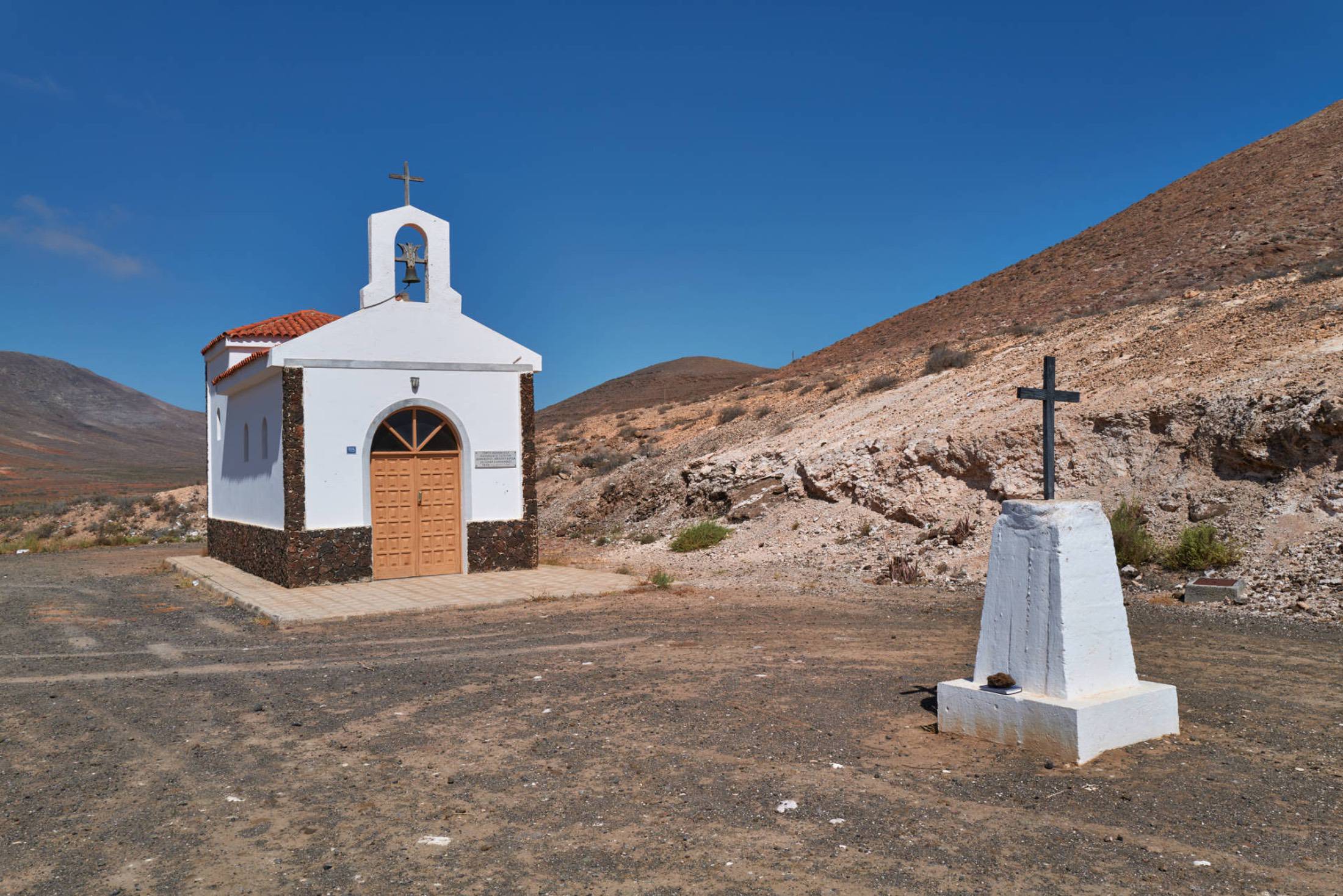
The present hermitage of San Andrés has a more recent origin. It was donated on November 30, 1989 by Don Juan Berriel Jordán to the parish of Santo Domingo de Guzmán, as stated on the plaque located on the façade of the building. Since then, the temple continues to be a spiritual and symbolic point of reference for the people of Tetir.
Every year, on November 30, hundreds of people congregate in the Vega de Tetir to celebrate the feast of St. Andrew. During this day the traditional procession of the saint, accompanied by prayers to intercede and bring the much needed rain to the fields majoreros takes place. This act keeps alive one of the most deeply rooted traditions of the rural world of Fuerteventura, closely linked to the agricultural cycle and dependence on the weather.
Since 1985, the Local Police adopted San Andrés as its patron saint, which is why the festival and the pilgrimage of Tetir are also associated with this security force at the insular level, reinforcing the popular and participatory nature of the celebration.
The importance of San Andrés in the traditional culture is reflected in the popular sayings that have endured over time. One of the best known says: “if it doesn’t rain for Santa Catalina or San Andrés, it’s bad”, in reference to the fact that the absence of rain before November 25, the feast of Santa Catalina, or November 30, the day of San Andrés, augurs a bad year for the crops.
The San Andres Chapel represents today a symbol of faith, tradition and collective memory, and is an essential stop to understand the historical relationship between the agricultural landscape, popular beliefs and community life in the interior of Fuerteventura.