La Asomada
LA ASOMADA: MILLING TRADITION, INGENUITY AND RURAL HERITAGE
La Asomada is a town in the municipality of Puerto del Rosario located on a high plain that acts as a natural balcony overlooking the Atlantic. This small rural town in the interior of Fuerteventura treasures an exceptional ethnographic heritage, starring one of the jewels of traditional architecture majorera: the famous Molina de La Asomada. Its history, deeply linked to the cereal tradition and the use of natural resources, represents a fundamental chapter to understand the rural identity of this town.
THE MAHO TERRITORY: ABORIGINAL ROOTS AND OCCUPATION OF SPACE
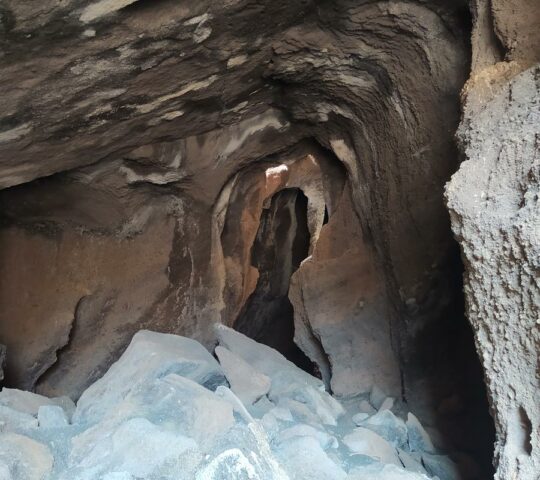
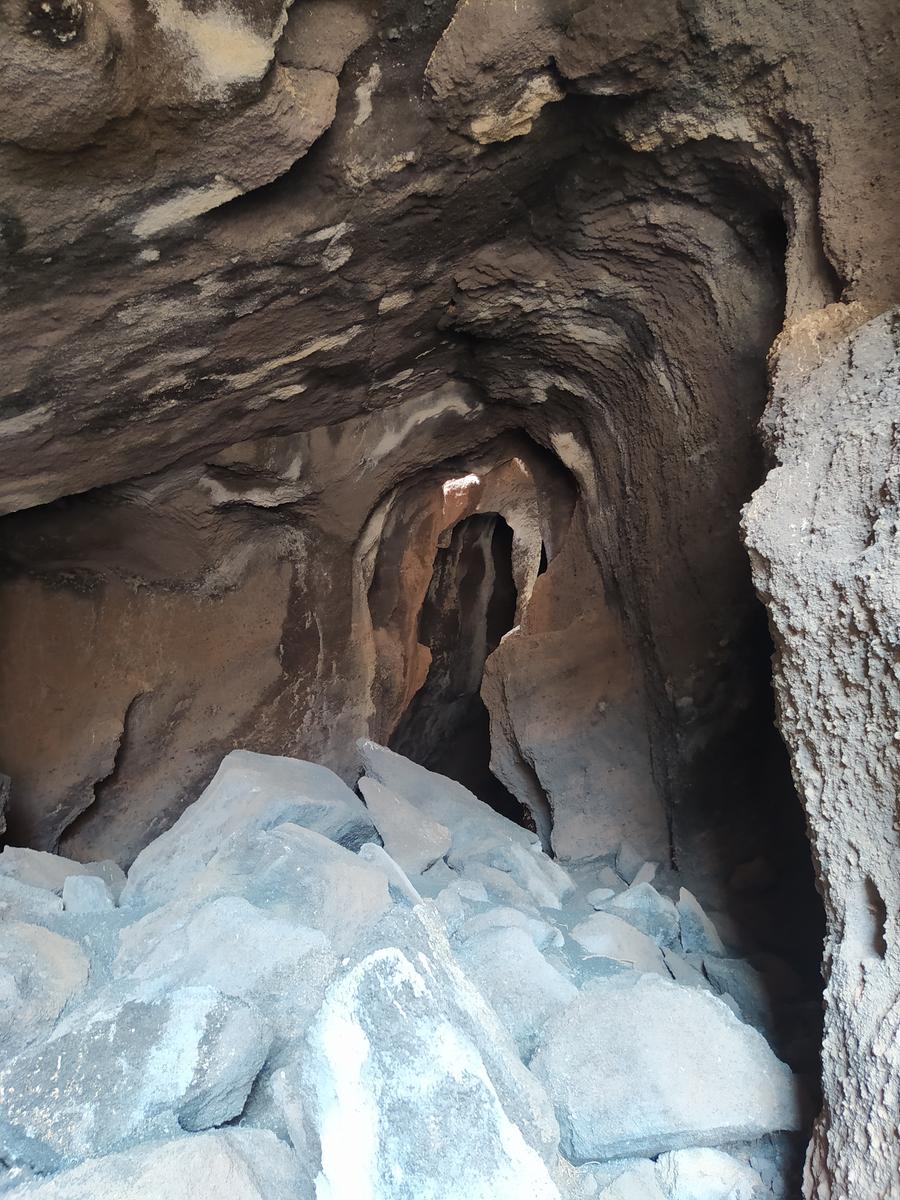
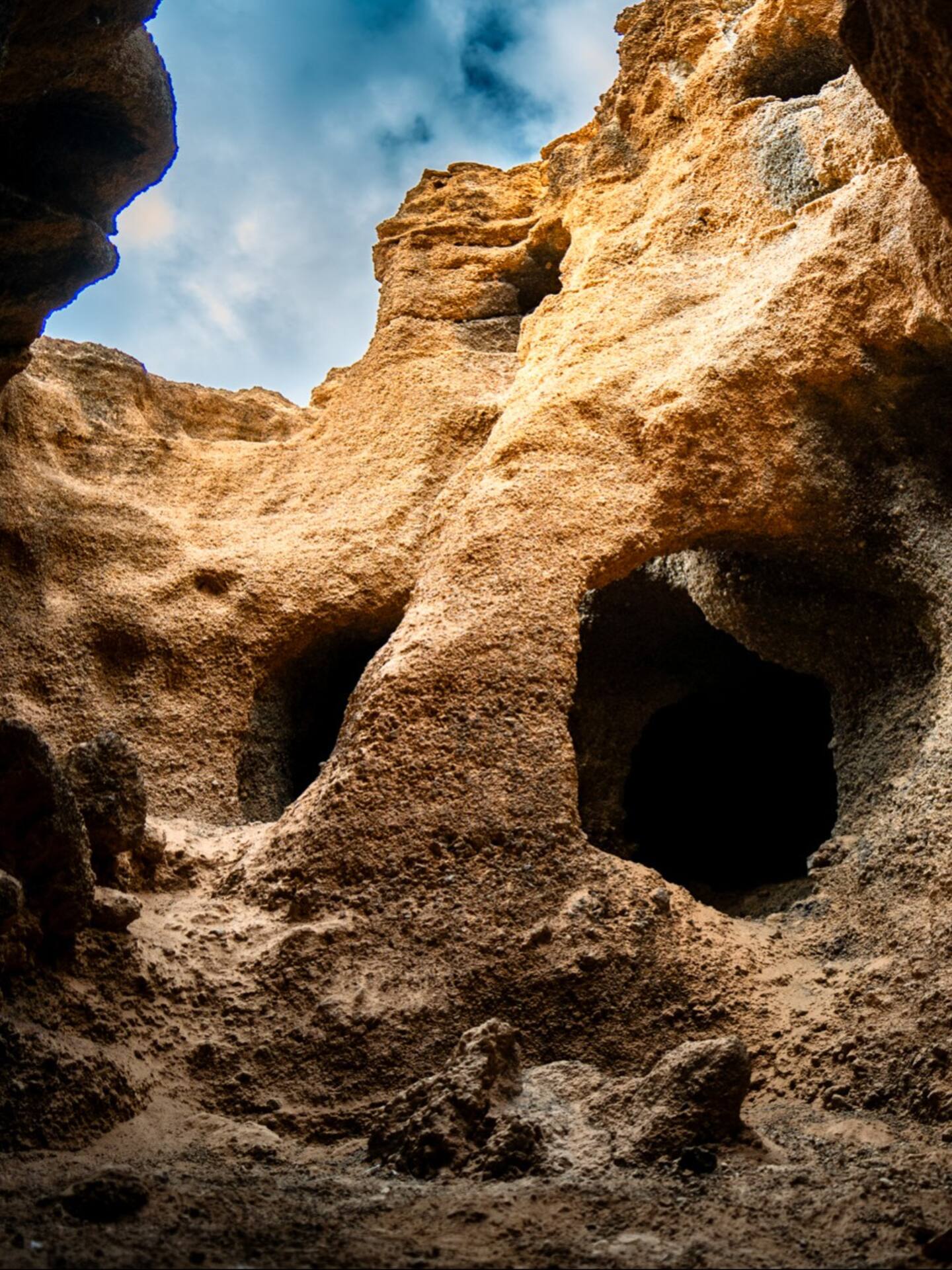
The ancient settlers of Fuerteventura, known as mahos, practiced a model of dispersed occupation of the territory, combining settlements in natural caves and dry stone structures. Their productive system was mainly based on goat herding, complemented by gathering and a very limited agriculture due to the arid climate. The area where La Asomada sits today, with its elevated plains and proximity to the coast, offered favorable conditions for seasonal grazing and visual control of the territory, which is probably the origin of its name: “La Asomada”, the place from which one “looks out” over the surrounding landscape.
During the following centuries, the territory of La Asomada was configured as a rural area dedicated mainly to dry farming and livestock. Its condition as an elevated and clear place made it especially suitable for the use of wind, a resource that centuries later would be decisive for its economic development with the installation of windmills.
LA MOLINA DE LA ASOMADA: A UNIQUE ETHNOGRAPHIC TREASURE
Origin and history
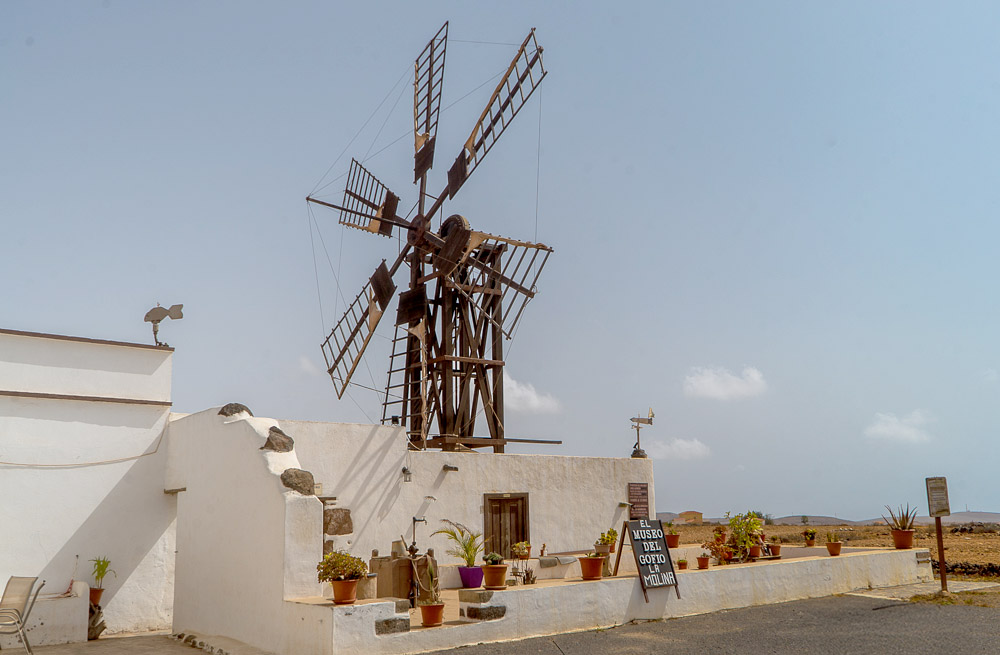
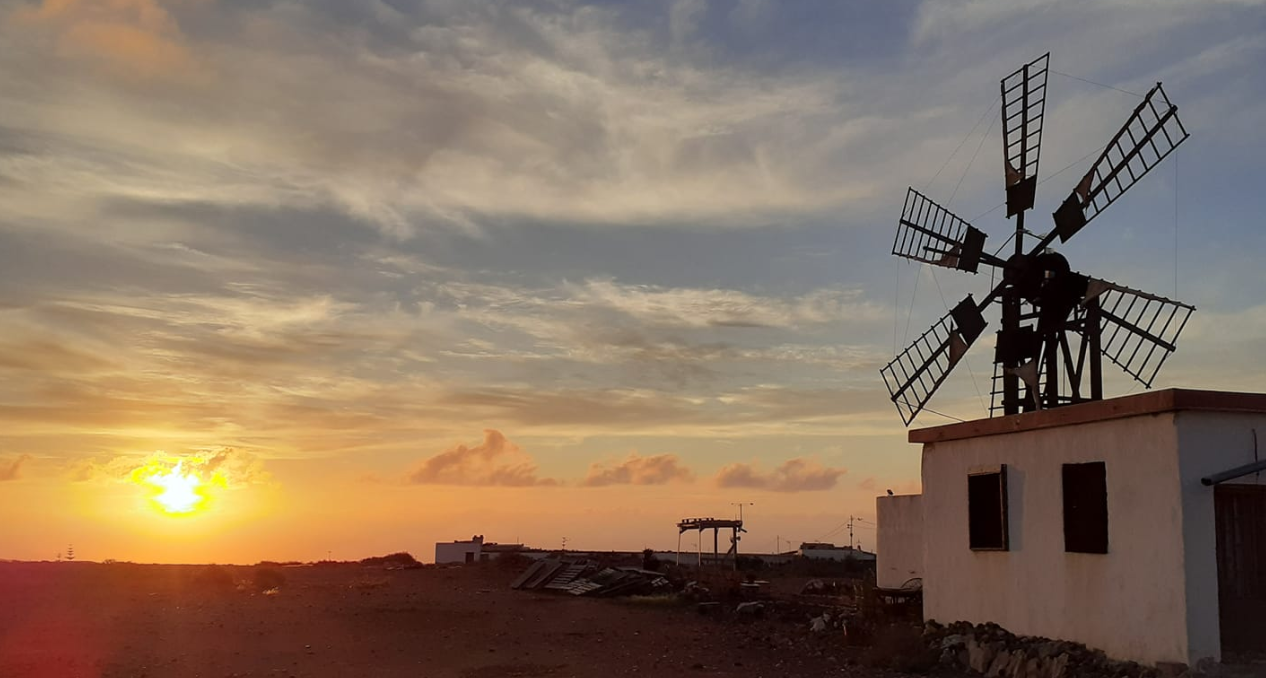
La Molina de La Asomada is the most emblematic heritage element of the town. Its history begins in 1818, when it was originally built in the town of Casillas del Ángel. In 1903, the mill was moved to its current location in La Asomada, where it operated uninterruptedly until 1951.
This move was possible thanks to a unique feature of the mills: their portability. Unlike traditional mills, whose structure forms an inseparable part of the building, the mills allowed the tower and machinery to be disassembled and transported to a new location when circumstances required it.
The last known use of the mill, already in La Asomada, dates back to 1950, and later fell into disuse as a result of the abandonment of traditional milling methods due to the arrival of industrial production.
Declaration as an Asset of Cultural Interest
La Molina de La Asomada, along with 23 other mills on the island, has been declared an Asset of Cultural Interest (BIC), the highest level of heritage protection in Spain. This recognition underlines its exceptional historical and ethnographic value within the industrial and cultural heritage of the Canary Islands.
Restoration and commissioning
In 2011, the Molina de La Asomada underwent a thorough restoration promoted by the Cabildo Insular de Fuerteventura and the great work of the carpenter Domingo Molina.
The rehabilitation required a careful restoration work of its iron and wood elements, as well as the replacement of the most deteriorated parts. The original wooden parts that were recovered include the structure of the tower (also called the distillery), the hopper, the chute, the pivot or puyón, the two cogwheels and the base or crosshead. The restored metal parts include the pivot, the spindle, the brake pin, the crab and the needle or axle. The blades, the harinal and the rudder, among other elements, had to be reproduced faithfully following the traditional typology.
The commissioning took place in May 2011, with the presence of island and municipal authorities, as well as the owners and many neighbors who celebrated the recovery of this symbol of Majorcan identity.
Singularity and recognition
La Molina de La Asomada has several features that make it a unique piece not only in the Canary Islands, but also internationally:
- The only wind and wood mill in operation in Europe: it is the only mill on the continent that continues to produce handmade gofio, powered by wind energy and with the grain toasted by wood fire and white earth.
- The only active mill in the world: according to official sources of the Puerto del Rosario Town Hall, this is the only remaining active mill for the production of gofio in the world.
- The largest in the archipelago: with its imposing dimensions -tower between 8 and 12 meters high and blades that exceed 11 meters in span-, it is considered the largest windmill in the Canary Islands.
- Recognition in official competitions: in 2021, gofio made at the Molina de La Asomada won the Silver Medal in the Official Agrocanarias Competition, in the wheat gofio category, competing with 86 samples from 17 mills throughout the islands.
The mill in front of the mill: a majorera innovation
The molina, also known as the “female mill”, represents a technological innovation of great relevance in the agrarian history of the Canary Islands. Its invention is attributed to Isidoro Ortega, a native of Santa Cruz de La Palma, in the 19th century.
The main differences with traditional mills are:
A single floor where all the milling and grain handling activities were concentrated, unlike the mill, which had two or three floors, forcing the miller to constantly move between them.
Grinding speed: up to five times faster than mills, with blades reaching 140 km/h.
Portability: the tower and machinery could be disassembled and moved to another location, unlike the mill, which is a fixed structure inseparable from the building.
Main function: specifically designed to grind previously roasted grain for gofio; the mill, however, was intended to grind raw grain.
Wind orientation: the tower rotates on itself to orient the blades in any direction, while the windmill has a more limited orientation.
This ability to orient themselves in all directions and their greater efficiency made the windmills a solution perfectly adapted to the conditions of Fuerteventura, where the trade winds blow steadily but can vary in direction.
The milling process
The commissioning of the mill follows a carefully preserved ritual:
- Preparation: the gearwheel mechanism is greased with black grease (in the past, beef or mutton tallow was used) and the mill is shimmed with blocks.
- Setting the sails: the miller, climbing on the wooden gear, unfolds the sails on each of the six blades, adjusting them one by one as if they were the canvas of a ship.
- Orientation: using the rudder, the tower is manually oriented to catch the wind and then fixed to the ground.
- Grinding: the horizontal rotation of the blades becomes vertical when the rotation of the toothed wheel is transferred to the spindle. This rotation is transmitted to the upper grinding stone through the crab. Grinding is produced by friction between the upper (mobile) and lower (fixed) stones.
- Feeding: the roasted grain falls from the hopper into the chute and, as it is crushed, it moves towards the flour bin, from where it finally falls into the sack or sack.
The miller must simultaneously control the speed by means of the brake lever and the gap between the stones to regulate the thickness of the grind.
LA MOLINA TODAY
Today, the Molina de La Asomada is much more than a monument: it is a living space where handmade gofio continues to be produced in the traditional way. Visitors can observe the milling process in operation (subject to wind conditions), learn about the history of gofio and the importance of mills in Fuerteventura, and purchase freshly made gofio made in a completely artisanal way.
THE LIME KILN OF THE TOBACCONISTS: AN INDUSTRIAL HERITAGE
Along with the mill, another important heritage element in La Asomada is the Lime Kiln of Los Estancos, located approximately 1.25 kilometers east of the mill. This oven is an exceptional testimony of the traditional industrial activity in Fuerteventura, linked to the production of lime, an essential material in the construction of Fuerteventura.
Importance of lime in traditional architecture
Lime, obtained by firing limestone rock in kilns such as Los Estancos, was for centuries a fundamental material in the construction of traditional houses in Fuerteventura. It was used to make the mortar to join the stones and, especially, the whitewashing of the facades and interiors, that characteristic white layer that defines the image of the traditional villages of Fuerteventura.
Whitewashing did not only have an aesthetic function. The lime acted as a natural disinfectant, eliminating microorganisms and contributing to the healthiness of the houses; as a protector, waterproofing the walls and protecting them from erosion; and as a thermal insulator, helping to keep the interior cool during the hot summers.
Equity value
The lime kiln of Los Estancos, although less well known than the mill, is part of the valuable ethnographic heritage of La Asomada. Its conservation allows us to understand the importance of this traditional industry and its role in the configuration of the island’s built landscape. Together with the old airfield of Los Estancos, it forms an environment of great heritage interest in the vicinity of the village.
TRADITIONAL ECONOMY: THE GRAIN-GOOSEBERRY BINOMIAL
The history of La Asomada is inextricably linked to the production of cereals and their transformation into gofio. Fuerteventura was known in the past as the “granary of the Canary Islands” for its important cereal production, and towns like La Asomada played an important role in this economy.
Gofio is a food of pre-Hispanic origin made from toasted and ground cereals that has been the basis of Canarian food for centuries. Its consumption dates back to the time of the ancient mahos, who already toasted and ground their grains using rudimentary techniques.
In La Asomada, the presence of the mill allowed the farmers of the region to transform their harvests into this essential food, avoiding long journeys. The mill thus became a meeting point and the nerve center of local economic activity.
INSTITUTIONAL RECOGNITION
The City Council of Puerto del Rosario and the Cabildo of Fuerteventura have actively supported the enhancement of this heritage, supporting the restoration of the mill and publicly recognizing the work of its owners, such as Francisco Román Cabrera, current miller who continues the family tradition.
TRADITIONAL ARCHITECTURE AND RURAL LANDSCAPE
The hamlet of La Asomada preserves samples of the traditional Majorero architecture: whitewashed earthen houses, dry stone walls, livestock corrals and cisterns. The whitewashing of the facades, for which the lime produced in kilns such as Los Estancos was essential, gives the village that characteristic image of the traditional rural centers of the island.
The natural environment surrounding La Asomada offers a typical landscape of the interior of Fuerteventura, with rolling plains and panoramic views towards the Atlantic. The elevated location of the village allows to contemplate wide perspectives of the north of the island, combining the blue of the ocean with the ocher and volcanic tones of the terrain.
HISTORICAL CONTINUITY AND TERRITORIAL MEMORY
La Asomada is, in short, a place where the past is not a static memory, but a living reality that can be experienced in each milling, in each bag of freshly made gofio, in each blade that turns driven by the trade wind. Its people, like Francisco Cabrera, keep alive a tradition that is not only heritage of La Asomada or Fuerteventura, but of all humanity: the last mill in the world is still grinding in this corner of the interior of Fuerteventura, connecting the present with a history that began long before Europeans set foot on the island.
The valorization of this heritage, both tangible and intangible, is not only a question of identity, but also an opportunity to build a sustainable future that integrates the legacy of the past with the needs of the present.