Guisguey’s Pajero
Agricultural memory and living heritage of the municipality
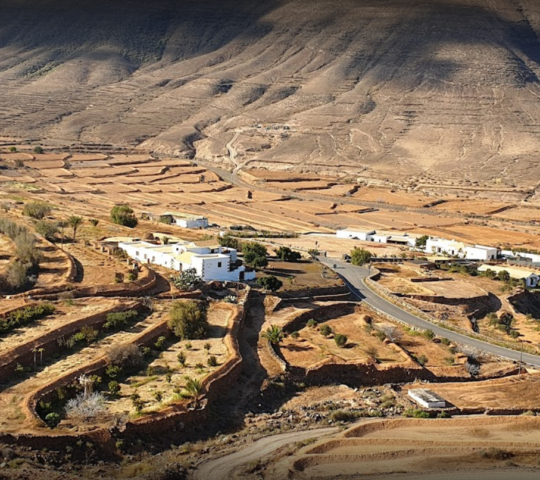
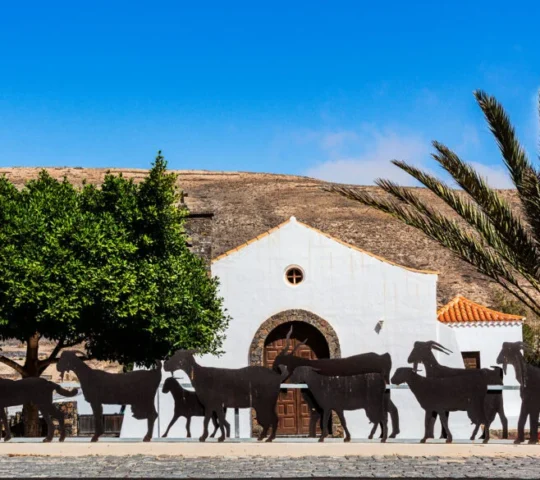
The village of Guisguey, located north of the capital in a wide valley, preserves a marked rural character and a quiet atmosphere that keeps it off the beaten tourist track. Its urban landscape, defined by traditional buildings, has managed to preserve the original identity of the village, closely linked to agriculture.
Guisguey has historically developed around terrace farming, favored by the fertility of the valley. In this environment, the gavias -traditional systems of water use- continue to be an essential element of the agricultural landscape, allowing crops to be harvested in a dry climate.
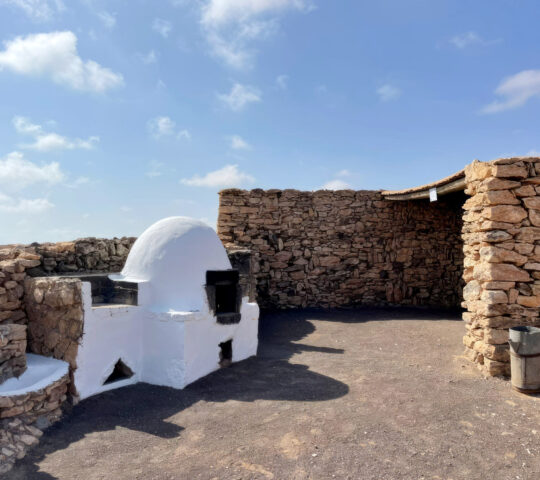
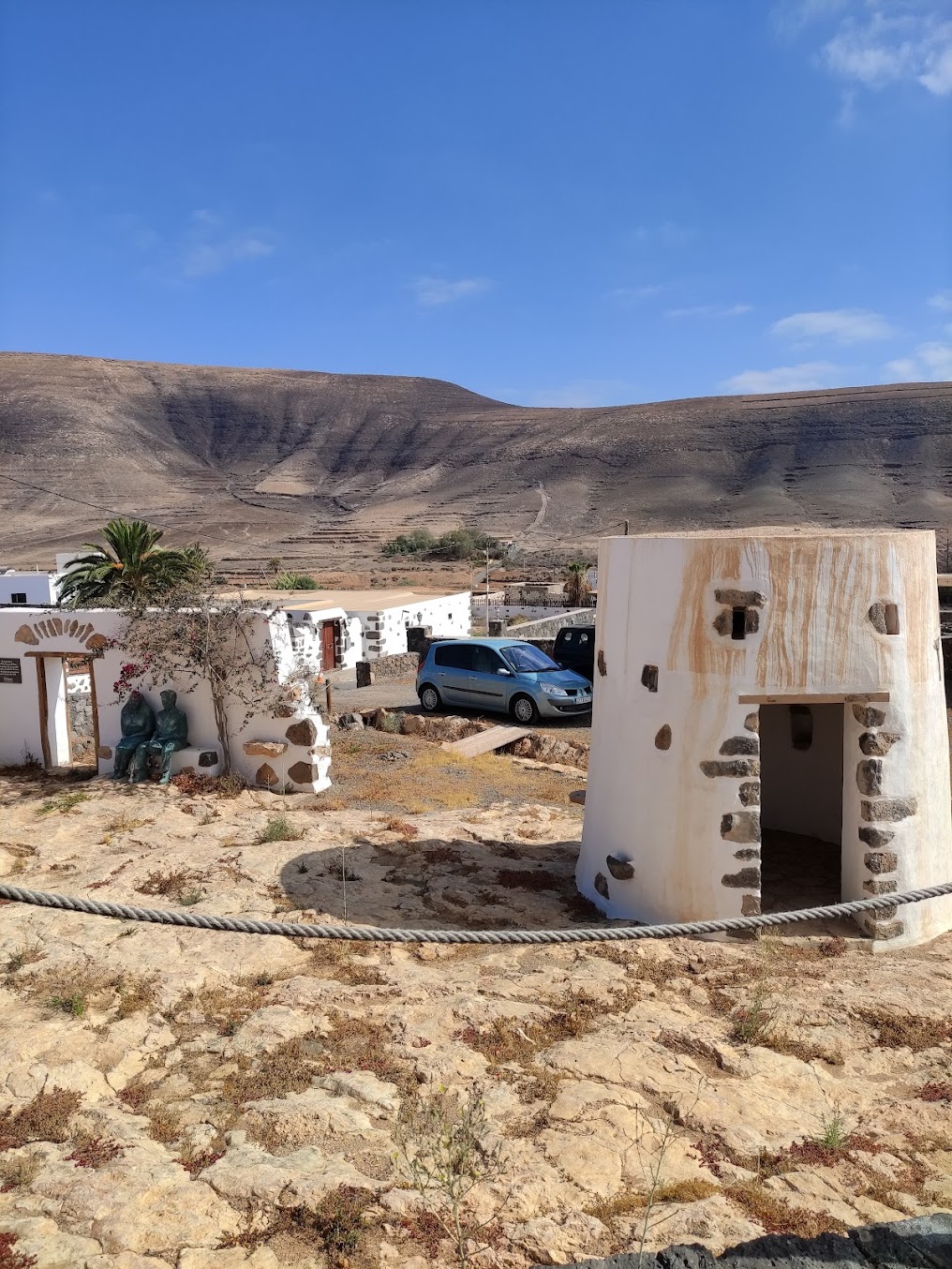
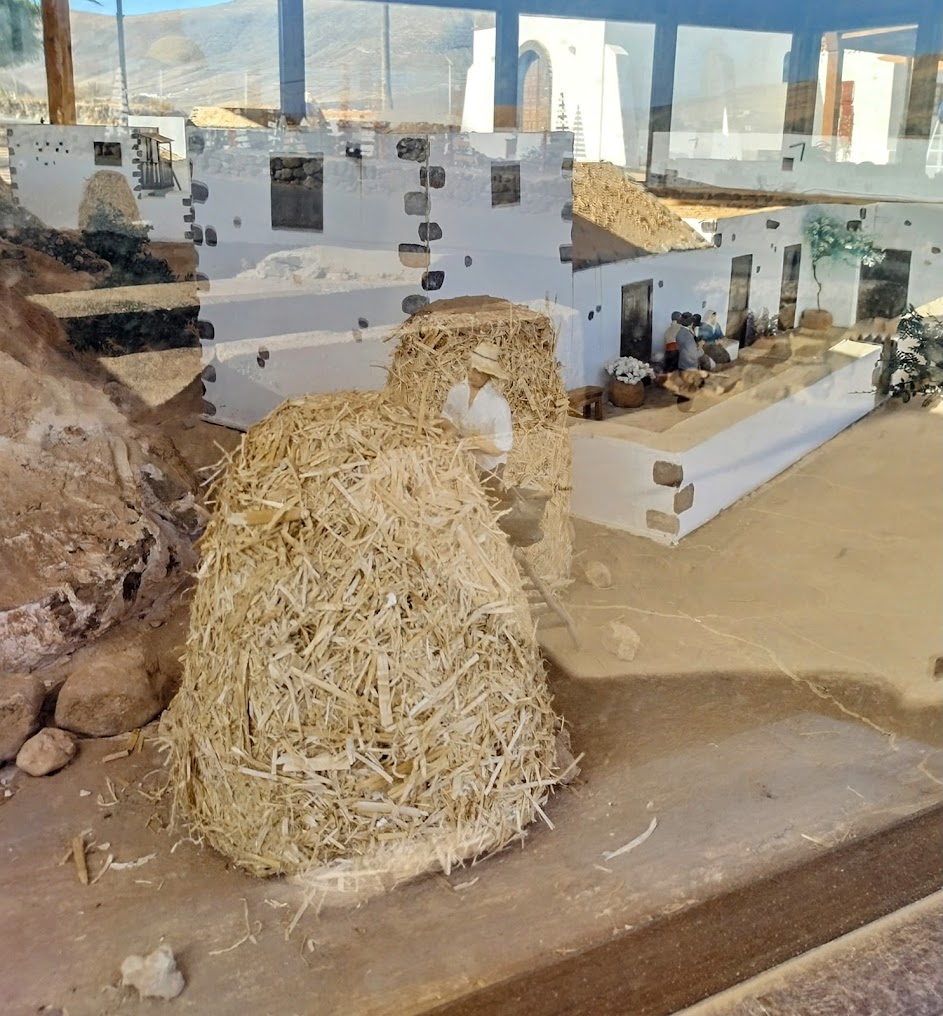
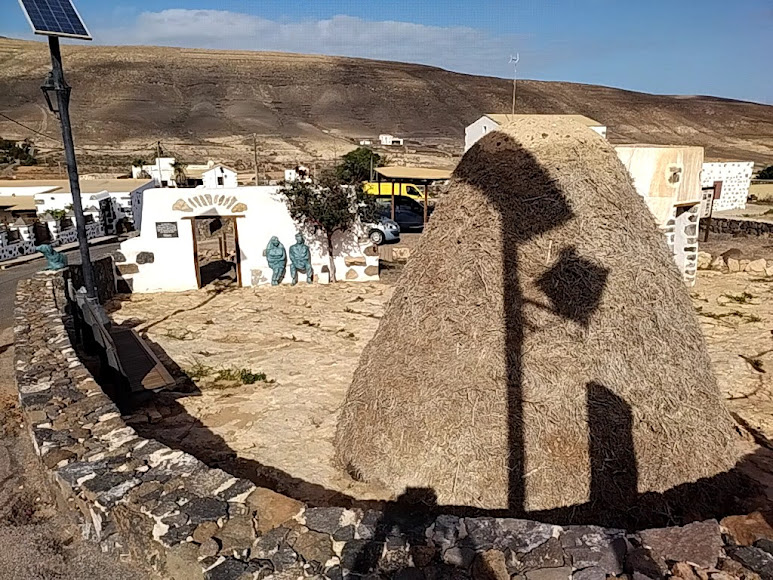
In this context is located El Pajero, a small monument that pays tribute to one of the most characteristic constructions of the rural Canary Islands. The traditional haystack was used to store foodstuffs essential for subsistence, especially in years of drought. Under the straw the crops were protected, including cheese, maintaining a constant temperature that protected the products from the inclemency of the weather.
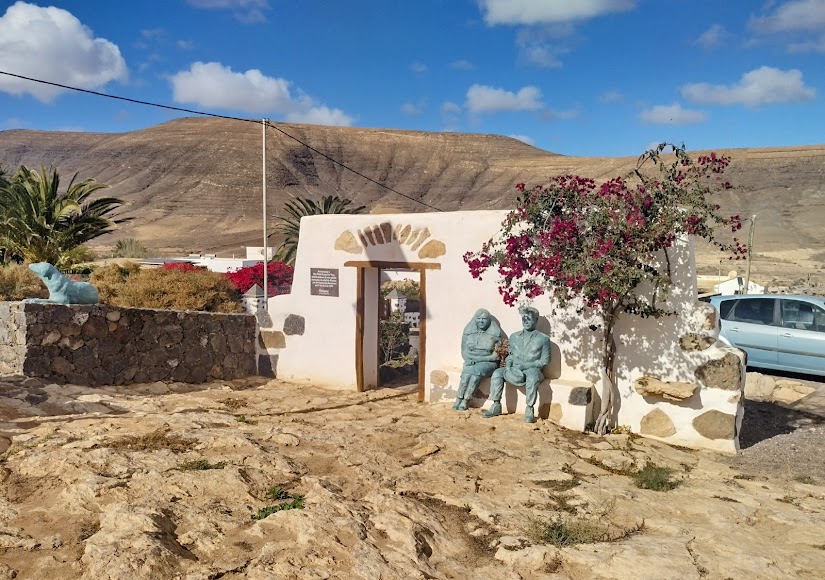
The enclave also has information panels that recall the figure of Pablo Espinel de Vera, farmer and mayor of Guisguey, whose memory is linked to this place. Espinel de Vera was assassinated at this point in 1976 by deserting legionnaires, a tragic event that is part of the recent history of the municipality and that today is preserved as part of the collective story of the town.
The Pajero de Guisguey is thus integrated into the set of heritage elements that help to understand the traditional agricultural life of Fuerteventura, combining historical memory, rural identity and landscape. The visit to the village can be completed with a rest stop at the restaurant La Escuela, located in the center of the village. This corner of the municipality invites you to discover a discreet but significant heritage, where the agricultural past and local memory are still present in the territory.